
Crab found alive after growing inside drifting plastic bottle
Hiroshima University researchers say a swimming crab survived about two months trapped in a bottle off Okinawa, feeding on fish and algae.
By Lucas Ferreira · Science & Environment Writer
3 min read
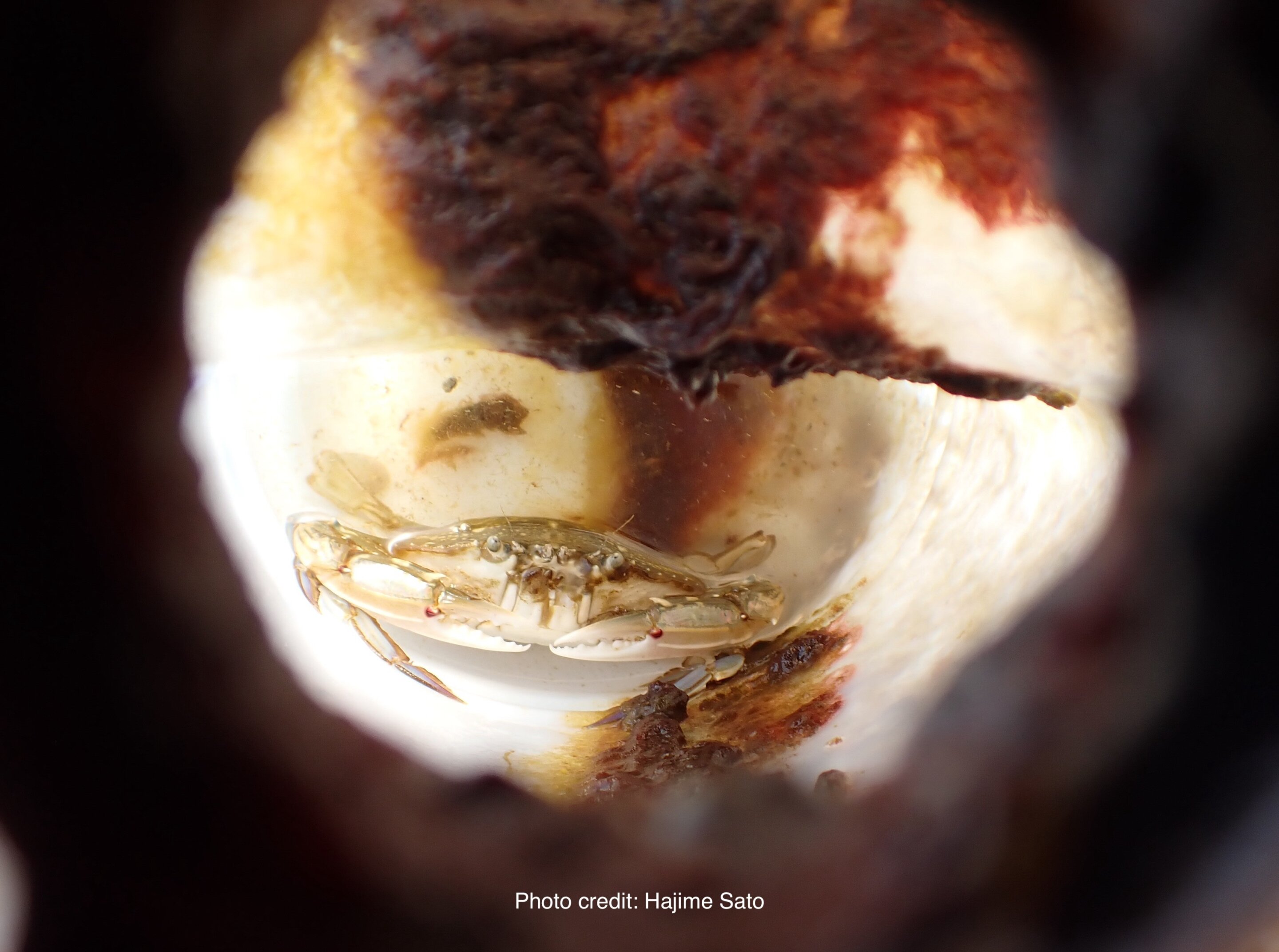
A swimming crab found alive inside a drifting plastic bottle off Okinawa shows how marine trash can trap smaller ocean animals in unexpected ways, according to Hiroshima University researchers. Their study, published in the journal Ecosphere, says the crab likely entered the bottle while young, fed inside it and then grew too large to get out.
Researchers Hajime Sato and Yoichi Sakai reported finding the bottle during juvenile fish surveys about 500 meters off Sesoko Island, Japan. The high-density polyethylene bottle, identified as a Shaoxing wine container, was floating at the sea surface with juvenile fish around it, according to Hiroshima University.
Inside was a live three-spot swimming crab, Portunus sanguinolentus. The team said the animal was larger than the bottle opening, raising the central question of how it had become trapped.
A small opening, a larger crab
The researchers collected the bottle on July 15, 2022, according to the study. Markings on the container showed it had been manufactured on Nov. 17, 2021, and the bottle was open, allowing seawater to move in and out.
The bottle mouth measured 24 millimeters across, while the crab measured 40.31 millimeters long and 88.23 millimeters wide, according to Sato and Sakai. The crab weighed 42.06 grams, meaning it could not have entered the bottle at the size observed by the researchers.
Hiroshima University said the team examined biological evidence to work out both how the crab survived and how long the bottle had been drifting with the animal inside. The researchers used stomach-content DNA analysis and growth estimates from goose barnacles attached to the outside of the bottle.
Feeding inside the bottle
DNA analysis showed the crab had eaten juvenile fish linked to the floating bottle, according to the study. Those included rough triggerfish, Canthidermis maculata, and sergeant major, Abudefduf vaigiensis.
The analysis also found algae in the crab’s stomach, which the researchers said had probably grown inside the bottle. Based on the goose barnacle Lepas anserifera attached to the container, the team estimated the bottle had drifted for about two months.
Sato and Sakai concluded that the crab entered the bottle as a juvenile, remained alive by feeding on fish and algae, and then became too large to escape. Hiroshima University said the case illustrates a less familiar effect of plastic waste on crustaceans, in addition to better-known examples involving seabirds, turtles and marine mammals.
The researchers said similar cases have been reported in waters around Japan, suggesting the Okinawa find was not a one-off event. They said discarded plastic bottles can become traps for crabs and may block their escape after the animals grow.
Sato was a doctoral student under Sakai at the time of the work and is now a postdoctoral research fellow at the Okinawa Institute of Science and Technology, according to Hiroshima University. Sakai is a professor at Hiroshima University’s Graduate School of Integrated Sciences for Life.
The study is titled “Swimming crab in a bottle: A two-month drift on the ocean surface while entrapped,” by Hajime Sato and colleagues, published in Ecosphere. The researchers said the case also points to the resilience of the swimming crab, which survived despite being confined in a container made and discarded by humans.
This story draws on original reporting from Phys.org.