
Copper balance helps two pathogens form tougher biofilms
Researchers say Candida albicans and Staphylococcus aureus cooperate in mixed biofilms by handling copper in complementary ways.
By Lucas Ferreira · Science & Environment Writer
3 min read
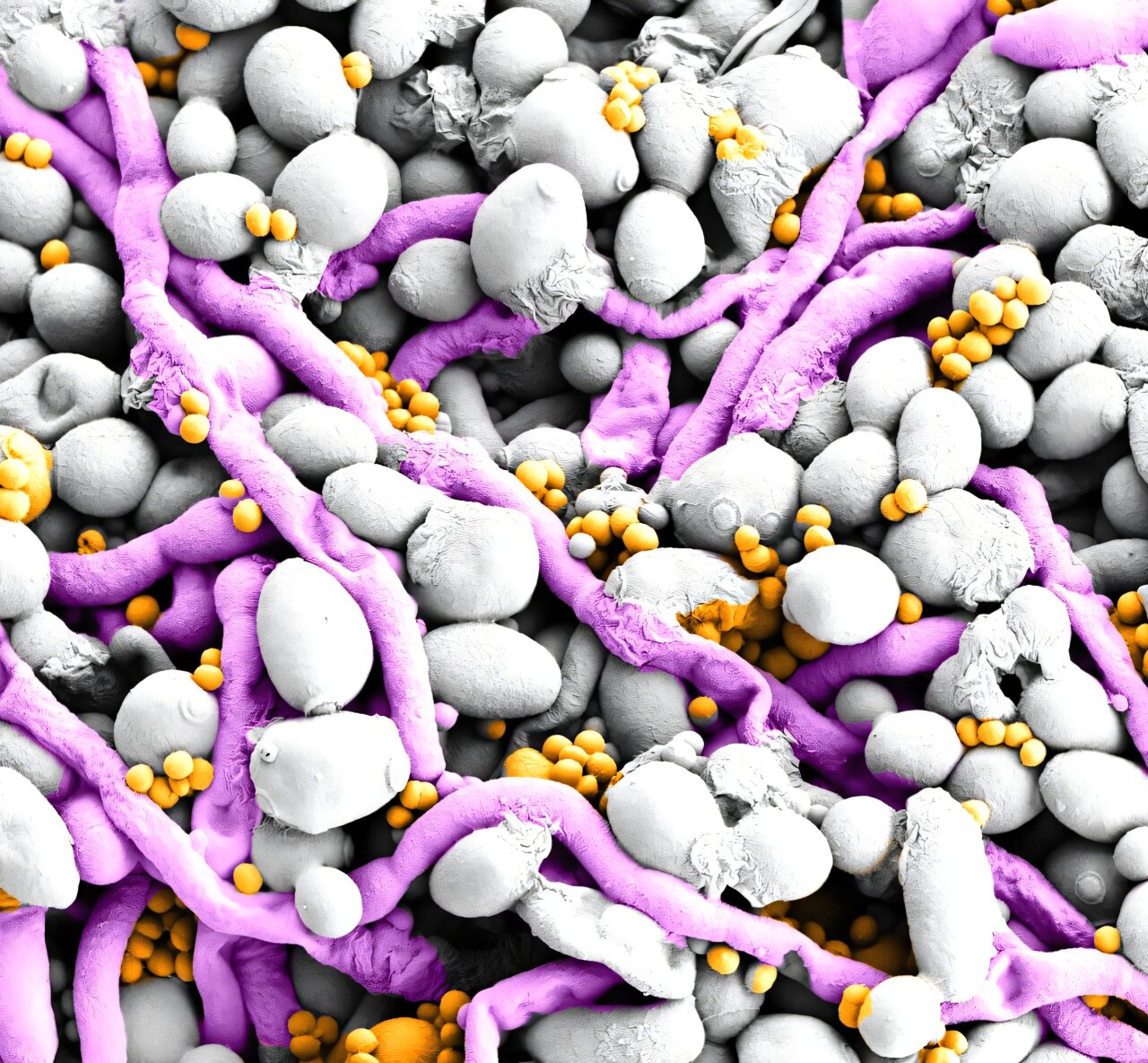
Researchers at the University of Exeter say two common human pathogens can strengthen each other in biofilms by controlling copper in their shared environment. The finding matters because mixed fungal-bacterial biofilms are tied to hard-to-treat infections in wounds, bloodstreams and medical devices.
The work focused on the fungus Candida albicans and the bacterium Staphylococcus aureus, both described by the university as major causes of human infection. The study, led by Dr. Seána Duggan at Exeter’s MRC Center for Medical Mycology, was published in Microbiology under the title “Copper Driven Mutualism of Candida albicans and Staphylococcus aureus Interkingdom Biofilms.”
Biofilms form when microbes grow in surface-bound communities. According to Exeter, these communities can resist treatment, and mixed biofilms may be harder to clear because different organisms can shield or support one another.
A shared copper balance
Duggan’s team grew C. albicans and S. aureus together in laboratory conditions designed to resemble the human body. Exeter said the paired organisms made biofilms that were larger and more metabolically active than biofilms formed by either microbe on its own.
Protein analysis pointed to a division of labor around copper. The university said C. albicans produced more proteins associated with taking up copper, while S. aureus produced more proteins involved in exporting copper and protecting against copper-related stress.
Duggan described the result as a more complex picture than the common view of copper as only an antimicrobial threat. According to Exeter, she said copper appeared to function as a kind of shared resource in the mixed biofilms, helping two different pathogens cooperate until the balance was disturbed.
Disruption weakened the community
The researchers tested what happened when copper levels changed. Exeter said both copper excess and copper shortage weakened the mixed biofilm, suggesting that the partnership depends on a narrow copper balance.
Duggan said the mixed biofilm reacted more strongly to copper disruption than either organism did alone, according to the university. She said that points to the biology of the relationship between the pathogens, rather than the behavior of one species in isolation.
The study also found that copper affected the physical structure of the biofilm. Exeter said early tests indicate copper-based strategies may help break down these microbial communities, though the university did not describe them as ready clinical treatments.
Duggan said mixed infections remain a major clinical problem and that scientists still know relatively little about the molecular processes inside these communities. She said micronutrients such as copper may influence whether pathogens compete, cooperate or become harder to treat.
The researchers said the findings support studying infections as multi-organism systems, not only as single-pathogen events. More information on the paper is available through DOI: 10.1099/mic.0.001725.
This story draws on original reporting from Phys.org.