
Computer scientist challenges Turing’s legacy in AI research
Peter J. Denning argues in a new book that human-level AI may be unreachable because machines cannot encode tacit human knowledge.
By Priya Raghavan · Science Reporter
3 min read
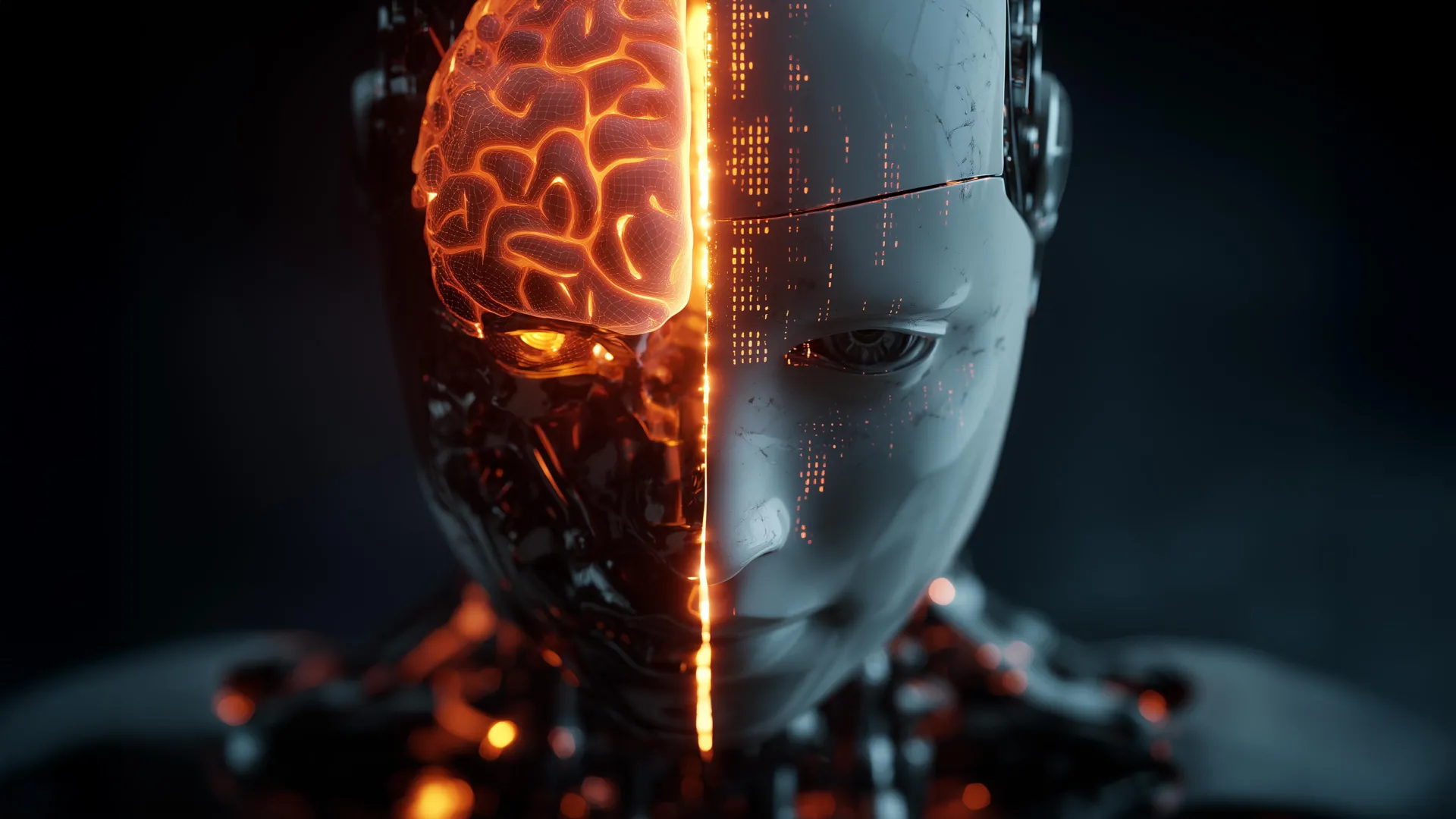
Computer scientist Peter J. Denning says artificial intelligence research has been guided for decades by a flawed reading of what machines can become. In a new book announced by Taylor & Francis Group, Denning argues that systems may grow more autonomous and risky without ever reaching human-like understanding.
Denning’s book, Turing’s Mistake: Escaping the Yoke of Unintelligent Machines, takes aim at assumptions he traces to Alan Turing’s 1950 work on machine intelligence. According to Taylor & Francis Group, Denning says Turing’s ideas encouraged researchers to treat intelligence as something that can be separated from the body and reproduced in software, and to judge machine intelligence through conversational imitation.
That second idea became known as the Turing test. Denning argues that those premises helped set the agenda for artificial intelligence research, including the long-running goal of artificial general intelligence, or AGI: machines with human-level intelligence.
The problem of knowledge that cannot be written down
Denning’s central claim is that much of human intelligence depends on tacit knowledge, the practical and cultural understanding people use without being able to fully state it as rules. Taylor & Francis Group said he identifies several areas that he believes machine learning cannot capture, including common sense, emotion, perception, everyday social interaction, skilled performance and cultural background.
He points to Douglas Lenat’s Cyc project, which began in the 1980s as an effort to build a large database of common-sense knowledge. According to the publisher’s summary, the project amassed about 25 million entries over four decades, but Denning says it still did not give expert systems the broad background knowledge needed to behave like experts.
Denning also argues that physical skill creates a barrier for AI. A machine may store descriptions of successful performance, he says, but that does not mean it can encode the embodied know-how behind a musician’s touch, a craftsperson’s judgment or other skilled acts.
In Denning’s view, large language models such as ChatGPT, Claude and Gemini manipulate words rather than understand meanings. He argues that language rests on shared background experience, and that computers can process only representations that have been converted into data and instructions.
Culture, context and safety
Denning says context is another obstacle. Human conversation depends on prior exchanges, shared assumptions, social cues, humor, sincerity and emotion, according to the account from Taylor & Francis Group. Culture adds further layers, including values, norms, history, judgments, community and power relationships.
For that reason, Denning argues that larger neural networks will not by themselves give language models the embodied cultural knowledge that humans bring to speech and action. He says this undermines the Turing test’s aim of showing machine thought that cannot be distinguished from human thought.
The book also raises safety concerns. Denning argues that humans and machines may develop forms of tacit knowledge that are opaque to each other, making it difficult to align advanced automated systems with human aims.
According to Taylor & Francis Group, Denning warns that networks of automated, agent-like machines could create serious problems even if they do not become human-level intelligences. He frames that risk as more immediate than a takeover by superintelligent machines, because such systems may solve problems in ways that remain alien to human users.
This story draws on original reporting from ScienceDaily.