
Chiral nanocarbons made with skeletal editing in molecule interiors
Nagoya University researchers used skeletal editing to reshape flat carbon molecules into chiral nanocarbons with unusual optical and gas-storage behavior.
By Tom Brennan · Health & Medicine Correspondent
3 min read
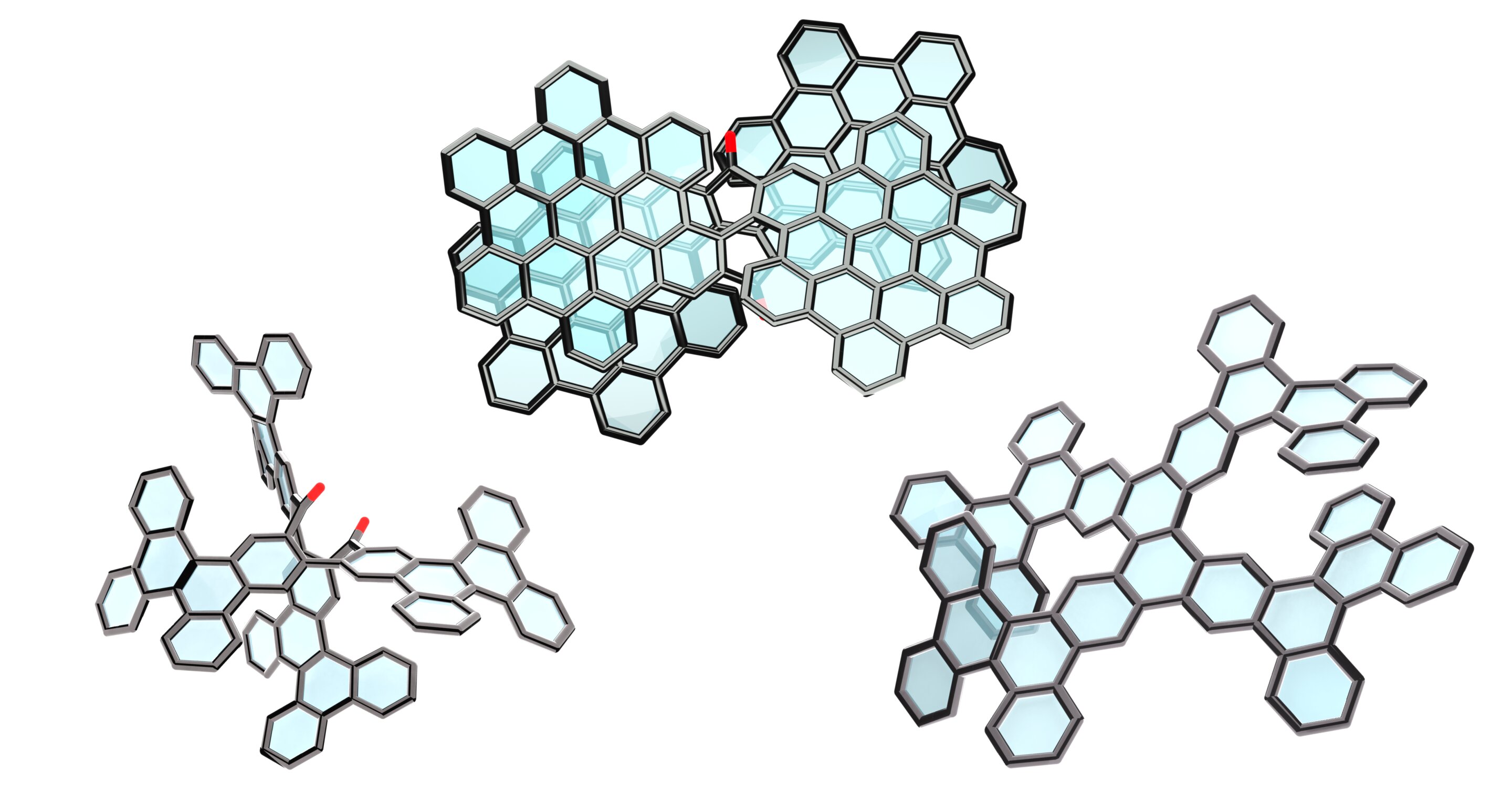
Nagoya University researchers say they have made chiral nanocarbons by using skeletal editing to alter bonds inside flat carbon molecules, a route that could broaden how advanced carbon materials are designed. The work matters because nanocarbons are studied as building blocks for future materials, but chemists have usually built them by joining small flat carbon units at their edges.
The team reported the findings in Nature Communications. According to Nagoya University, the method produced mirror-image left- and right-handed molecules in shapes described as a figure-eight, a bathtub and a double helix.
How does skeletal editing make chiral nanocarbons?
Skeletal editing is a chemical method that cuts and remakes bonds in a molecule’s framework. Nagoya University said the approach has been used mainly in pharmaceutical chemistry, but the new study applies it to nanocarbon synthesis.
Nanocarbons commonly start from flat networks of six-sided carbon rings, similar to small pieces of graphene. The university said bonds in the interiors of those molecules have been hard to change because the structures are flat, rigid and resistant to strain.
Norihito Fukui, an associate professor at Nagoya University’s Graduate School of Engineering and senior author of the study, said internal changes place heavy strain on a molecule, so reactions have tended to occur around the outside. Fukui said the team showed that selecting the right method and starting molecule can allow chemists to change the interior and make shapes that were previously out of reach.
What did the researchers build?
The researchers used the method on common flat carbon molecules, including graphene-like fragments, according to Nagoya University. The work allowed them to create chiral nanocarbons that include 10-carbon rings and a double-helix structure.
Nagoya University said the study addressed two hard problems in the field. The researchers built a 10-carbon ring into large chiral nanocarbons, which the university said had not been achieved before, and they produced both left- and right-handed versions of complex nanocarbons through asymmetric synthesis, a result it said had been achieved only twice before for nanocarbons of comparable size.
Chemists had recently found ways to place seven- and eight-sided rings into nanocarbons, the university said. Ten-sided rings and nonflat arrangements of six-sided rings have remained difficult because carbon atoms tend to favor flat ring systems based on their bonding angles.
What properties did the new molecules show?
According to Nagoya University, all of the new chiral molecules emit light that spirals as it travels. The university said two of the molecules can hold multiple electrical charges without breaking apart, while another keeps its handed form at 280°C, or 536°F.
The double-helix molecule also self-assembles into crystals with spiral-shaped pores, the university said. Those pores can trap and release carbon dioxide, a behavior that could be relevant to gas storage materials.
Nagoya University described the porous chiral material as the first of its kind and said it is related to the family of metal-organic frameworks, or MOFs, recognized by the 2025 Nobel Prize in Chemistry. The university said the unusual behavior of the molecules is the type researchers seek in materials for gas storage, ultra-low-power electronics and next-generation encryption.
Fukui said the team hopes the work will encourage other researchers to test what can be made by editing the interiors of molecules. The study is titled “Skeletal transformation to chiral nanocarbon molecules.”
This story draws on original reporting from Phys.org.