
Old master painting may show Europe’s largest bat eating a bird
Researchers say a 1611 Brueghel painting appears to record bird-eating by the greater noctule bat centuries before modern confirmation.
By Priya Raghavan · Science Reporter
3 min read
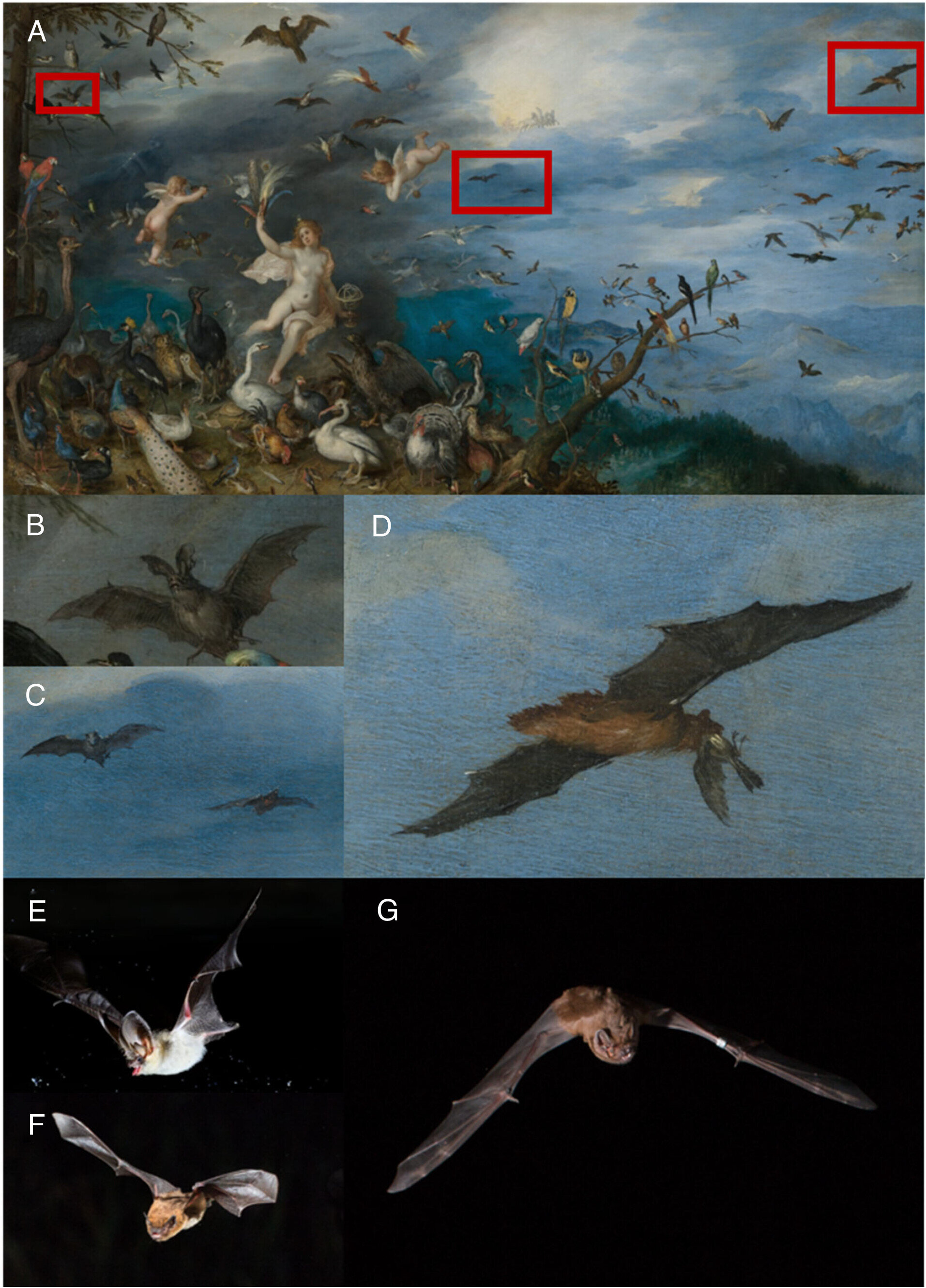
A 17th-century painting may contain an early record of a rare hunting behavior by Europe’s largest bat. In a study published in Proceedings of the National Academy of Sciences, researchers led by Pedro Romero-Vidal of the Doñana Biological Station in Seville say Jan Brueghel the Elder’s 1611 canvas Air appears to show a greater noctule bat carrying a small bird in its mouth.
The finding matters because scientists only recently confirmed that greater noctules catch migrating songbirds in flight. The PNAS study argues that the painting may preserve a natural-history observation made centuries before tracking tags and other modern tools could document the behavior.
A clue in a crowded canvas
Romero-Vidal’s team was examining a high-resolution digital image of Brueghel’s Air, an allegorical work that includes more than 60 bird species and three kinds of bats, according to the study. The researchers were cataloging the animals represented in the painting rather than searching for evidence of bat feeding habits.
In the upper-right section of the work, the team identified a bat with a small bird at its mouth, according to PNAS. The researchers said the animal’s rounded ears, narrow wings and reddish-brown coloring are consistent with a noctule bat, while its apparent size points to the greater noctule, Nyctalus lasiopterus.
The greater noctule is the largest bat species in Europe, according to the researchers. Earlier evidence for its bird-eating diet came from fecal-pellet studies: in 2001, scientists found feathers from dozens of songbird species in bat droppings, suggesting the bats were consuming birds rather than only insects.
Modern tracking confirmed the hunt
Direct confirmation came much later, according to the account cited by the study. In 2025, researchers fitted bats with small tracking tags and recorded them diving after migrating songbirds, catching them in the air and feeding for as long as 20 minutes without landing.
The new PNAS paper does not claim that Brueghel’s painting changes that scientific record. Instead, Romero-Vidal and colleagues say it suggests the behavior may have been noticed long before it was formally documented by biologists.
The researchers also caution that the painting is not the same as a field note. Because greater noctules hunt at night, the study says Brueghel almost certainly would not have watched the scene directly in daylight.
Still, the team notes that Brueghel spent time in Italy, where greater noctules occur. The researchers say he may have heard accounts of the behavior or seen indirect evidence, such as feathers in droppings, that linked the bats to bird prey.
Art as a natural-history archive
Romero-Vidal’s team argues that the specific depiction is significant because Brueghel included multiple kinds of bats in the same work. According to the study, singling out a noctule-like bat with a bird suggests the image may draw on observed natural history rather than a purely symbolic convention.
The paper, titled Natural history on canvas: Brueghel knew about bird-eating noctule bats, was published in PNAS with the DOI 10.1073/pnas.2536525123.
The researchers say digitized museum and gallery collections could hold more overlooked biological observations. Their study points to old artworks as records that can complement modern field tools when scientists examine them with the right questions in mind.
This story draws on original reporting from Phys.org.