
Brain cells may use family ties to find their place, study suggests
Researchers say cellular lineage may help developing brain cells organize themselves alongside chemical signals.
By Priya Raghavan · Science Reporter
3 min read
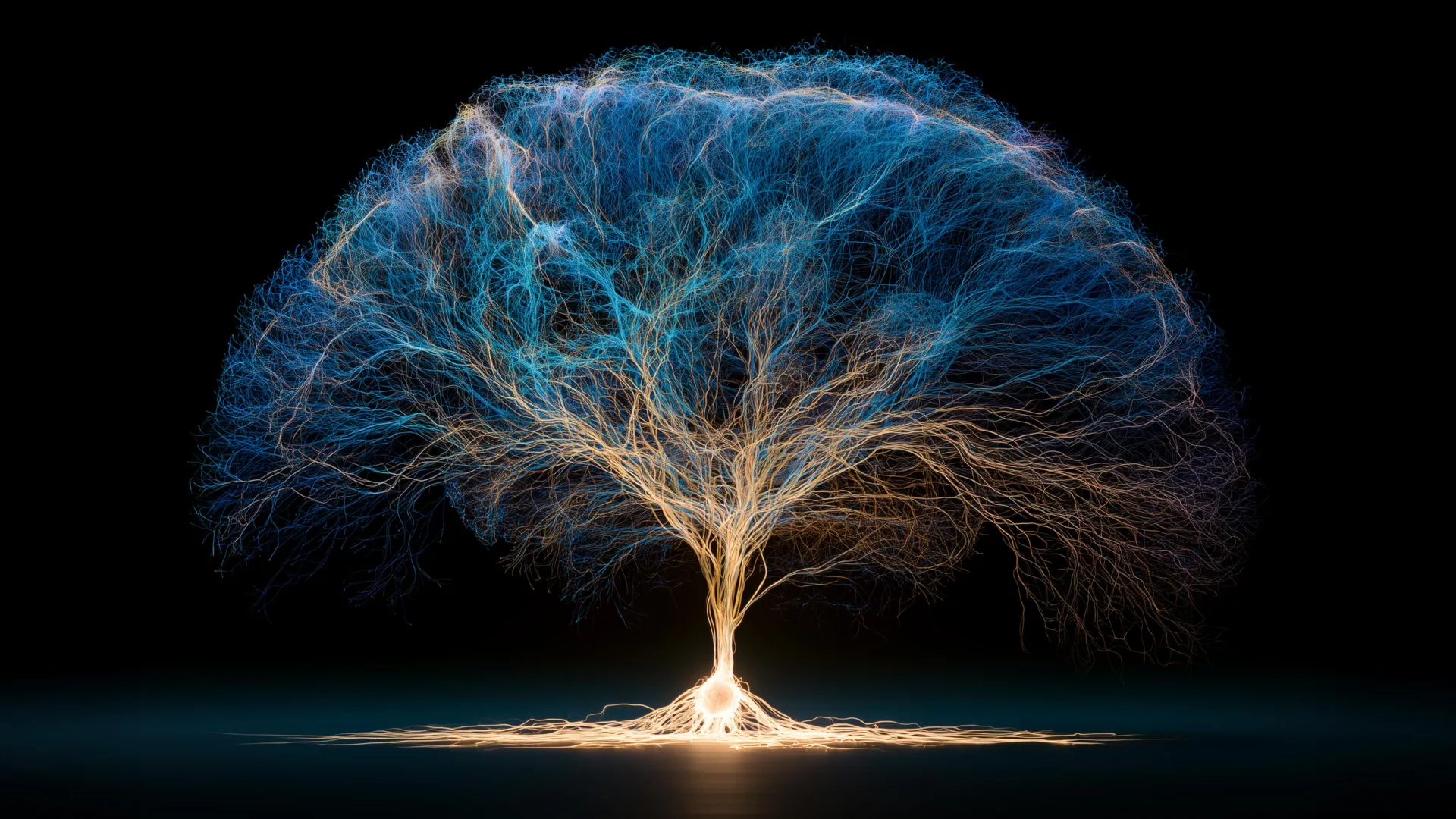
Researchers have proposed a new explanation for how a developing brain places billions of cells in the right locations: cells may use their ancestry as a guide. Cold Spring Harbor Laboratory said the work could help explain how a single starting cell gives rise to a human brain containing roughly 170 billion cells.
The study, published in Neuron, argues that cellular lineage — the family tree connecting cells to their ancestors — can provide positional information during brain development. The authors say cells descended from the same progenitor tend to remain near one another, creating organized patterns without depending only on long-distance chemical instructions.
Stan Kerstjens, a postdoctoral researcher in Anthony Zador’s laboratory at Cold Spring Harbor Laboratory, framed the problem as one of local information. According to Kerstjens, a cell can detect itself and nearby cells, yet its future depends on where it sits in the developing brain.
For decades, Cold Spring Harbor Laboratory said, researchers have focused on chemical signals as a way for cells to determine position. That model works well for smaller systems, Kerstjens said, but it raises questions in a brain where billions of neurons must form in the proper locations and chemical signals become weaker over distance.
Kerstjens and colleagues from Cold Spring Harbor Laboratory, Harvard University and ETH Zürich developed what they call a lineage-based model of scalable positional information. In that model, related cells remain clustered enough that ancestry itself helps define spatial order as the tissue grows.
Kerstjens compared the principle to human populations spreading over generations, according to Cold Spring Harbor Laboratory. Descendants often settle near parents, so people with shared ancestry can form broad geographic patterns without requiring communication across an entire country; the researchers argue a similar process may occur as the brain develops.
Model tested across species
The team first used theoretical calculations to assess whether lineage could carry positional information at scale. The researchers then examined gene-expression patterns in developing mouse brains, looking at both single cells and larger groups of cells, according to Cold Spring Harbor Laboratory.
The group also tested the idea in zebrafish and found similar results, the laboratory said. The authors said that finding points to a mechanism that may apply across brains of different sizes.
The study does not reject chemical signaling as part of brain development. Instead, the researchers conclude that chemical signals and lineage may work together to help cells determine where they are and what they should become.
Possible wider uses
Cold Spring Harbor Laboratory said the theory may extend beyond the brain to other developing tissues, including tumors. Kerstjens also said the principle could be relevant to future self-replicating artificial intelligence systems that pass information from one generation to another.
The paper, “A lineage-based model of scalable positional information in vertebrate brain development,” lists Kerstjens, Florian Engert, Rodney J. Douglas and Anthony M. Zador as authors. It appeared in Neuron in 2026.
Kerstjens said the work addresses one part of a larger question about how the brain gains its capabilities across both development and evolution. Cold Spring Harbor Laboratory said understanding how one cell produces an organized brain may aid research into intelligence and the mind.
This story draws on original reporting from ScienceDaily.