
Atlantic waste mission finds damaged radioactive drums on seafloor
A CNRS-led expedition documented leaking and degraded radioactive waste barrels more than 4,700 meters deep in the North-East Atlantic.
By Lucas Ferreira · Science & Environment Writer
2 min read
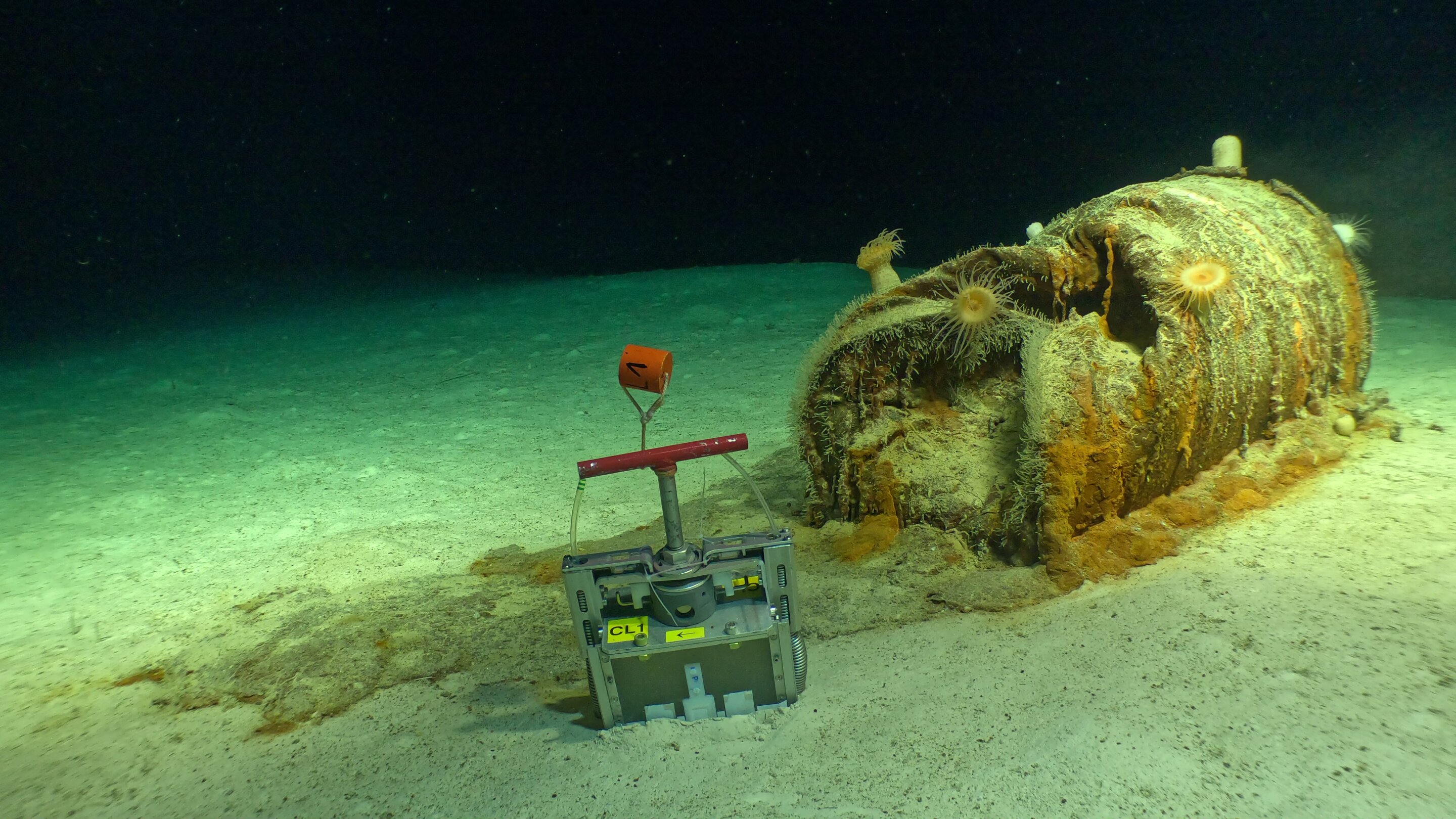
A French-led research mission has directly documented damaged radioactive waste barrels on the floor of the North-East Atlantic, where more than 200,000 drums were dumped between 1950 and 1990, according to CNRS. The findings matter because scientists are trying to measure how radioactivity from the submerged waste moves through deep-ocean environments and interacts with abyssal life.
CNRS said the Nodssum project returned to sea at the end of May 2026 after an initial campaign from June 15 to July 11, 2025, mapped the disposal area. The second expedition focused on sites of interest identified during that first survey, the research organization said.
The campaign ran from May 27 to June 28, 2026, aboard the research vessel Pourquoi Pas?, according to CNRS. About 30 scientists took part, with CNRS leading the work alongside Ifremer, ASNR and several national and international partners.
Researchers used Nautile, a manned submersible operated as part of the French Oceanographic Fleet, to reach the deep storage site, CNRS said. The submersible made 20 dives to depths greater than 4,700 meters, allowing the team to see several barrels and the seabed around them at close range.
CNRS said observations from Nautile and other instruments showed that several drums were in an advanced state of decay. Scientists also observed that some barrels had released their contents onto the surrounding seabed.
The mission also identified materials used to immobilize or encapsulate the radioactive waste, according to CNRS. The organization said the team found evidence of resin, bitumen and cement among the materials associated with the barrels.
Measurements taken at the site confirmed radionuclides characteristic of the dumped waste, CNRS said. Those activity levels were higher than expected for the area, though the organization said the levels recorded during the mission remained low enough for samples to be handled without major radiation-protection restrictions.
CNRS said laboratory testing will now be used to measure those radionuclides more precisely and may reveal additional radioactive elements. Analysis of samples and images collected during the expedition is expected to continue on land over the coming months.
The mission gathered water, sediment and biological samples to study how radioactivity may disperse and transfer through the environment, according to CNRS. Scientists also recorded and mapped biodiversity on the barrels, near the barrels and in surrounding habitats.
CNRS said the expedition produced new observations that may help determine the origin of some barrels. The broader aim is to better understand how radionuclides are transported in the deep ocean and how they interact with ecosystems living at abyssal depths.
This story draws on original reporting from Phys.org.