
Artificial cells made more permeable for reactions and drug delivery
Max Planck researchers report a membrane design that lets selected molecules enter artificial cells without destroying their structure.
By Tom Brennan · Health & Medicine Correspondent
3 min read
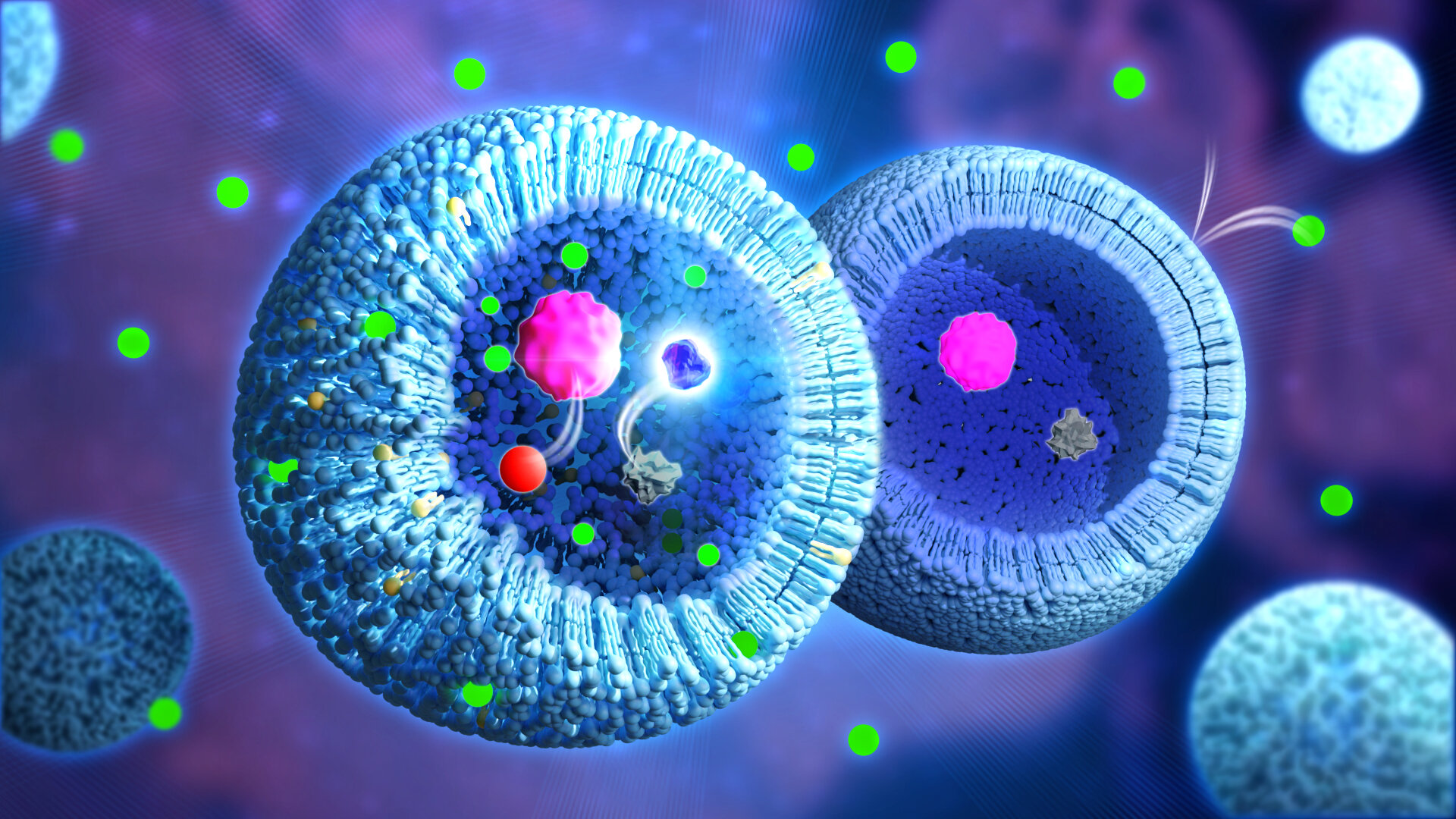
Researchers at the Max Planck Institute for Polymer Research have made artificial cell membranes more permeable, a change that could help scientists run controlled chemical reactions in lab-made cells and design future drug carriers. The team reported in ACS Nano that a membrane additive can create enough molecular disorder to let cargo molecules pass through.
Artificial cells known as polymersomes are built from polymers and can strip a living cell down to a much simpler model system. According to the Max Planck Society, that simplicity makes them useful for experiments that would be harder to perform in human cells, which contain many interacting parts, including a nucleus, mitochondria and other organelles.
The work focused on giant unilamellar vesicles, or GUVs, which the Max Planck Society described as about one-millionth of a meter in size. These structures can also be studied as tiny containers for medicines, because they can hold active ingredients and could potentially release them in places such as tumor tissue.
The barrier has been the membrane. Katharina Landfester, a director at the Max Planck Institute in Mainz who led the research, said polymersomes have been good at holding valuable material such as drugs or enzymes, but have had difficulty letting substances move in or out. The goal, she said, was to increase permeability in a controlled way while keeping the structures stable.
How the team altered the membrane
The researchers used oleyl alcohol, a co-surfactant, during production of the polymersomes. Co-surfactants are molecules used in products and mixtures such as soaps and emulsions, according to the Max Planck Society.
The team made the artificial cells with a microfluidic approach, often described as lab-on-a-chip technology. In that process, oleyl alcohol acted as a solvent, and a small amount remained embedded in the membrane after formation.
Gabrielle Ong, the study’s first author, said the leftover oleyl alcohol disturbed the regular packing of the polymer molecules. That disorder, the researchers reported, increased the membrane’s ability to let molecules diffuse through it.
The group used nuclear magnetic resonance spectroscopy and sum-frequency spectroscopy to examine the membranes. According to the Max Planck Society, those methods showed that the membranes became less ordered and that this change was linked to higher permeability.
Glucose test showed molecules could get inside
To test whether the altered membranes worked, the researchers placed the polymersomes in a glucose solution. Glucose moved through the membrane and entered the artificial cells, where it set off an enzymatic reaction cascade.
That reaction produced NADH, a fluorescent molecule. The researchers detected the fluorescence signal, which the Max Planck Society said confirmed that glucose had entered the polymersomes and triggered the internal chemistry.
As a comparison, polymersomes with nonpermeable membranes did not show fluorescence in the same test. The team said that result showed membrane permeability was required for the reaction to take place inside the artificial cells.
Priyanka Sharan, a group leader and co-author of the study, said the work provides a research tool and a materials-development principle: using controlled disorder to produce function. The Max Planck Society said the findings could support artificial cells designed to perform more complex reactions, as well as responsive materials that react to environmental conditions such as pH or salt concentration.
This story draws on original reporting from Phys.org.