
Honeybees change waggle dances when recruits confirm food directions
Researchers found that honeybees increase dance effort after followers validate their directions to a food source.
By Priya Raghavan · Science Reporter
3 min read
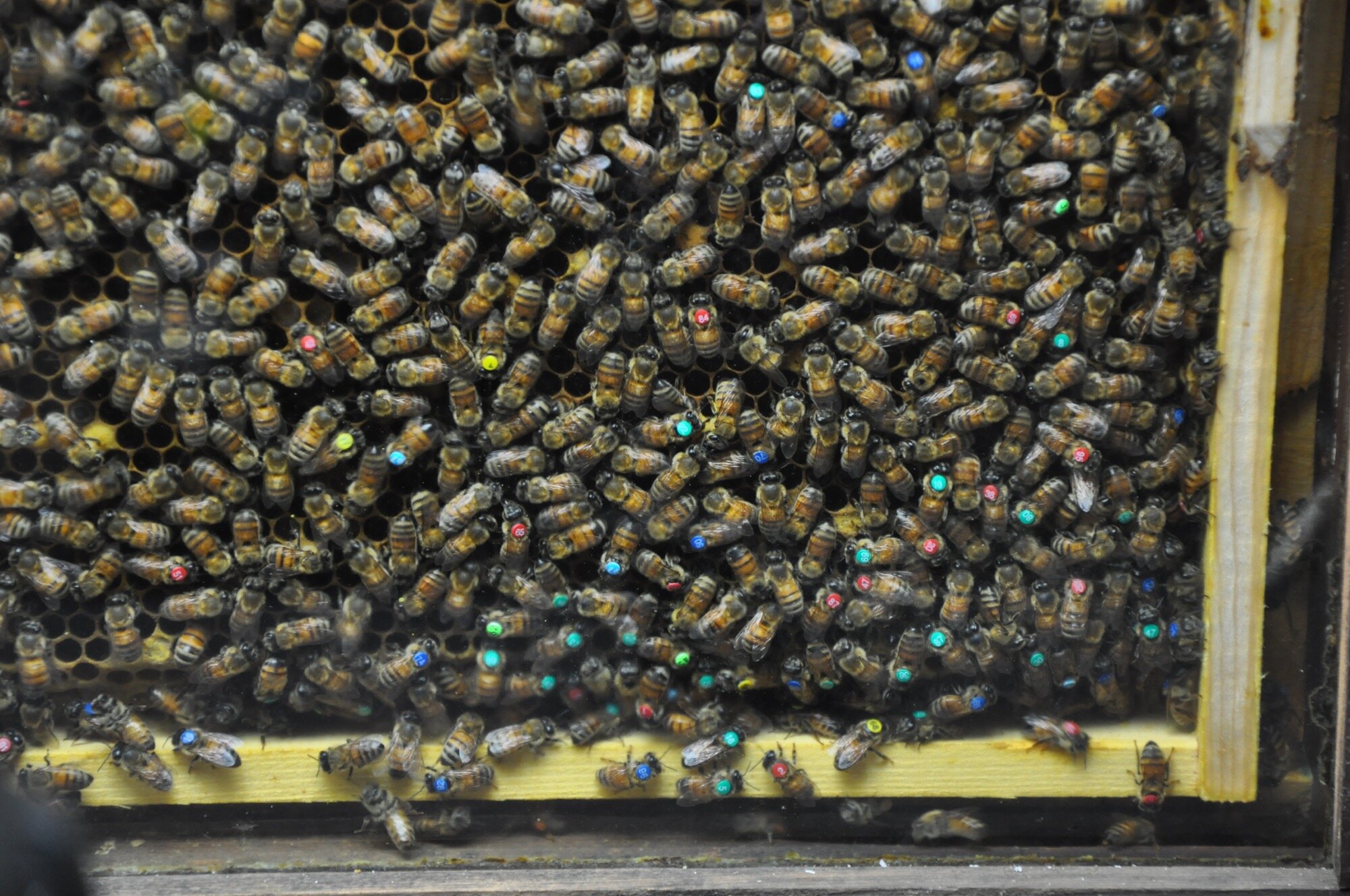
Honeybees appear to adjust how strongly they recruit nestmates after learning whether earlier directions led followers to food, according to a study from Hebrew University of Jerusalem researchers. The finding matters because the waggle dance is a central way bee colonies share foraging information, and the study suggests colonies can dampen unreliable signals without a central controller.
The research, by Karmi Oxman, Sharoni Shafir and Ofer Feinderman, was published in Behavioral Ecology and Sociobiology, according to the university. The team studied how individual honeybees changed their waggle dances after their messages were either confirmed, contradicted or left without feedback.
Honeybees use the waggle dance to point nestmates toward valuable food, with the dance conveying direction and distance. Because the accuracy of those dances can differ among bees, the researchers examined how a hive handles communication when some messages are more dependable than others.
The work took place at the Benjamin Triwaks Bee Research Center in Rehovot, according to the university. Researchers focused on selected dancing bees and altered what happened to the recruits that followed their directions.
In one treatment, recruits arrived at the location advertised by a dancer and fed on sugar solution. In another, the dancer had been able to feed, but the recruits found an empty feeder at the advertised site. In a third treatment, researchers captured recruits safely when they arrived, preventing them from returning to the hive and removing feedback from the system.
The researchers then moved the food source and watched how the same focal bees advertised the new site. Bees whose earlier directions had been confirmed by successful recruits increased their recruitment effort, performing more dance circuits over time, according to the study. Bees in the misleading-condition group did not raise their effort, while bees whose information had not been verified reduced the number of dance circuits they performed.
The results indicate that honeybees do more than repeat a location signal at a fixed intensity, according to the researchers. Instead, the dancers changed the vigor of their communication based on whether their previous information had been validated by followers reaching food.
Shafir said the behavior fits the colony’s collective way of making decisions. “A honeybee colony is a superorganism, possessing impressive decision-making abilities and collective wisdom,” Shafir said. “Since the bee is recruiting for the sake of the colony, and not for personal interests, the system is apparently designed to promote honest dancers and to quiet down signals in the face of ambiguity.”
According to the university, the study points to a self-regulating communication system inside the hive. By strengthening dances tied to confirmed information and limiting dances tied to uncertain or misleading outcomes, individual bees may help the colony direct more foragers toward reliable food sources.
The paper is titled “Honey bees increase recruitment effort when dance information is honest.” The journal lists the DOI as 10.1007/s00265-026-03744-2.
This story draws on original reporting from Phys.org.