
Study links Andes growth to bursts driven by shifting volcanism
Research led by UC San Diego says inland-moving volcanic activity may trigger rapid mountain-building episodes in the southern Andes.
By Lucas Ferreira · Science & Environment Writer
3 min read
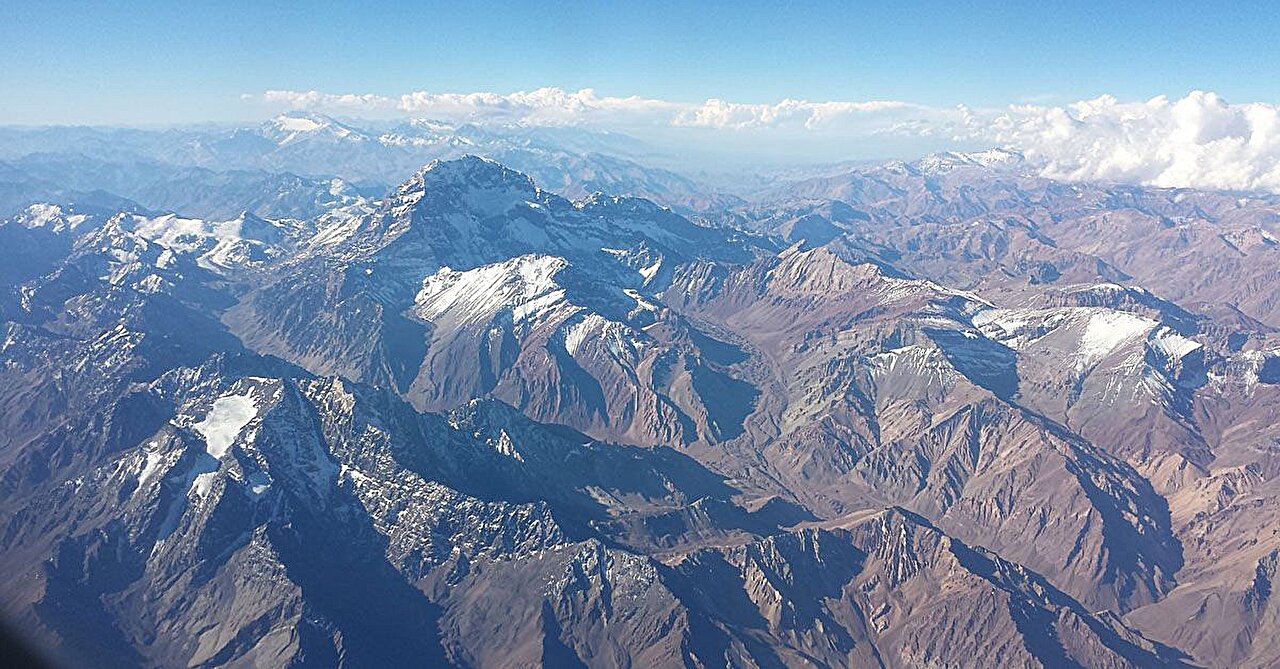
The southern Andes may have grown in repeated surges rather than through a slow, steady rise, according to research led by UC San Diego. The finding matters because the same deep-Earth process may help shape earthquake hazards, resources and landscapes across South America, the researchers said.
The study, led by Tomas Capaldi of Scripps Institution of Oceanography at UC San Diego, was published in Nature Communications. According to UC San Diego, the team identified a mechanism that could explain how mountain belts spread far into continents and why periods of rapid growth recur over millions of years.
Capaldi’s team examined volcanic histories, rock records and sediments deposited in nearby basins, according to UC San Diego. Those records pointed to a pattern in which volcanic activity gradually shifted toward the continental interior before rapid deformation helped build the mountain range.
The study links that inland shift in volcanism to weakening of the Earth’s crust. Once weakened, the crust can deform more quickly, producing shorter episodes of mountain growth instead of continuous uplift, according to the research team.
Volcanism as a signal
Mountain ranges preserve evidence of their growth in several kinds of geologic records, including volcanic deposits, structures in rock and sediment layers, Capaldi said in UC San Diego’s account of the work. The researchers used those records to trace changes through time in the southern Andes.
The paper identifies the inward advance of arc magmatism as a controlling factor in Andes mountain building. Arc magmatism is tied to volcanic activity above subduction zones, where one tectonic plate descends beneath another; the UC San Diego summary says the spatial movement of that volcanism was central to the team’s findings.
According to Capaldi, the pattern shows that processes deep within the Earth can reorganize quickly enough to alter landscapes and geologic hazards. The university said the pulses occur every few million years.
Possible hazard clues
The researchers also said tracking how volcanic activity migrates over time could offer clues about future episodes of mountain building and related earthquake risk. UC San Diego did not report a specific forecast for any location or earthquake event.
The study focuses on the southern Andes, part of the long mountain chain along western South America. Its conclusions challenge the idea, described by UC San Diego, that the range rose mainly through gradual, steady uplift.
The paper, “Inboard advance of arc magmatism regulates mountain building in the Andes,” lists Capaldi and colleagues as authors and appears in Nature Communications. UC San Diego said the work shows how volcanic, structural and sedimentary records can be combined to reconstruct the timing and causes of mountain growth.
This story draws on original reporting from Phys.org.