
AI method identifies two superconductors in faster materials search
Aalto University says machine learning and quantum calculations helped scientists find two superconducting compounds and narrow future searches.
By Priya Raghavan · Science Reporter
3 min read
An international research team has used machine learning and quantum physics to identify two superconducting materials, Aalto University said. The result matters because faster screening could help scientists search more efficiently for a room-temperature superconductor, a long-sought material that could carry electricity without energy loss under practical conditions.
The newly reported compounds are YRu3B2 and LuRu3B2, according to a study published in Physical Review Research. Aalto said the materials were first flagged by an AI-assisted screening process, then assessed with quantum calculations and confirmed experimentally by collaborators at Rice University.
Superconductors conduct electrical current with no resistance, but known materials generally need very low temperatures before they show that behavior, according to Aalto. That cooling requirement limits broader use and adds cost, even though superconductors already appear in quantum computers, medical neuroimaging systems, fusion reactors and maglev trains.
Päivi Törmä, an Aalto University professor who leads the SuperC consortium, said room-temperature superconductors could sharply reduce energy use if they replaced conventional conductors in systems such as computers and data centers. Aalto said researchers worldwide are trying to find a material that can operate at room temperature.
How the search worked
The team’s method combined machine-learning pre-screening with more detailed quantum analysis. Aalto said the algorithm narrowed a very large set of possible combinations of elements to a smaller group of candidates considered most likely to be useful.
Researchers then applied targeted quantum calculations to those candidates to test whether they could show superconductivity. After the theoretical work, Rice University researchers led by Professor Emilia Morosan made the compounds and verified that both were superconductors, Aalto said.
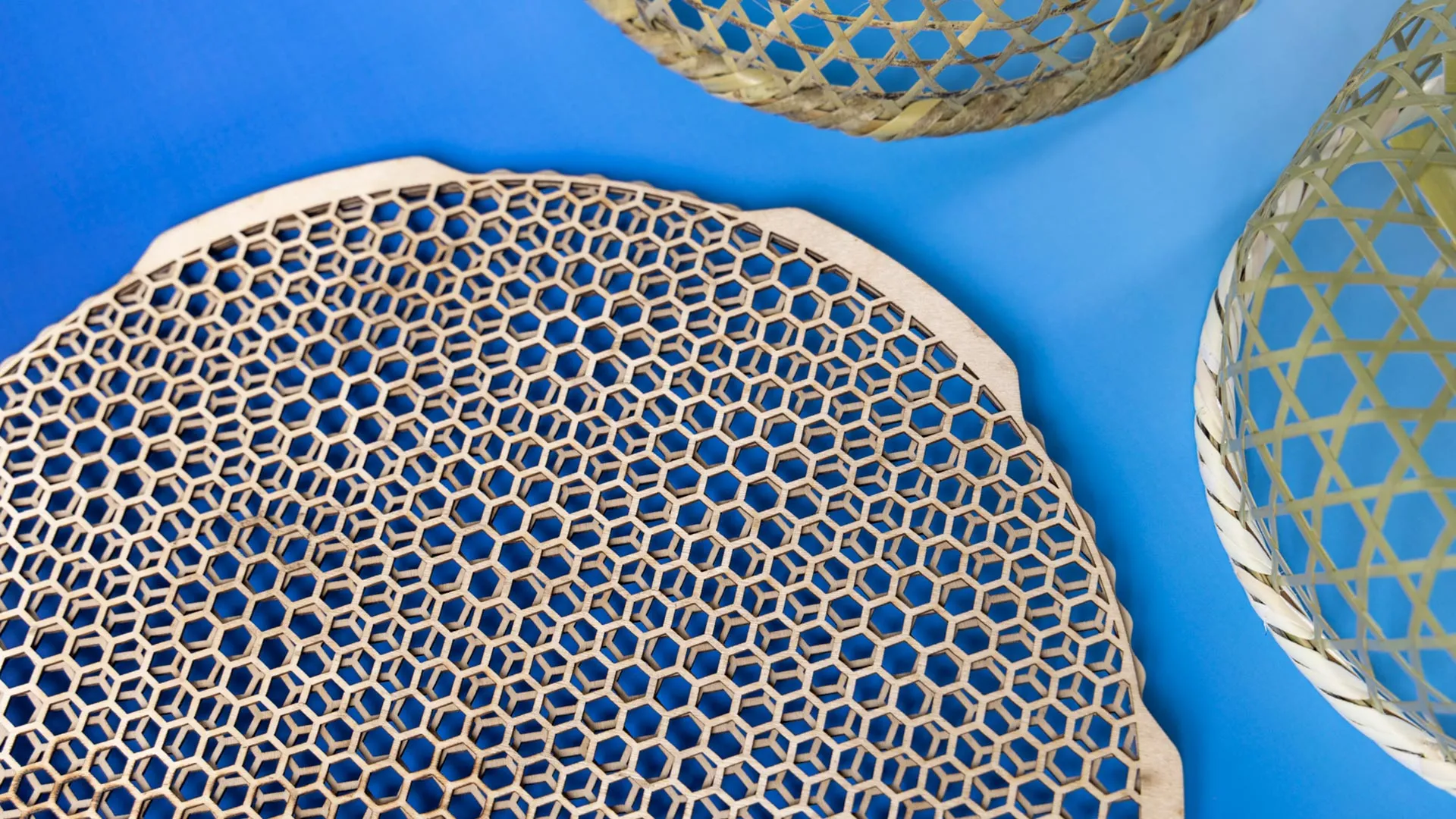
Aalto said YRu3B2 and LuRu3B2 gain their superconducting properties from electrons forming flat bands in a kagome lattice. The term refers to a geometric pattern named for a Japanese basket-weaving design.
The study’s authors include Rose Albu Mustaf, Sajilesh K. P., Sanu Mishra, Junze Deng, Yi Jiang, Kaja H. Hiorth, Eeli O. Lamponen, Martin Gutierrez-Amigo, Törmä, Miguel A. L. Marques, B. Andrei Bernevig and Morosan. The paper is titled “Machine-learning-guided discovery of kagome superconductors YRu3B2 and LuRu3B2.”
A bid to scale up predictions
Aalto said the discovery process for superconductors has often depended on chance because the number of possible materials is so large and the necessary calculations are demanding. Törmä said researchers have identified more than 7,000 superconductors over decades, while only about 20 have had their viability theoretically predicted.
Even a promising theoretical candidate can fail if it is too hard to synthesize or cannot be produced at scale, according to Törmä. The new workflow is meant to reserve heavier calculations for the strongest candidates rather than testing vast numbers of materials in full detail.
Törmä said machine learning could allow researchers to process billions of possible materials, according to Aalto. She described the approach as a step toward the SuperC consortium’s goal of finding a room-temperature superconductor by 2033.
SuperC was created in 2023 by Törmä and an international group of physicists, Aalto said. The consortium receives funding from The Kavli Foundation, Klaus Tschira Stiftung, Kevin Wells, the Jane and Aatos Erkko Foundation, the Keele Foundation, the Magnus Ehrnrooth Foundation, and the Neste and Fortum Foundation.
Aalto said the consortium’s work will be included in its Designs for a Cooler Planet exhibition from Sept. 1 to Oct. 30, 2026, in Greater Helsinki, Finland.
This story draws on original reporting from ScienceDaily.