
Wearable hand system improves grip and touch in small neurological injury trial
A 14-patient trial found a prototype combining a hand exoskeleton with nerve stimulation improved finger movement, touch and object handling.
By Priya Raghavan · Science Reporter
3 min read
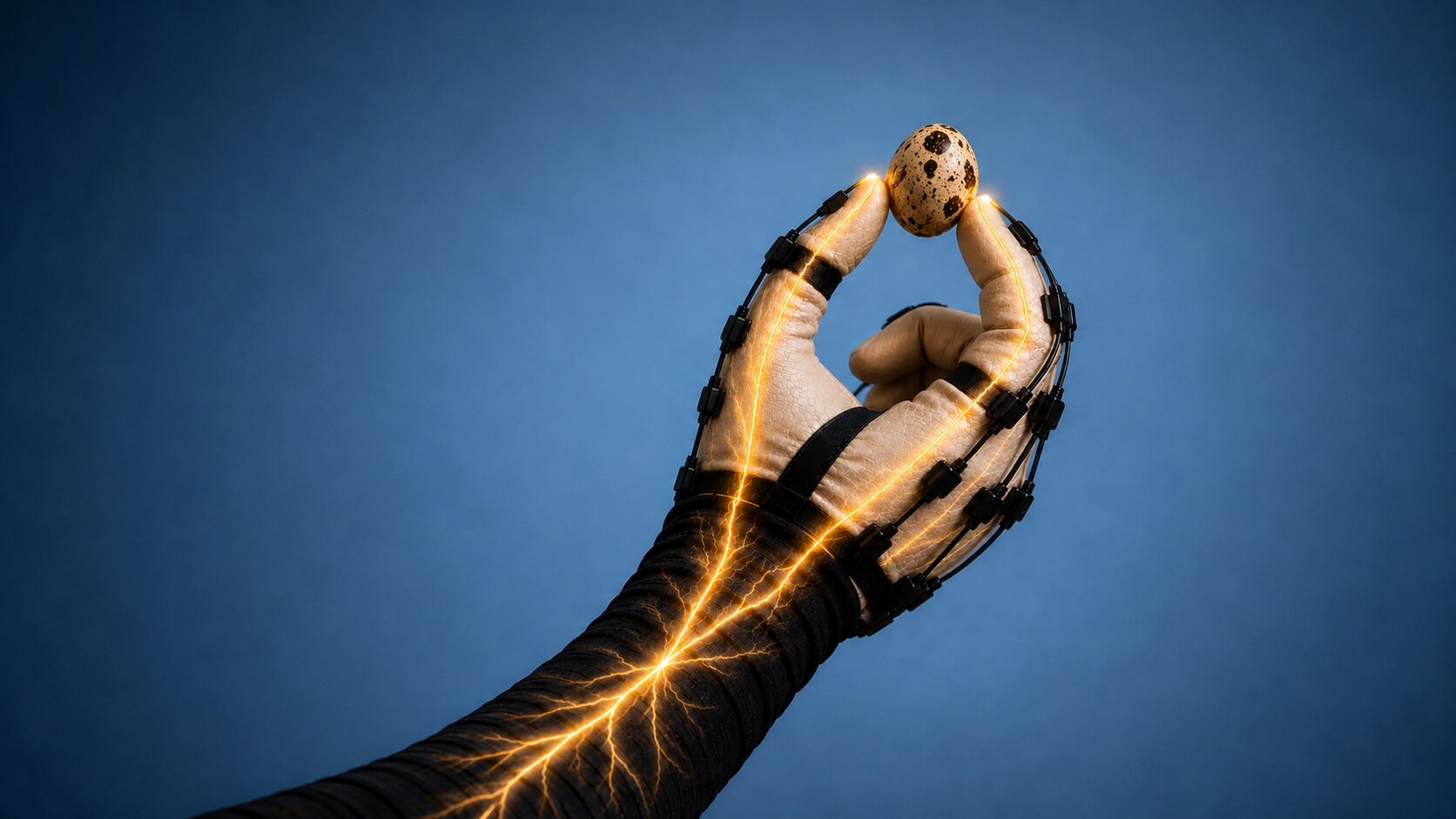
A wearable system that pairs a hand exoskeleton with electrical nerve and muscle stimulation improved touch, finger movement and grip control in a 14-patient clinical trial. The findings point to a possible assistive approach for people with hand impairment after spinal cord or brain injury, according to researchers reporting in Science Advances.
The system, called SensoExo, was developed by researchers at the Medical University of Vienna with collaborators at ETH Zurich, the Technical University of Munich and Medical Faculty Belgrade. The Medical University of Vienna said the device remains a prototype and has not been developed into a medical device for everyday use.
Hand function often remains limited after injuries to the central nervous system, affecting tasks such as grasping, eating, dressing and personal hygiene. Conventional rehabilitation can help, but the researchers said it does not always restore enough movement or sensation for daily use.
How the system works
SensoExo combines a wearable hand exoskeleton with a custom-fitted sleeve that delivers electrical stimulation through the skin to selected nerves and muscles in the forearm. Sensors on the fingers measure contact and grip force, then convert that information into electrical signals that give the user tactile feedback.
The system can also use functional electrical stimulation to assist finger opening and closing. Stanisa Raspopovic, the study director at the Center for Medical Physics and Biomedical Engineering at MedUni Vienna, said the goal was to support movement while also restoring some sense of touch.
“The interplay of strength, movement and the sense of touch is crucial, particularly when gripping,” Raspopovic said in a statement released by the university. “Without feedback on how firmly an object is being held, hand function remains significantly limited in everyday life.”
Small trial tested several support levels
The trial enrolled 14 people with neurological hand impairments. The Medical University of Vienna said all participants had sensory deficits and received tactile feedback through transcutaneous electrical nerve stimulation.
Seven participants with more severe motor impairments also received functional electrical muscle stimulation to help with hand opening and grip strength. Researchers compared three conditions: no assistance, an exoskeleton alone, and the combined exoskeleton-plus-stimulation system.
Eight of the 14 participants also performed grasp-and-release tasks using bulky and fragile objects. The researchers reported that the combined system produced the highest success rates in those functional tests.
For bulky objects, muscle stimulation helped support grip strength, according to the university. For fragile objects, sensory feedback helped users avoid applying excessive pressure.
Benefits varied by impairment
The study found that the combined approach added benefits beyond the exoskeleton alone. In participants with severe motor impairment, SensoExo improved finger mobility more than the exoskeleton alone, according to the researchers.
The tactile feedback also expanded the areas of the hand where users could perceive touch sensations. Andrea Cimolato, the study’s lead author at MedUni Vienna, said the results suggest that movement support and sensory feedback should be considered together.
“The system can be adapted depending on the individual's impairment profile,” Cimolato said. People with more severe movement problems benefited from extra motor support, while those with stronger sensory loss used feedback to handle fragile objects more precisely, he said.
Raspopovic said the study offers early clinical evidence that noninvasive neurostimulation combined with wearable robotics could support future personalized assistance systems. The researchers said larger studies, with patients grouped more closely by symptom type and severity, are needed to test how durable the effects are and whether the technology can be used in rehabilitation or daily life over longer periods.
This story draws on original reporting from Medical Xpress.