
Brainstem circuit tied to attention control in mouse study
Johns Hopkins researchers found that disabling specific brainstem neurons made mice highly distractible during a visual attention task.
By Priya Raghavan · Science Reporter
3 min read
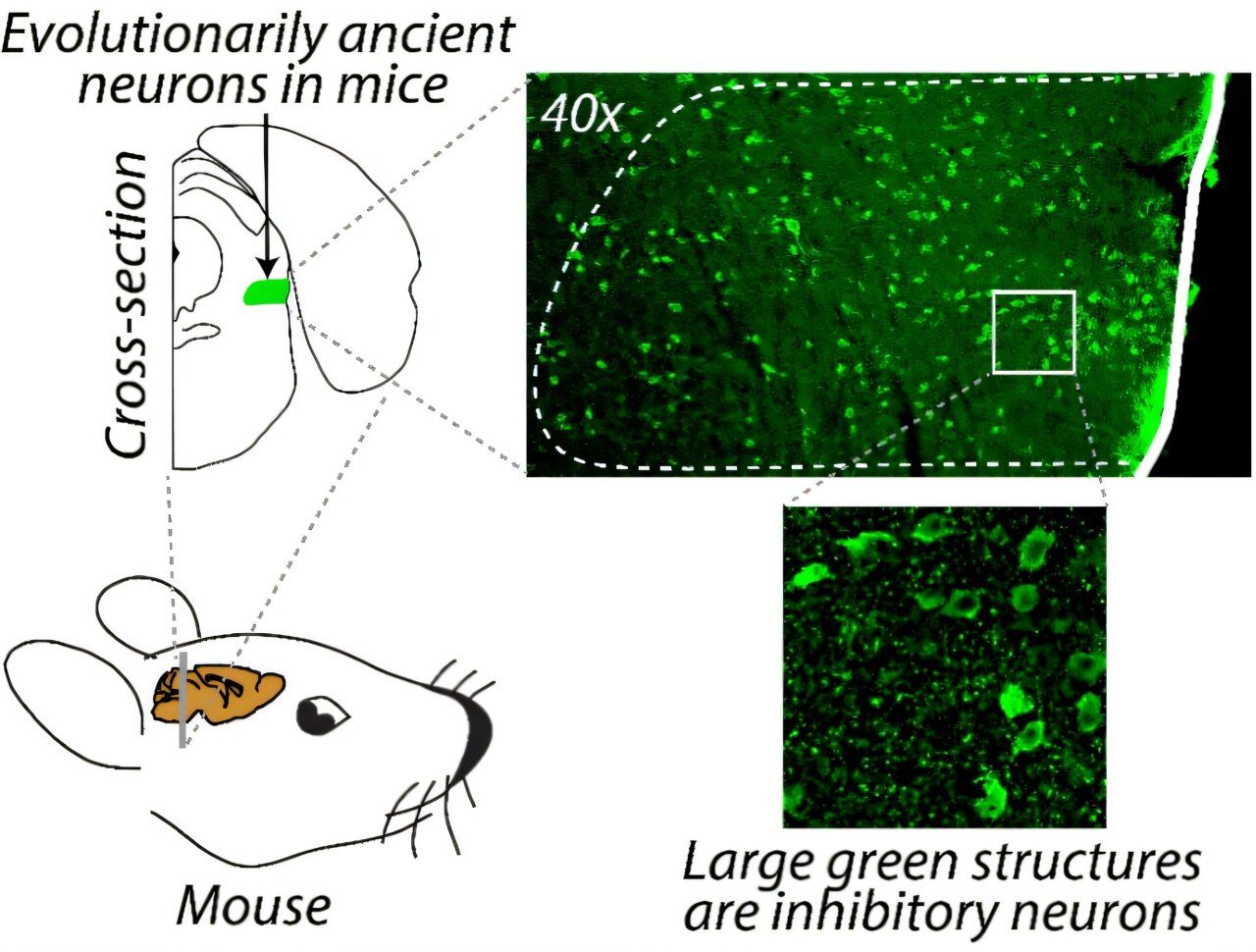
Johns Hopkins University researchers say they have identified a brainstem circuit that helps mice focus on relevant visual information while ignoring distractions. The finding, published in Nature Communications, points to an older part of the brain as a possible contributor to attention control, a function often linked to the prefrontal cortex.
The study centers on inhibitory neurons in a brainstem region that Johns Hopkins says exists across vertebrates, including birds, fish and humans. The researchers reported that when they temporarily switched off those neurons in mice, the animals became much more likely to respond to distracting information.
Senior author Shreesh Mysore, a Johns Hopkins neuroscientist who studies neural circuits and behavior, said the effect resembled a core feature of attention-deficit/hyperactivity disorder: weak distractions pulling attention away. Mysore said the same mice could ignore distractions again after the neurons were turned back on the next day.
A challenge to a cortex-centered view
Selective spatial attention allows animals to choose the most relevant information in a scene, such as locating someone in a crowd or following a conversation amid background noise. Johns Hopkins said impairments in that ability are associated with conditions including ADHD and autism.
Attention has often been tied to the prefrontal cortex, a brain region especially developed in humans and other primates. Lead author Ninad Kothari, a postdoctoral fellow in Johns Hopkins’ Department of Psychological and Brain Sciences, said that explanation does not fully account for attention-like abilities in animals without a highly developed prefrontal cortex.
Kothari said birds and fish have had such abilities for hundreds of millions of years, prompting the team to look for a more evolutionarily old system. Johns Hopkins said earlier work in birds, frogs and turtles by Mysore and other scientists helped guide the mouse study.
How the mice were tested
The researchers trained mice on a visual task designed to resemble a human attention test. According to Johns Hopkins, the animals had to focus on information shown straight ahead on a screen while disregarding competing signals appearing to the side.
The mice received rewards when they touched the screen with their noses at the location indicated by the forward visual cue instead of the distracting side cue. Johns Hopkins said the animals performed well until the researchers temporarily disabled the brainstem neurons under study.
Kothari said inactivating the neurons made the mice “hyper distractible.” The team then ran additional tests and reported that the animals’ poorer performance was not explained by problems with movement or with seeing objects.
Mysore said the deficit appeared limited to comparing competing information and choosing the location carrying the most relevant signal. He described the brain region as an “attentional selection engine” that helps determine what information deserves focus at a given moment.
Next questions for human attention
The researchers now want to study how the neurons control spatial attention across vertebrates and whether they have a similar role in people. Mysore said current evidence suggests the neurons are present in humans, while the question of whether they drive selective spatial attention in humans remains open.
Johns Hopkins said the team hopes to measure the activity of these neurons in people with ADHD and autism. If future work shows their function is affected in those conditions, the researchers said the finding could help guide more targeted drugs or treatments.
The paper’s authors include Kothari, Arunima Banerjee, Qingcheng Zhang, Wen-Kai You and Mysore, all of Johns Hopkins. The study was published under the title “Evolutionarily old brainstem neurons are required for the control of selective spatial attention,” with DOI 10.1038/s41467-026-72340-9.
This story draws on original reporting from Medical Xpress.