
Ultrasound stimulation tied to better movement in stroke model
A mouse study suggests transcranial ultrasound stimulation may improve post-stroke gait by changing communication across motor-related cortical networks.
By Tom Brennan · Health & Medicine Correspondent
2 min read
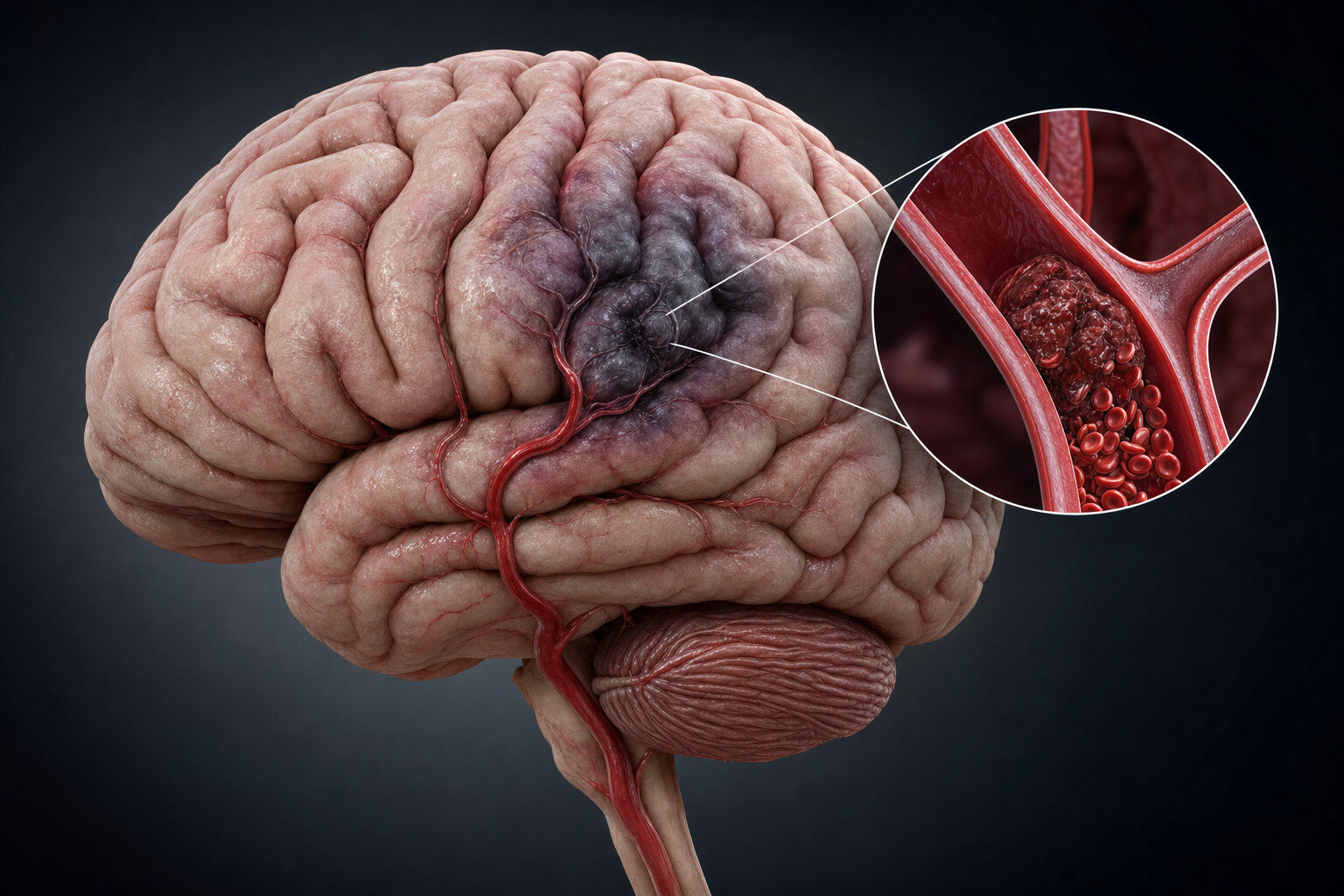
Transcranial ultrasound stimulation improved walking coordination in mice after ischemic stroke, according to a study published in The Journal of Neuroscience. The findings matter because researchers are trying to understand how the treatment may affect brain circuits involved in movement after stroke.
The Society for Neuroscience reported that Yi Yuan of Yanshan University and colleagues used a mouse model of ischemic stroke to study how transcranial ultrasound stimulation, or TUS, interacts with the brain during behavior. The work focused on motor coordination, a common problem after stroke.
According to the Society for Neuroscience, TUS is being studied as a possible way to improve coordination after stroke, but the biological mechanisms behind any motor gains have remained unclear. The new study examined activity in the cortex, a brain region involved in supporting movement, while mice moved around.
How the study was conducted
Yuan and colleagues applied TUS to stroke-damaged brain areas in the mice over one week, according to the Society for Neuroscience. The researchers also measured cortical activity as the animals walked, allowing them to compare changes in brain network activity with changes in movement.
The paper, titled “Low-Intensity Transcranial Ultrasound Stimulation Improves Motor Behavior and Modulates Cortical Functional Network Connectivity in Mice with Ischemic Stroke,” was published in The Journal of Neuroscience in 2026. The publication lists the DOI as 10.1523/JNEUROSCI.2329-25.2026.
What researchers found
The Society for Neuroscience said TUS improved gait in the mice and restored communication between cortical brain networks. The researchers also linked the changes in those networks to the observed improvements in behavior.
That connection suggests the treatment may influence motor recovery through changes in cortical network connectivity, according to the authors. The study does not establish that the same effects will occur in people, and the reported work was conducted in mice.
The authors said the findings point to neural mechanisms that ultrasound may target to improve motor function after stroke. They also said additional work in more advanced animal models is needed before the approach can be better understood.
The study adds to a growing body of research on noninvasive brain stimulation after stroke, while keeping the focus on a specific question: how an ultrasound-based intervention may alter brain communication during movement. According to the Society for Neuroscience, the findings offer a starting point for further testing of TUS in post-stroke motor recovery.
This story draws on original reporting from Medical Xpress.