
New training device helps novice workers pool diagnostic samples
Researchers say a low-cost device improved sample-pooling accuracy among users with little or no lab experience.
By Priya Raghavan · Science Reporter
3 min read
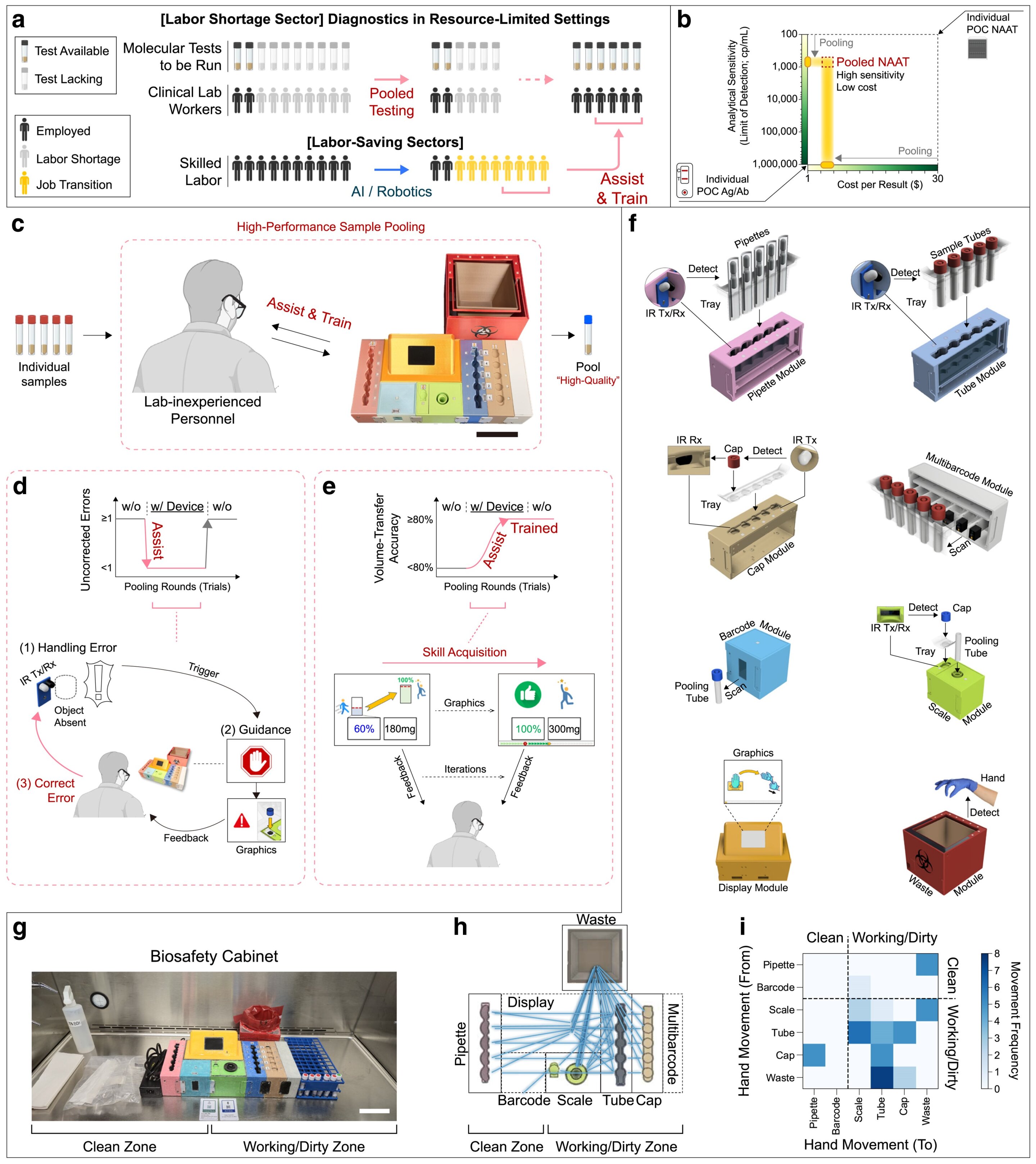
Researchers have built a device meant to train and guide workers with little laboratory experience through a key step in infectious disease testing. The system could help smaller clinics, mobile testing programs and decentralized health sites use pooled nucleic acid tests when trained staff or automated equipment are out of reach, according to a study in PNAS Nexus.
Minkyo Lee, Rustem F. Ismagilov and colleagues described an interactive device that monitors users as they pool samples for nucleic acid amplification tests, or NAATs. The authors said those tests can detect a wide range of infectious pathogens, but the preparation work can require careful handling and documentation.
In sample pooling, workers combine equal volumes from multiple specimens and test the combined sample. The PNAS Nexus authors said pooling can lower per-sample costs and raise testing throughput while maintaining clinical performance.
The same process can also introduce errors, according to the authors. Workers must move the right clinical specimens, avoid cross-contamination and keep accurate records, which can be difficult in settings without experienced laboratory staff.
How the device works
The device gives step-by-step instructions while tracking each user’s progress through the pooling workflow, the researchers reported. It weighs each sample tube and gives real-time feedback when a user adds too much or too little material.
According to the study, the system is designed to help users correct mistakes when that is still possible. If the device detects an error that cannot be fixed, it instructs the user to stop the process.
The authors said they designed the apparatus for broad access rather than high-end laboratory automation. Each unit costs about $600 and is built from low-cost, off-the-shelf electronic parts, 3D-printed modules and open-source systems, according to the study.
The researchers said the device is aimed at small- and medium-scale health settings, including mobile and decentralized testing sites. In those locations, the authors said, trained personnel and automated liquid-handling systems may be unavailable or too costly.
Tested with novice users
The team evaluated the device with 48 participants, 37 of whom had little or no previous laboratory experience, according to PNAS Nexus. Participants used the system to pool mock clinical samples.
Compared with paper instructions, the device helped users produce pools with high accuracy, the authors reported. The study also found fewer uncorrected handling errors, better volume-transfer skills and high-quality pooled samples among users guided by the device.
The authors said the findings point to a role for smart training tools that assist workers instead of replacing them. They framed the device as one possible answer to shortages of trained personnel that limit health care capacity in both developed and developing countries.
According to the researchers, train-and-assist tools could make pooled NAATs more practical and affordable for large surveillance programs. They said such programs include efforts that estimate low disease prevalence and help decide when mass drug administration can be stopped.
This story draws on original reporting from Medical Xpress.