
Skin immune cells in infancy tied to adult immune function
Hospital for Special Surgery researchers say Langerhans cells help build skin lymphatic vessels early in life, with effects that may last into adulthood.
By Priya Raghavan · Science Reporter
3 min read
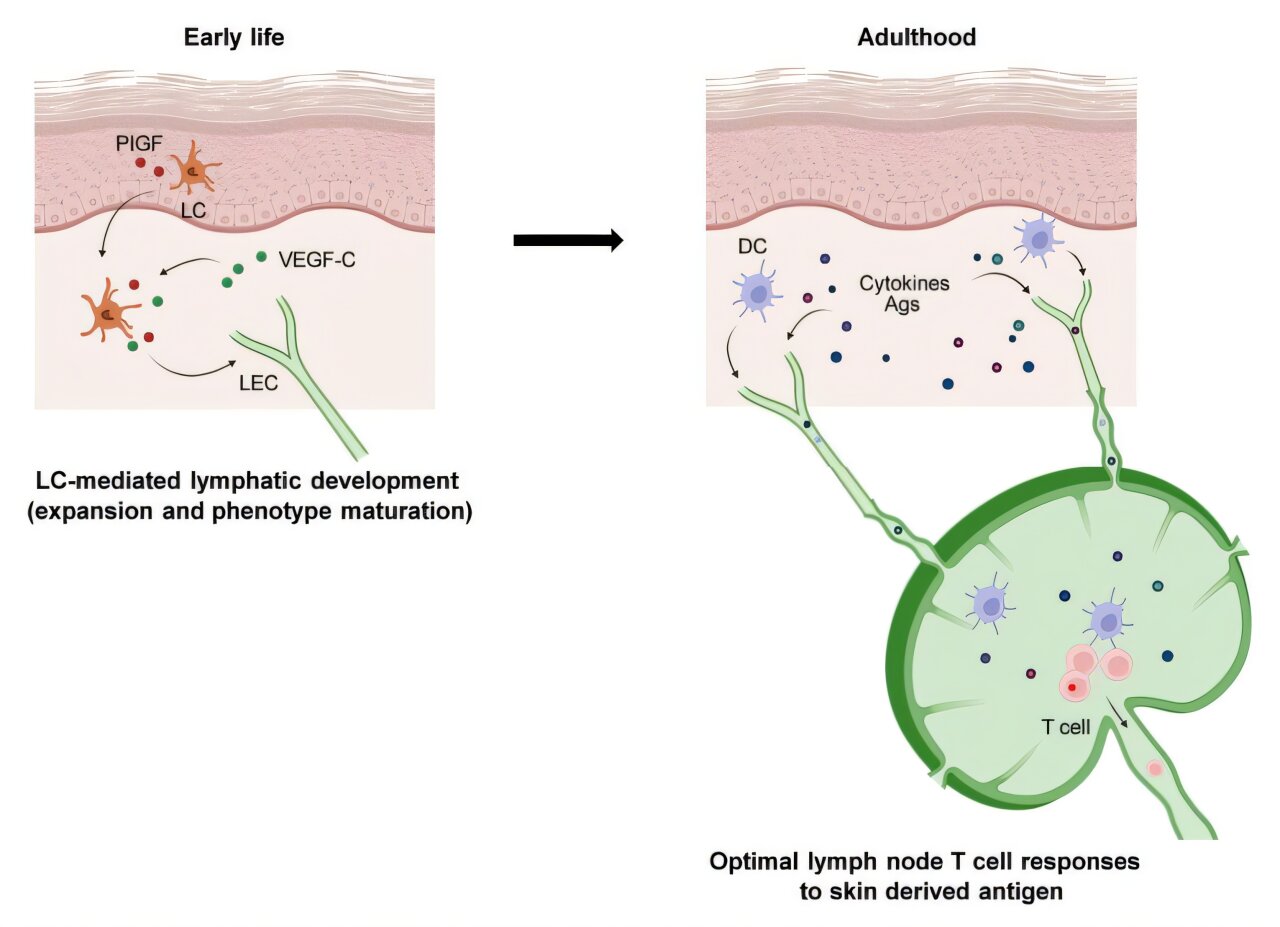
Researchers at Hospital for Special Surgery report that specialized immune cells in the skin help shape lymphatic vessel development early in life. The finding matters because the lymphatic system carries signals from tissues that help the body respond to infection, injury, vaccination and inflammation, according to the research team.
The study, published in Science Immunology, focuses on Langerhans cells, a type of immune cell found in the skin. The HSS team says these cells do more than react to threats; during early life, they help guide the growth and organization of lymphatic vessels in the skin.
Lymphatic vessels form part of the body’s immune communication network, according to HSS. When that network works poorly, the body may have more trouble fighting infections, responding to vaccines, repairing tissue or controlling inflammation, the researchers said.
Early skin biology with later effects
The HSS study identifies what the authors describe as a new role for Langerhans cells in building immune infrastructure. According to the team, disruption of this process during early life can have consequences for immune function later on.
Theresa T. Lu, senior author of the study and holder of the St. Giles Chair for Research in the HSS Research Institute, said the work shows skin immune cells help construct systems the immune response depends on. Lu, who is also a member of pediatric rheumatology at HSS, said the findings point to skin health as a factor in lymphatic vessel development and immune function in health and disease.
JiHyun Sim, the study’s first author and a postdoctoral fellow at HSS, said the findings add to understanding of how early-life biological events influence immune function over time. Sim said the researchers want to learn whether disruption of this process contributes to autoimmune disease.
Possible implications for childhood skin injury and disease
HSS said the research suggests early-life conditions that affect the skin may interfere with Langerhans cells and lymphatic development. The examples cited by the researchers include severe sunburn, burns and autoimmune diseases such as lupus.
According to HSS, such disruption may contribute later to weaker immune responses, including lower vaccine effectiveness, greater susceptibility to infection, poor healing and autoimmune complications. The study does not present those outcomes as established clinical predictions for individual patients, but as implications raised by the biological mechanism the researchers identified.
Lu said the results support protecting skin health early in life. She also said the work points toward possible approaches aimed at strengthening immune function through the lymphatic system.
A broader view of immune development
The study adds to research linking early-life health and environmental exposures with disease risk in adulthood, according to HSS. It also describes a mechanism in which immune cells influence tissue development rather than only activating immune defenses.
The publication is titled “Langerhans cell control of early-life dermal lymphatic development shapes adult immunity.” The authors say a clearer understanding of how Langerhans cells regulate lymphatic vessel growth could inform future strategies to improve immune responses and prevent disease across the lifespan.
This story draws on original reporting from Medical Xpress.