
Peptide protects dopamine neurons in mouse model of Parkinson’s
Brazilian researchers report that Ac2-26 reduced neuroinflammation and neuron loss in mice, but the work remains early and preventive.
By Priya Raghavan · Science Reporter
3 min read
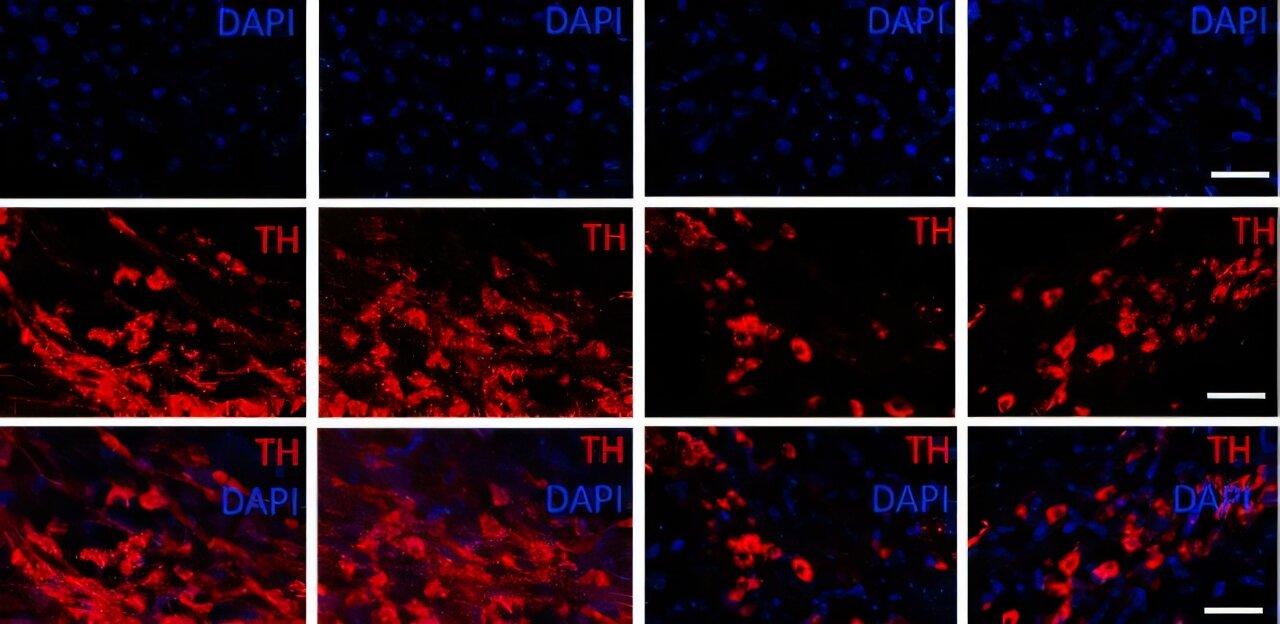
A peptide with anti-inflammatory effects protected brain cells in a mouse model of Parkinson’s disease, according to researchers at the Federal University of São Paulo in Brazil. The finding points to a possible strategy that targets inflammation rather than replacing dopamine, but the team said the work is still at an early experimental stage.
The study, published in Neuropharmacology, examined Ac2-26, a short fragment of the protein Annexin A1. According to the researchers, Annexin A1 is naturally produced in rodents and humans, and earlier animal work has linked it to control of neuroinflammation associated with Parkinson’s disease.
Parkinson’s disease is tied to the loss of neurons that make and release dopamine, a neurotransmitter involved in movement, motivation, reward and pleasure. As those cells degenerate, dopamine levels fall and patients can develop motor problems such as tremors and freezing of gait, according to the study team.
Cristiane Damas Gil, head of the Department of Morphology and Genetics at the São Paulo School of Medicine at UNIFESP and an author of the paper, said the approach differs from standard treatment because the peptide acts on neuroinflammation instead of dopamine replacement. Gil said inflammatory reactions in neurodegenerative disease affect neurons and nearby cells, and that reducing that process may help protect brain tissue from cell death.
How the mouse study worked
To model Parkinson’s disease, the researchers injected a neurotoxic substance into the animals’ brains to trigger neuronal death and disease-like symptoms. Around the same time, they gave Ac2-26 through an injection into the abdomen.
The experiments included mice that produced Annexin A1 and genetically modified mice that lacked the protein. The paper’s publication details identify the model as a 6-OHDA model of Parkinson’s disease.
The researchers reported that Ac2-26 helped protect dopaminergic neurons from degeneration and reduced neuroinflammation in the model. The findings suggest a preventive effect at the start of injury, rather than proof that the peptide can repair established damage.
Current Parkinson’s therapy mainly aims to manage motor symptoms caused by dopamine deficiency. Luiz Philipe de Souza Ferreira, the study’s first author, said levodopa remains the gold-standard drug and can produce strong benefits, especially early in treatment or during acute use.
Ferreira said long-term levodopa treatment can become less effective and can be associated with motor complications and changing treatment response. He said those limits are one reason researchers are looking for additional treatment approaches for Parkinson’s disease.
Sex differences emerged
The study also found differences between male and female mice. After the injury used to simulate Parkinson’s disease, female mice initially did better on movement tests, but that advantage did not persist over time, according to the researchers.
Gil said that early resilience was seen even in female mice without Annexin A1. Ferreira said neuron loss was more apparent in males, which made it easier for the team to measure the protective effect of Ac2-26 against degeneration.
The researchers also reported that inducing the disease changed the reproductive cycle of female mice. Ferreira said that result underscores the need for protocols that account for biological sex in Parkinson’s research.
Ac2-26 has been studied as an anti-inflammatory agent in other diseases, according to the UNIFESP team, but it has not been developed into a medicine. The researchers also noted that Annexin A1 is altered in Parkinson’s disease and is associated with brain inflammation and dopaminergic neurons involved in movement control.
Gil said the next step is to test whether Ac2-26 can reverse damage caused by Parkinson’s disease. She said evidence of reversal would make the peptide a more promising treatment candidate.
This story draws on original reporting from Medical Xpress.