
NMT1 antiviral study finds cancer-trial drug may weaken virus spread
University of Queensland-led lab work found blocking NMT1 reduced several viral infections, but researchers say clinical use remains unproven.
By Tom Brennan · Health & Medicine Correspondent
3 min read
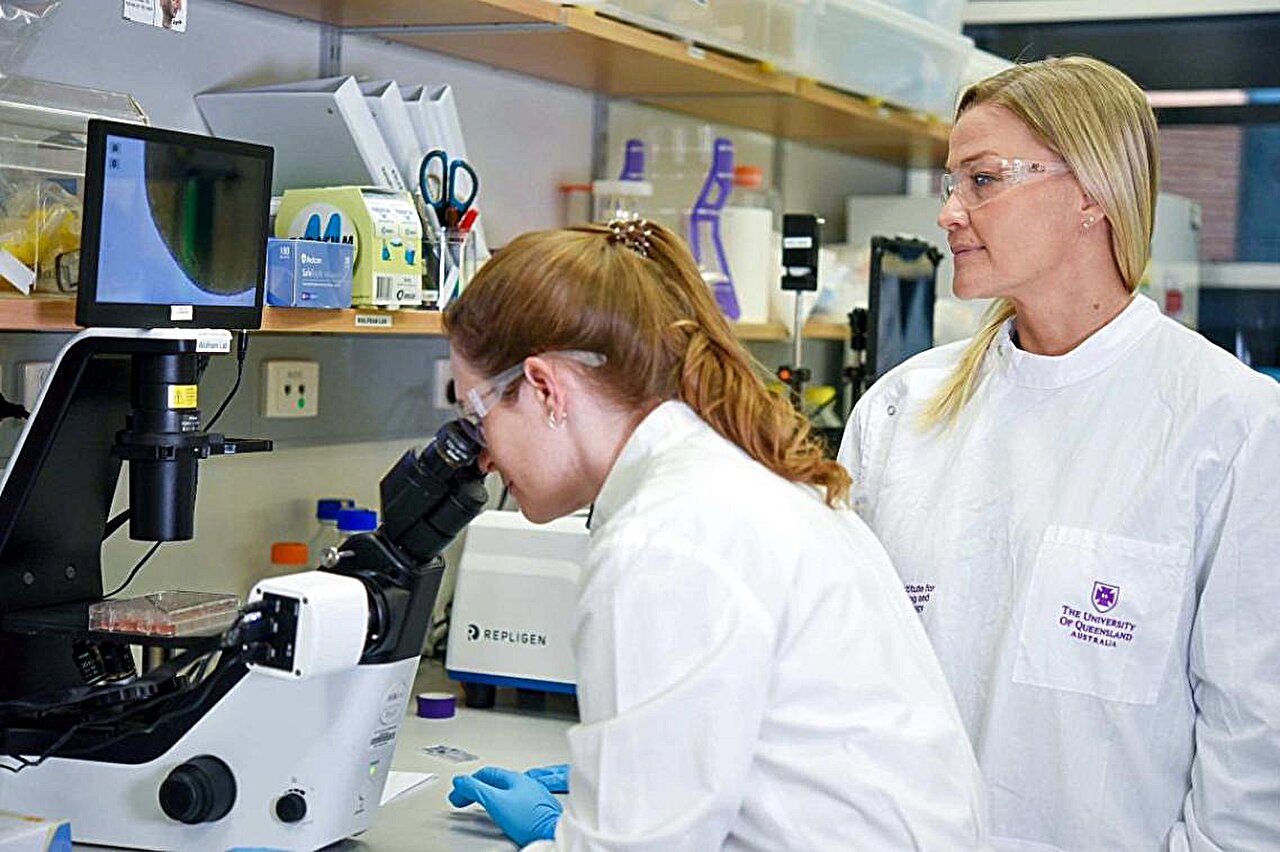
A new NMT1 antiviral study led by University of Queensland researchers found that blocking a human cell enzyme can make several viruses less infectious in laboratory tests. The work matters because the approach targets a host-cell process used by viruses, rather than the viruses themselves, which the researchers say could reduce the chance of drug resistance.
The study, published in Nature Communications, grew out of an unexpected observation by Dr. Merja Joensuu, a neuroscientist and biochemist at UQ’s Australian Institute for Bioengineering and Nanotechnology. Joensuu said she was studying unrelated processes inside the human brain when she noticed disruption in a cellular pathway used by many human viruses to move from one cell to another.
Joensuu worked with Professor Giuseppe Balistreri of the University of Helsinki and other researchers to look for a compound that could inhibit that pathway. The team identified a drug candidate already being tested as a cancer treatment, according to the University of Queensland.
How would an NMT1 antiviral work?
The compound targets N-myristoyltransferase 1, or NMT1, a human enzyme involved in controlling where proteins go and how they work inside cells, the researchers reported. Viruses rely on human cells to produce new viral particles, so changing a host-cell process can interfere with how those particles are assembled.
Balistreri said the drug disrupts cell function in a way that causes newly made viruses to form incorrectly. According to the research team, the virus continues producing and releasing weaker versions of itself, potentially giving the immune system more time to clear the infection.
In cell-culture experiments, the researchers tested the compound against several viruses. The list included SARS-CoV-2, the virus that causes COVID-19; respiratory syncytial virus, a major cause of pneumonia in infants; and vesicular stomatitis virus, which can infect cattle, horses and, in some cases, people.
The University of Queensland said infection levels fell by about half after one day of treatment in the lab tests. After two days, the reduction reached as much as 90%, according to the researchers.
Which diseases could the approach affect?
The study directly tested the compound in cell cultures against SARS-CoV-2, respiratory syncytial virus and vesicular stomatitis virus. Joensuu said the findings also suggest the strategy could potentially apply to viruses with high mortality rates and long incubation periods, including Ebola and hantavirus.
The researchers framed the work as a possible broad antiviral strategy because many viruses depend on host-cell machinery to copy themselves and spread. Joensuu said that by acting on the host cell rather than directly attacking the virus, the approach may leave the virus with fewer chances to mutate around the treatment.
What has to happen before patients could use it?
The drug is not approved for antiviral use, and the researchers said more studies are needed to test its safety and effectiveness for infections. The current results come from laboratory cell-culture work, not from an approved treatment for COVID-19, RSV or other viral diseases.
Joensuu said the approach could eventually be explored for respiratory infections in forms such as a nasal spray or inhaler. The publication lists the study as “Inhibition of host N-myristoylation compromises the infectivity of SARS-CoV-2 due to Golgi-bypassing egress,” with Saber H. Saber and colleagues as authors.
This story draws on original reporting from Medical Xpress.