
Gut bacterium tied to lower anxiety in diarrhea-predominant IBS study
Researchers report that Phocaeicola vulgatus reduced anxiety-like behavior in mice, pointing to a possible microbiome-based approach for IBS-D.
By Priya Raghavan · Science Reporter
3 min read
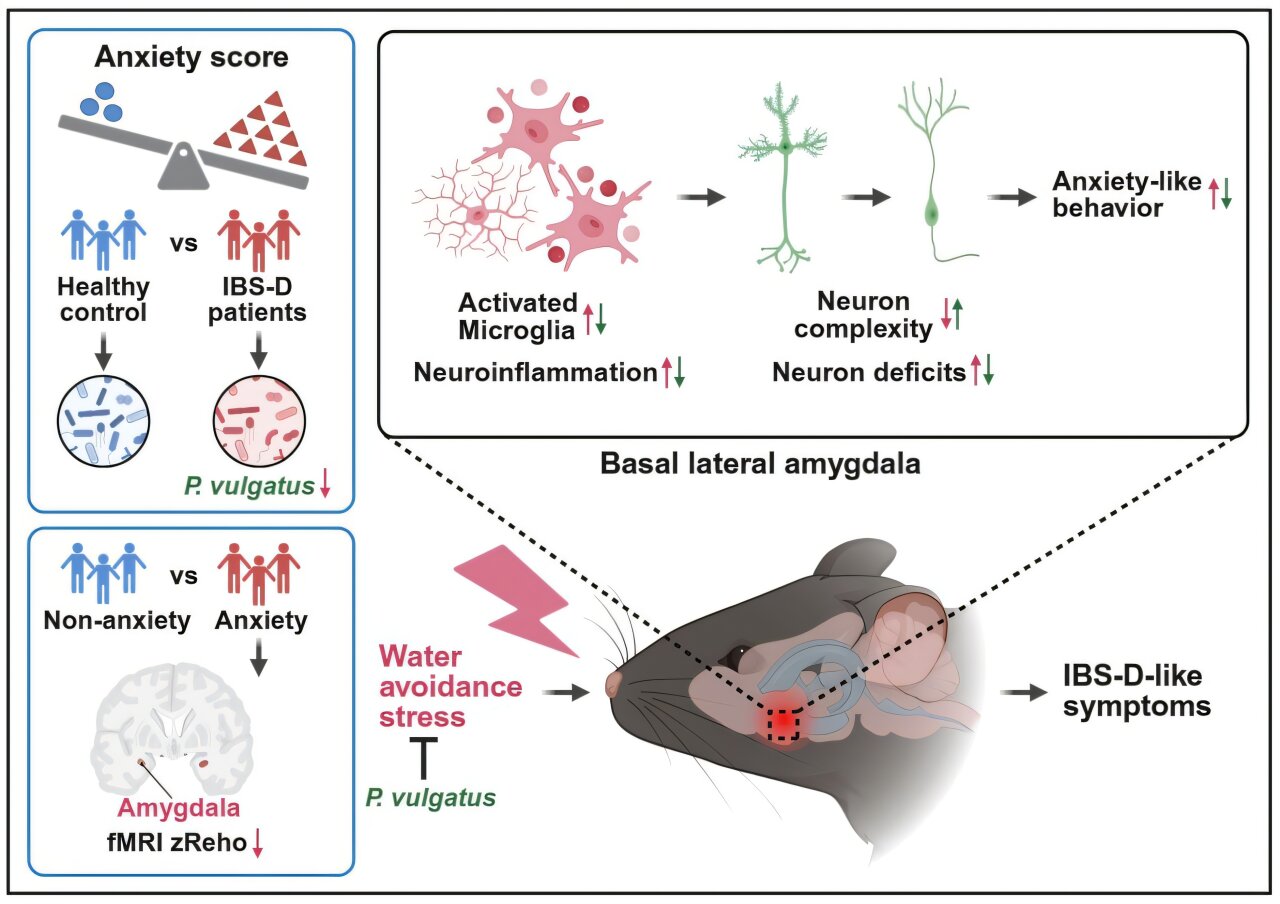
A gut bacterium may help explain why anxiety often appears alongside diarrhea-predominant irritable bowel syndrome, according to a study published in Translational Psychiatry. The findings matter because they point to a possible treatment target for patients whose bowel symptoms and anxiety occur together.
Researchers from Wuhan University of Science and Technology and Huazhong University of Science and Technology focused on Phocaeicola vulgatus, a bacterial species found in the digestive tract. Their work suggests that lower levels of the bacterium are associated with anxiety in IBS-D, and that adding it back in mice reduced anxiety-like behavior.
IBS is marked by abdominal pain, bloating and altered bowel habits, and is estimated to affect 10% to 15% of people worldwide. Anxiety is often reported in people with IBS, but the biological connection between the gut disorder and mental symptoms has remained unclear.
The team studied diarrhea-predominant IBS, or IBS-D, a subtype linked with frequent loose stools. Bai Tao, the senior author, told Medical Xpress that the researchers often saw high rates of anxiety among IBS-D patients in clinical practice, while the mechanisms behind that overlap were still not well defined.
Patient data and mouse studies pointed to the amygdala
In clinical data gathered from people with IBS-D, about 35% of patients reported anxiety, according to the study. Among those anxious patients, stronger anxiety was associated with more severe IBS-D symptoms.
Brain imaging also showed unusual activity in the amygdala among anxious patients, the researchers reported. The amygdala is a deep brain region involved in fear, intense emotion and automatic threat responses.
To test whether gut microbes could drive both bowel and anxiety symptoms, the researchers used a stress-based mouse model designed to reflect IBS and anxiety features seen in humans. Tao told Medical Xpress that fecal microbiota transfer experiments showed gut bacteria alone could trigger gut pain and anxious behaviors in mice.
The team found that Phocaeicola vulgatus was much less common in both IBS-D patients and the model mice, according to the paper. Lower levels of the bacterium were linked with worse anxiety and altered amygdala function.
Further genetic analyses in the mouse model supported a protective role for the bacterium against anxiety, the researchers reported. When the mice were given live Phocaeicola vulgatus, their anxiety-like behavior eased, along with signs of inflammation and neuronal damage in the amygdala.
Clinical use remains unproven
The results are early and do not establish that Phocaeicola vulgatus is ready for use as a treatment in people. The authors said clinical studies would be needed to test both therapeutic potential and safety.
Tao told Medical Xpress that the study offers a possible “psychobiotic” treatment direction for IBS patients with anxiety. He also said bilateral amygdala brain signals could serve as a biomarker for anxiety that occurs with IBS-D.
The researchers plan to study which metabolites produced by Phocaeicola vulgatus may cross the blood-brain barrier and affect brain inflammation. Tao said the team also wants to develop postbiotics, rather than live bacteria, to reduce infection risks.
This story draws on original reporting from Medical Xpress.