
Caspase-11 osteoporosis study points to bone-loss target
Chonnam National University researchers found caspase-11 drives osteoclast formation in models of pathological bone loss.
By Tom Brennan · Health & Medicine Correspondent
3 min read
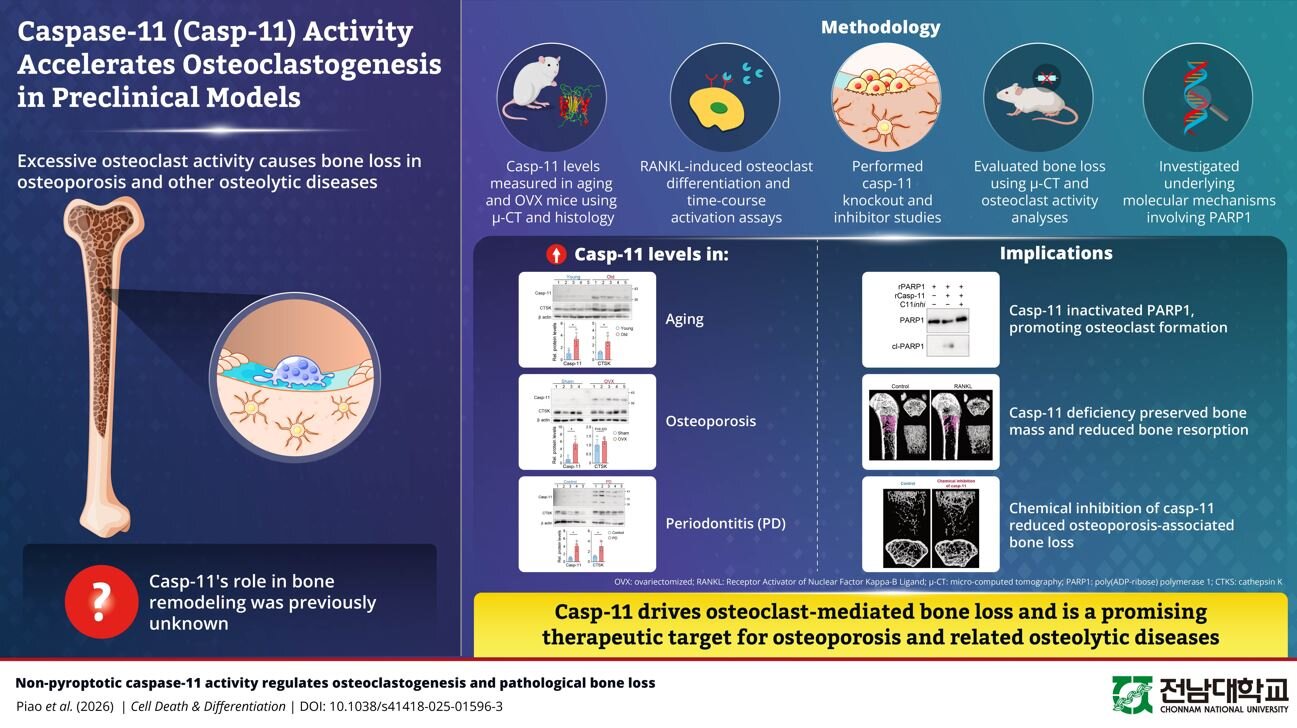
A caspase-11 osteoporosis study from Chonnam National University has identified the inflammatory enzyme as a driver of bone-destroying cell formation. The finding matters because excessive activity by those cells, called osteoclasts, is a central feature of osteoporosis and other disorders marked by bone loss.
The work, led by professor Jeong-Tae Koh and published in Cell Death & Differentiation, suggests caspase-11 may be a target for more precise treatments. Current therapies can slow bone loss, according to the university, but long-term use may carry limits and side effects.
Bone is renewed through a balance between osteoblasts, which build bone, and osteoclasts, which remove old or damaged bone. Osteoporosis develops when resorption by osteoclasts outpaces new bone formation, leaving bones weaker and more prone to fracture.
What is caspase-11's role in osteoporosis?
Caspase-11 is best known as an innate immune enzyme involved in noncanonical inflammasome signaling and pyroptosis, an inflammatory form of programmed cell death during bacterial infection. The Chonnam National University team found that it also helps start osteoclast differentiation through a mechanism separate from its established immune function.
The researchers examined caspase-11 in mouse models involving aging, ovariectomy-induced osteoporosis and periodontitis, all associated with excessive bone resorption. They also studied osteoclast formation triggered by RANKL, a signal that promotes development of bone-resorbing osteoclasts.
Across those models, caspase-11 levels rose consistently, the researchers reported. During RANKL-induced osteoclastogenesis, the enzyme became active early and was needed to initiate the differentiation process.
How the researchers tested the bone-loss mechanism
The team used genetic knockout mice, gene-silencing methods and VX-765, a pharmacological inhibitor. They assessed bone structure with micro-computed tomography and measured osteoclast formation and activity using TRAP staining and bone resorption assays.
When caspase-11 was deleted genetically or blocked with a drug, osteoclast formation and bone-resorbing activity fell significantly, according to the study. In living animals, those interventions helped preserve bone mass.
The researchers also traced a molecular route for the effect. They reported that caspase-11 moved into the nucleus and inactivated PARP1, which the study describes as a suppressor of osteoclast differentiation.
VX-765 treatment reduced bone loss associated with osteoporosis in the study models, strengthening the case for caspase-11 as a potential therapeutic target. The findings do not establish a new approved treatment, but they identify a disease mechanism that future therapies could be designed to address.
Why the finding broadens caspase-11 research
Koh said the study showed an inflammation-associated protein can control osteoclasts, pointing to a previously unknown role in bone loss. He said the work could support development of treatments for diseases involving excessive bone destruction, including osteoporosis.
The university said the findings also raise a broader biological point: proteins usually studied in immune responses may have important functions in other systems. In this case, caspase-11 was linked to bone remodeling through PARP1 inactivation and pathological bone resorption.
This story draws on original reporting from Medical Xpress.