
CAR-T therapy genetics linked to benefits and toxic side effects
A Science Immunology study found inherited variants tied to CAR-T response and toxicity in aggressive lymphoma patients.
By Tom Brennan · Health & Medicine Correspondent
3 min read
CAR-T therapy genetics may help explain why some patients with aggressive lymphoma respond well to the treatment while others develop serious side effects, according to a study published in Science Immunology. Researchers led by Mass General Brigham Cancer Institute, the Broad Institute of MIT and Harvard, and Dana-Farber Cancer Institute found links between inherited gene variants and both treatment activity and toxicity.
CAR-T cell therapy uses a patient’s own immune cells, which are altered so they can recognize and attack certain cancer cells. Mass General Brigham said the approach has changed treatment for blood cancers including lymphoma, but can also produce dangerous adverse reactions in some patients.
The team sequenced whole genomes from more than 200 people with aggressive lymphoma who took part in two major CAR-T therapy clinical trials, according to Mass General Brigham. The researchers then looked for inherited variants associated with patient outcomes, CAR-T cell expansion and treatment-related toxicity.
How do genes affect CAR-T therapy?
The study suggests that inherited DNA differences can affect how engineered immune cells behave after infusion. Because CAR-T products are made from an individual’s T cells, Mass General Brigham oncologist Mark B. Leick said patient-to-patient genetic differences may matter in a way they do not for therapies manufactured identically for many people.
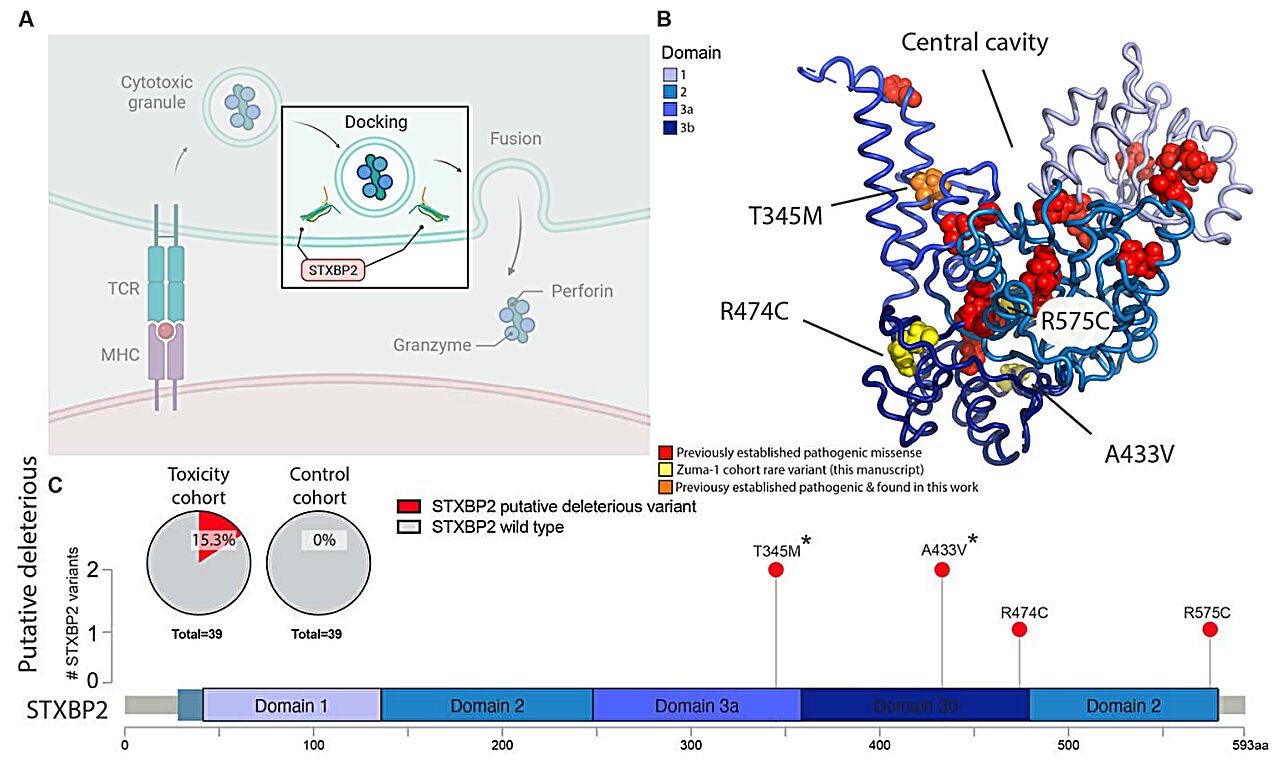
In one of the clinical trials, the researchers found that patients whose T cells carried variants that shut down the STXBP2 gene were more likely to have CAR-T-related toxicity, according to Mass General Brigham. In separate donor T-cell experiments, cells engineered to lack STXBP2 or to carry STXBP2-silencing variants set off inflammation, the institution said.
The researchers also reported gene signals that pointed in the other direction. Across both clinical trials, variants in ADAMTSL3 were associated with protection from treatment-related toxicity, according to the study summary from Mass General Brigham.
Variants in PTPN22 were strongly linked to greater CAR-T cell expansion, the researchers found. CAR-T expansion is considered a marker tied to effective therapy, according to Mass General Brigham.
What could the findings change?
The findings do not describe a new clinical test or treatment decision rule. They suggest that inherited variants in several genes may shape the safety and activity of CAR-T cells and other immune cell therapies, according to the research team.
Marcela Maus, co-senior author and director of the Cellular Immunotherapy Program at Mass General Brigham Cancer Institute, said the results could matter for choosing donors in CAR-T approaches where one donor’s T cells may be used for many patients. She also said the work could inform the design of enhanced CAR-T cells as researchers learn more about how human genetic variation affects their behavior.
The paper, titled “Genomic correlates of clinical CAR T cell activity,” was authored by Mark Leick and colleagues and published in Science Immunology.
This story draws on original reporting from Medical Xpress.