
BAP1 mutations in cancer may disable a hidden tumor-suppressor signal
National Taiwan University researchers found that tiny BAP1 mutations can disrupt internal protein communication tied to tumor suppression.
By Tom Brennan · Health & Medicine Correspondent
3 min read
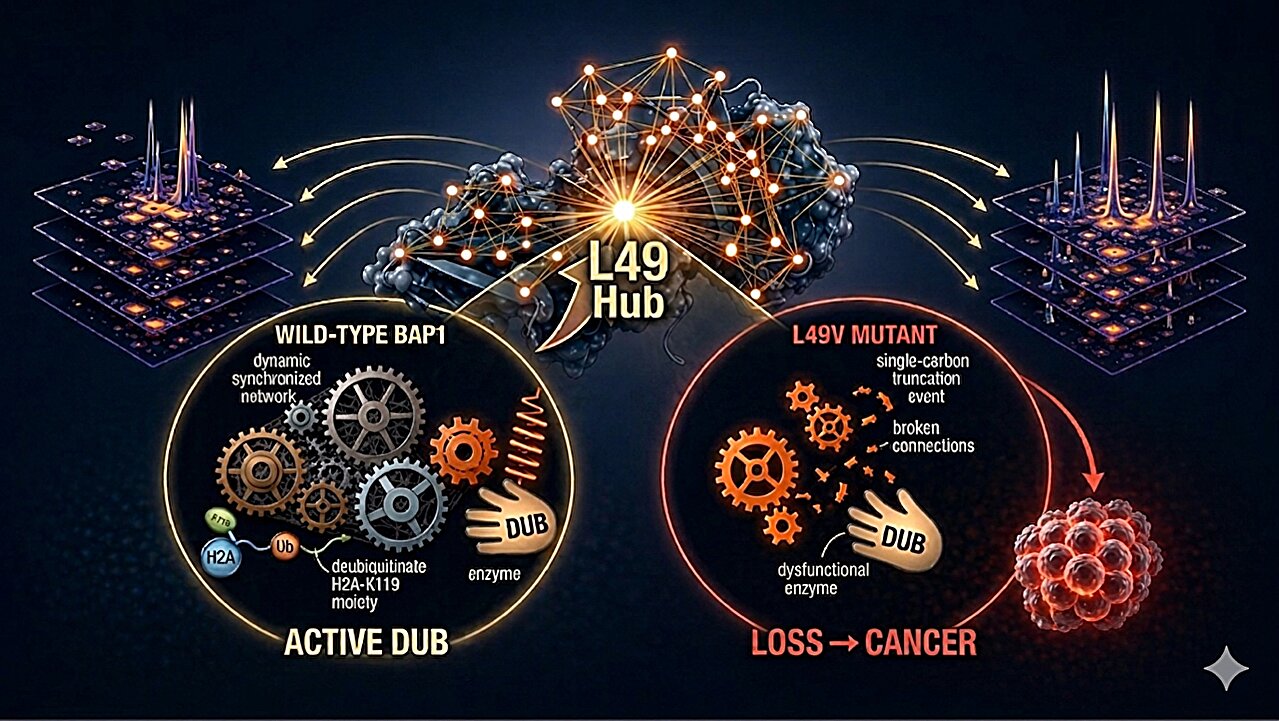
National Taiwan University researchers say a new study of BAP1 mutations cancer has shown how very small genetic changes can weaken a protein that helps restrain tumor growth. The work matters because BAP1 is often altered in cancers including mesothelioma, uveal melanoma and kidney cancer, according to the university.
The study, published in Nature Communications, examined how cancer-linked mutations affect BRCA1-associated protein 1, known as BAP1. Researchers at the university’s Institute of Biochemical Sciences used nuclear magnetic resonance spectroscopy, computer simulations and biochemical experiments to study nearly 50 mutations associated with cancer.
What is BAP1 and why do its mutations matter?
BAP1 is a protein that helps maintain normal cell growth, according to National Taiwan University. When mutations interfere with its function, the loss of that tumor-suppressing role can be linked to cancer development.
The research team focused on the protein’s deubiquitinase domain, the part tied to BAP1’s activity. Rather than only describing the protein’s shape, the scientists tracked how its parts move and communicate inside the molecule.
A communication hub inside the protein
The team reported that BAP1 contains an internal communication network that lets distant parts of the protein work together. At the center of that network, the researchers identified one amino acid, L49, as a signaling hub.
One cancer-associated change, known as L49V, removes a single carbon atom from that amino acid, according to the university. The researchers found that this small change could uncouple the protein’s internal motion and sharply reduce BAP1’s deubiquitinase activity, even though the protein’s overall structure was largely preserved.
That finding helps explain why some mutations can have strong biological effects without visibly reshaping a protein. The study suggests that cancer-related damage can come from interrupting internal protein dynamics, not only from changes at a protein’s active site.
Mapping how BAP1 mutations cause damage
By testing nearly 50 cancer-associated mutations, the researchers created what National Taiwan University described as the largest experimental map so far connecting BAP1 cancer mutations with their molecular effects. The map links specific mutations to changes in the protein’s internal signaling and function.
The study’s corresponding author, Prof. Shang-Te Danny Hsu of Academia Sinica’s Institute of Biological Chemistry and National Taiwan University’s Institute of Biochemical Sciences, said the work shows that proteins move and communicate internally. According to Hsu, understanding those hidden networks could point toward precision medicines that restore protein function in new ways.
The authors said the findings could help guide future drug design by shifting attention beyond the active site of BAP1. Their work points to the possibility of targeting communication networks within proteins, though the study reports molecular findings rather than a treatment ready for patients.
The paper is titled “Allosteric network of dynamic coupling within BAP1-UCH revealed by methyl NMR.” Its authors include Chih-Hsuan Lai and colleagues, and it appeared in Nature Communications in 2026.
This story draws on original reporting from Medical Xpress.