
Study links star-shaped brain cells to memory persistence in mice
Researchers found astrocytes help preserve remote memories by supporting contacts with memory-encoding neurons in the hippocampus.
By Tom Brennan · Health & Medicine Correspondent
3 min read
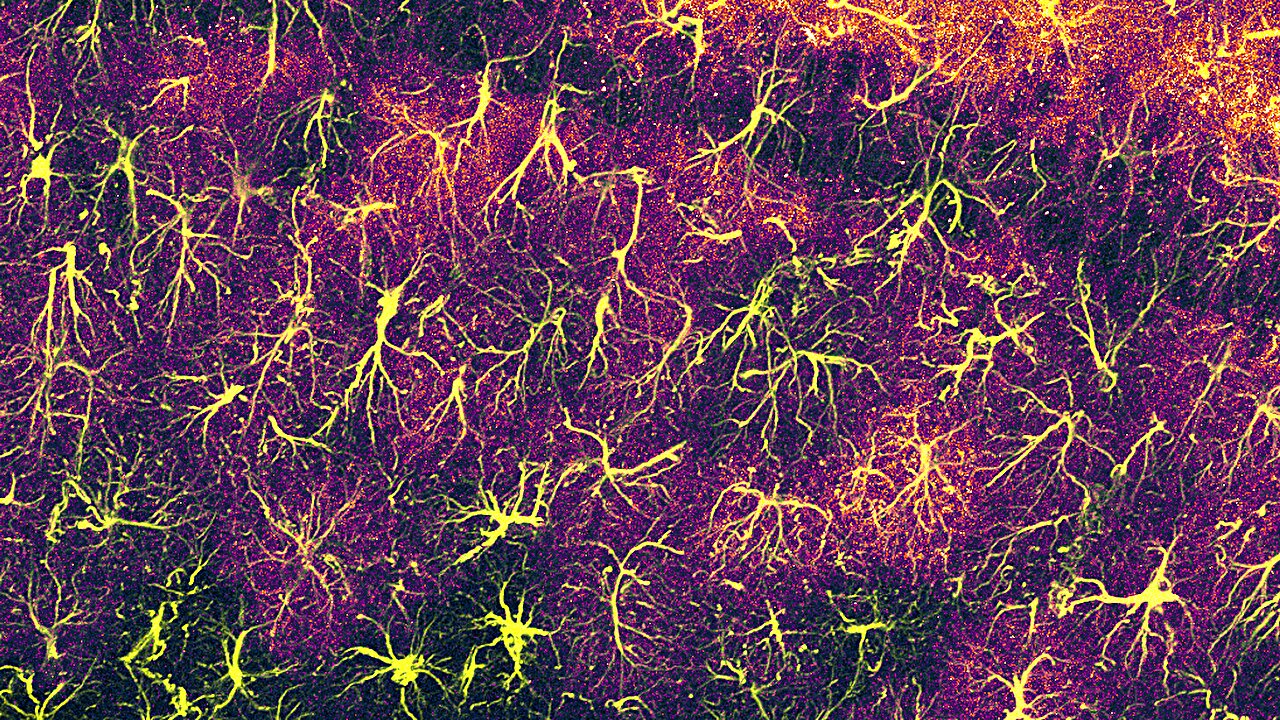
Astrocytes, long treated as support cells for neurons, helped determine whether learned memories lasted for weeks in mouse experiments, according to researchers at the Institute for Basic Science and the Korea Brain Research Institute. The findings matter because they point to a non-neuronal mechanism that helps stabilize memory circuits after learning.
The study, published in Nature Communications, was led by Dr. Koh Wuhyun at the Center for Memory and Glioscience within the Institute for Basic Science. The team focused on the hippocampus, a brain region tied to learning and memory, and on astrocytes, star-shaped cells that densely occupy it.
Memory research has often centered on neurons, which send and process information in the brain. The Institute for Basic Science said the new work suggests memory formation and memory preservation depend on partly separate biological processes.
Ank2 emerges as a key factor
The researchers identified ankyrin-2, or Ank2, as an astrocyte-enriched protein involved in memory persistence. To test its role, the team created mice in which Ank2 was removed only from astrocytes.
According to the study, those mice showed normal movement, anxiety-like behavior, sociability and recent memory shortly after learning. Two weeks later, however, their remote memory was significantly weakened, indicating that the loss of astrocytic Ank2 affected memory maintenance rather than initial learning.
The team reported that astrocytes lacking Ank2 had less complex cell structures. They also made fewer physical contacts with nearby engram neurons, the neurons associated with storing particular memories.
Those learning-dependent contacts are thought to help keep memory-related circuits stable over time, according to the researchers. The study also found that maintenance of long-term potentiation, a cellular process associated with long-term memory, was selectively impaired while ordinary synaptic transmission remained intact.
BDNF signaling and calcium activity
The researchers then examined the molecular pathway behind the effect. They found that Ank2 was needed for brain-derived neurotrophic factor, or BDNF, signaling through an astrocytic receptor called TrkB.T1, as well as IP3R2-mediated calcium signaling.
When Ank2 was absent, calcium signaling weakened, astrocytes did not remodel normally, and their ability to keep contact with memory-encoding neurons was reduced, the study found. The team also reported that BDNF infusion into the hippocampus strengthened long-term memory persistence under normal conditions, but not when astrocytic Ank2 had been deleted.
To test whether astrocyte signaling alone could improve memory persistence, the researchers built an optogenetic tool called Opto-T1. The tool uses light to selectively activate TrkB.T1 signaling in astrocytes.
Activating that pathway promoted astrocyte remodeling, maintained long-term potentiation and improved remote memory without changing recent memory, according to the study. The Institute for Basic Science said the result supports the view that astrocytes actively regulate how long memories last.
Koh, the study’s corresponding author, said the findings identify Ank2 as a regulator of astrocyte remodeling and BDNF signaling, and may open new routes for understanding memory disorders. The researchers also noted that Ank2 has been linked to autism spectrum disorder, intellectual disability and epilepsy, and said astrocyte dysfunction may contribute to neurological conditions involving impaired memory.
This story draws on original reporting from Medical Xpress.