
Alzheimer’s prodrug uses hydrogen peroxide to activate in diseased brains
KAIST-led researchers report a mouse-tested strategy that turns elevated hydrogen peroxide into a trigger for Alzheimer’s drug activation.
By Tom Brennan · Health & Medicine Correspondent
3 min read
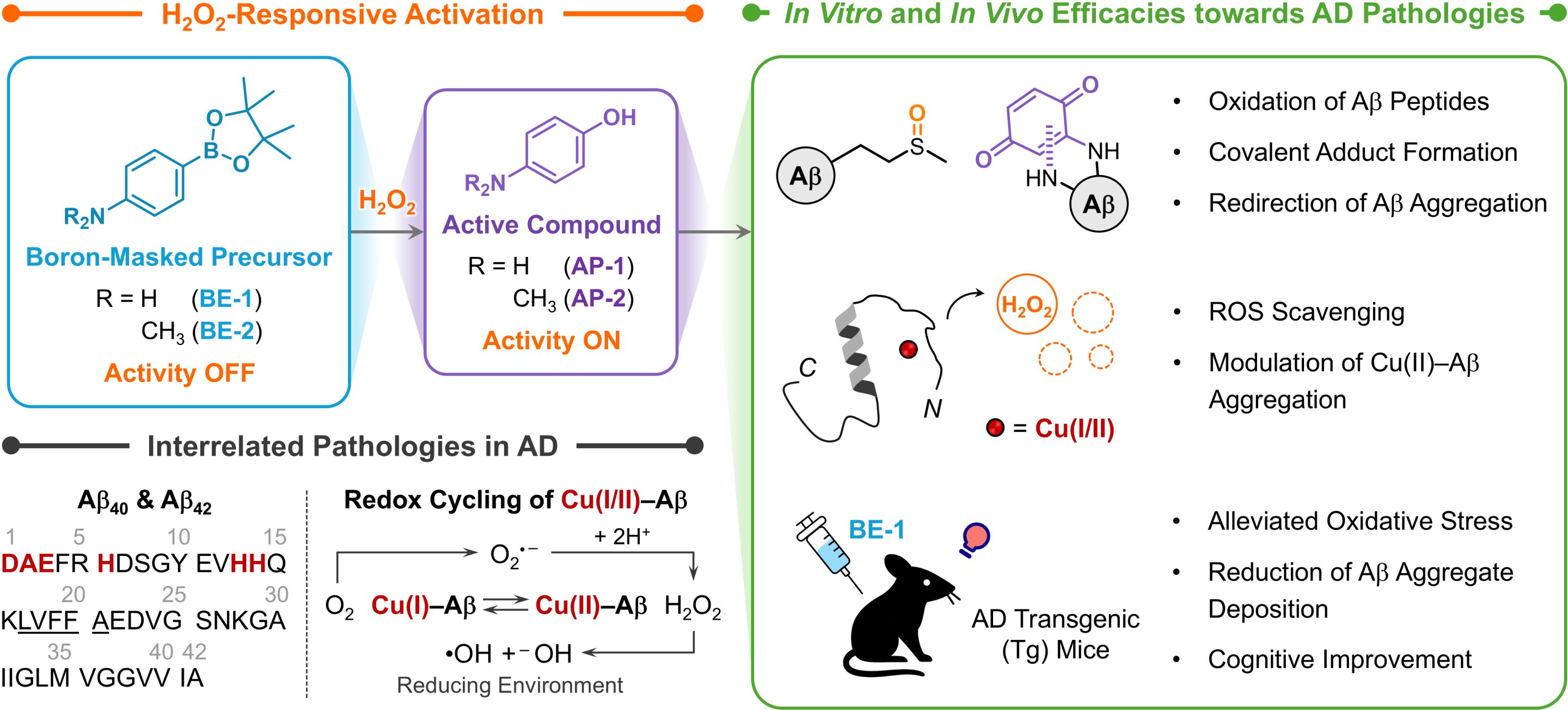
Researchers in South Korea have designed an experimental Alzheimer’s treatment that uses a damaging molecule found at elevated levels in diseased brains as the cue to switch the drug on. The KAIST-led team said the approach improved markers of disease and cognitive performance in mouse experiments, pointing to a possible route for more targeted dementia therapies.
The work, published in the journal Small, centers on hydrogen peroxide, a reactive oxygen species linked to cellular damage and reported at higher-than-normal levels in the brains of people with Alzheimer’s disease. Instead of treating hydrogen peroxide only as a harmful byproduct to remove, the researchers used it as a chemical signal that activates a prodrug in affected tissue.
A prodrug is a compound designed to have little therapeutic action until it is converted into an active drug under specific conditions in the body. KAIST said the team’s compounds, called BE-1 and BE-2, were built to stay minimally reactive in healthy brain conditions but convert into active agents, AP-1 and AP-2, when they encounter hydrogen peroxide.
Targeting several Alzheimer’s processes
According to KAIST, the activated compounds acted on more than one disease-related process. The team reported that they reduced reactive oxygen species, including hydrogen peroxide, and interfered with the buildup of amyloid beta peptides, which are associated with toxic deposits in Alzheimer’s disease.
The researchers said analytical tests showed the activated drug changed the form of amyloid beta aggregates and limited their development into larger clumps. Amyloid beta accumulation is widely studied because these protein fragments can gather in the brain and damage nerve cells.
The project was led by Mi Hee Lim, a chemistry professor at KAIST, with collaborators including Mingeun Kim of Chonnam National University, Chul-Ho Lee and Kyoung-Shim Kim of the Korea Research Institute of Bioscience and Biotechnology, and Young-Ho Lee of the Korea Basic Science Institute. Jimin Lee and Eunseo Hong, doctoral candidates in KAIST’s chemistry department, were listed as co-first authors.
Mouse tests showed brain entry and cognitive gains
KAIST said tests in Alzheimer’s disease mouse models showed the compounds crossed the blood-brain barrier, the filtering system that helps control which substances move from the bloodstream into the brain. In the diseased brain, the prodrug was converted into its active form, according to the study.
After longer-term administration, the researchers reported lower oxidative stress in the hippocampus, a brain region tied to memory, and reduced amyloid beta accumulation. In behavioral tests involving recognition of new objects and maze tasks, treated mice also showed improved cognitive function, KAIST said.
The findings remain preclinical, and the reported results come from laboratory and animal studies rather than human trials. The study does not establish whether the same strategy would be safe or effective in patients with Alzheimer’s disease.
Potential platform approach
KAIST said the broader significance of the work is the use of the diseased brain’s chemical environment to control where a drug becomes active. That design could raise therapeutic effects while limiting unwanted activity in healthier tissue, according to the researchers.
Lim said the study shows hydrogen peroxide can be used as an activation signal rather than only as a target for elimination. KAIST said the team expects this disease-activated prodrug strategy may also be relevant to other neurodegenerative disorders, including Parkinson’s disease.
This story draws on original reporting from Medical Xpress.