
AI prostate cancer surgery system links technique to recovery
Cedars-Sinai researchers say F2O can read surgical video and predict sexual function recovery after prostate cancer surgery.
By Priya Raghavan · Science Reporter
3 min read
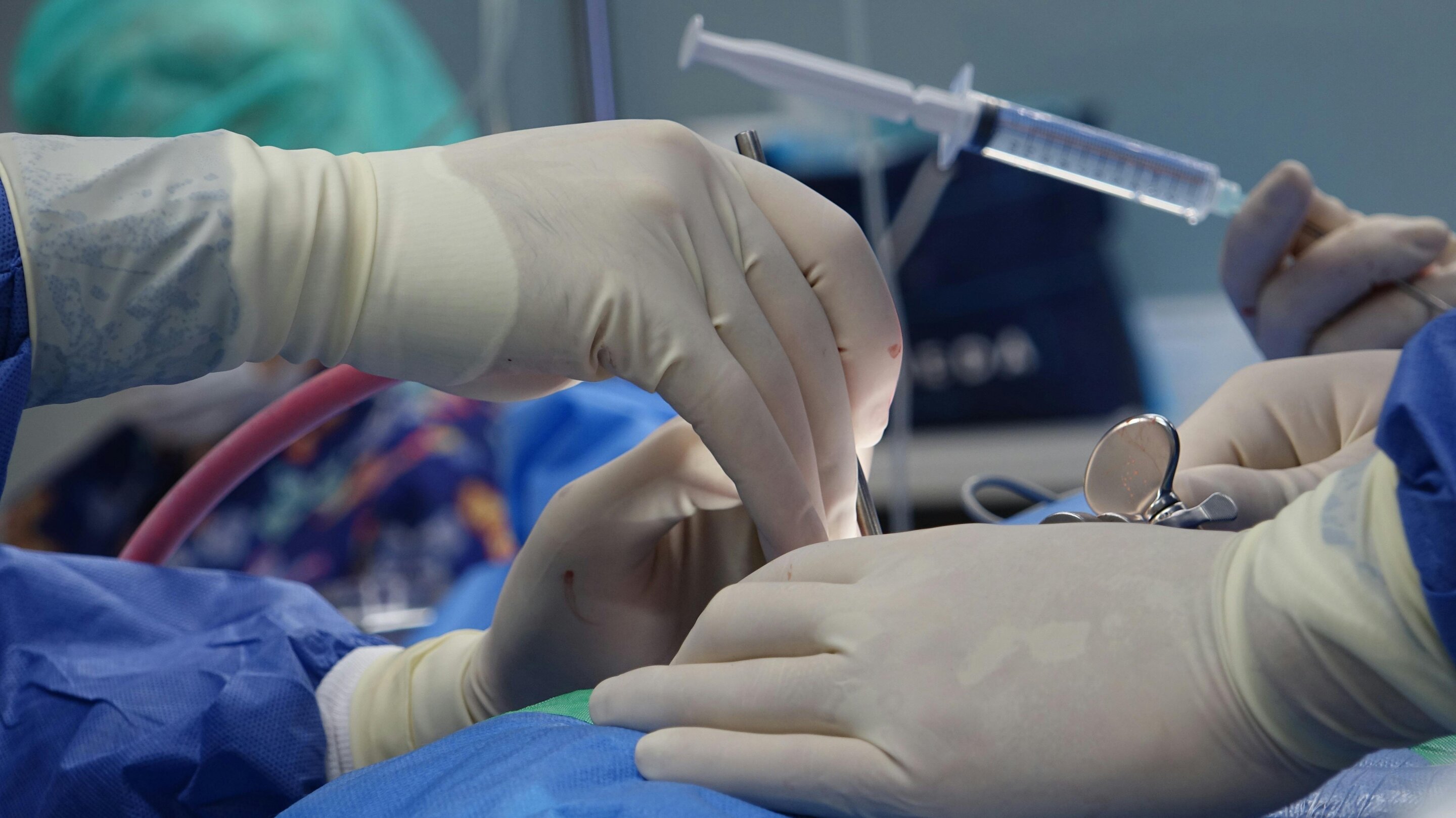
Cedars-Sinai investigators have built an AI prostate cancer surgery system that studies surgeons' movements and predicts whether patients are likely to recover sexual function. The work matters because it could give surgeons faster, more objective feedback on the techniques tied to better outcomes after robot-assisted prostate operations.
The system, called Frame-to-Outcome, or F2O, was described in a peer-reviewed study in npj Digital Medicine. According to Cedars-Sinai, F2O analyzes video from the nerve-sparing part of prostate cancer surgery, when surgeons try to protect nerves involved in sexual function.
Researchers said the system looks for patterns in “surgical gestures,” meaning the small, repeated actions surgeons make during an operation. Those gestures can include how instruments are used in sequence or how quickly nerves are stretched and moved aside, according to prior Cedars-Sinai work cited by the investigators.
How does AI analyze prostate cancer surgery?
F2O reviews surgical video and identifies gesture patterns without requiring trained observers to label every movement by hand. It then uses those patterns to estimate whether a patient is more or less likely to have a good recovery, Cedars-Sinai said.
The goal is broader than forecasting recovery for individual patients, according to Andrew Hung, MD, the study's corresponding author and a professor of urology at Cedars-Sinai. Hung said the work is aimed at finding which techniques are associated with better outcomes so surgeons can adjust their practice and improve care for later patients.
To create the system, the researchers trained F2O with videos from 294 surgeries that had been annotated by human analysts. Those procedures were performed by 23 surgeons at four international centers, according to Cedars-Sinai.
The team then evaluated the system on 29 additional surgeries. Cedars-Sinai said F2O's predictions closely tracked those made by expert human reviewers, while cutting the time needed to assess surgical performance.
What did the study find?
The investigators reported that surgeon movement patterns during the operation could be used to predict patient recovery. They also found that an automated system could perform this analysis at a level comparable to expert reviewers, according to Cedars-Sinai.
The findings build on earlier research that connected specific surgical gestures during prostate removal with sexual function recovery. In the new study, the researchers moved that idea toward automation by training an end-to-end AI system to recognize gesture sequences and link them with outcomes.
Cedars-Sinai said the technology could eventually help surgeons receive objective feedback about which technical choices are most strongly associated with successful recovery. The study did not say the tool is in routine clinical use.
The project involved Cedars-Sinai's Department of Urology, Department of Computational Biomedicine and Center for Artificial Intelligence Research and Education. Jason Moore, Ph.D., chair of the Department of Computational Biomedicine and director of the center, said the work reflected a joint effort between surgeons and computational biomedicine researchers toward a clinical goal.
The paper, “End to end AI system for surgical gesture sequence recognition and clinical outcome prediction,” lists Xi Li and colleagues as authors. Its DOI is 10.1038/s41746-026-02927-5.
This story draws on original reporting from Medical Xpress.