
3MDR PTSD therapy shows promise in University of Alberta study
Researchers report reduced PTSD symptoms after a therapy that combines treadmill walking with trauma-related images and music.
By Priya Raghavan · Science Reporter
3 min read
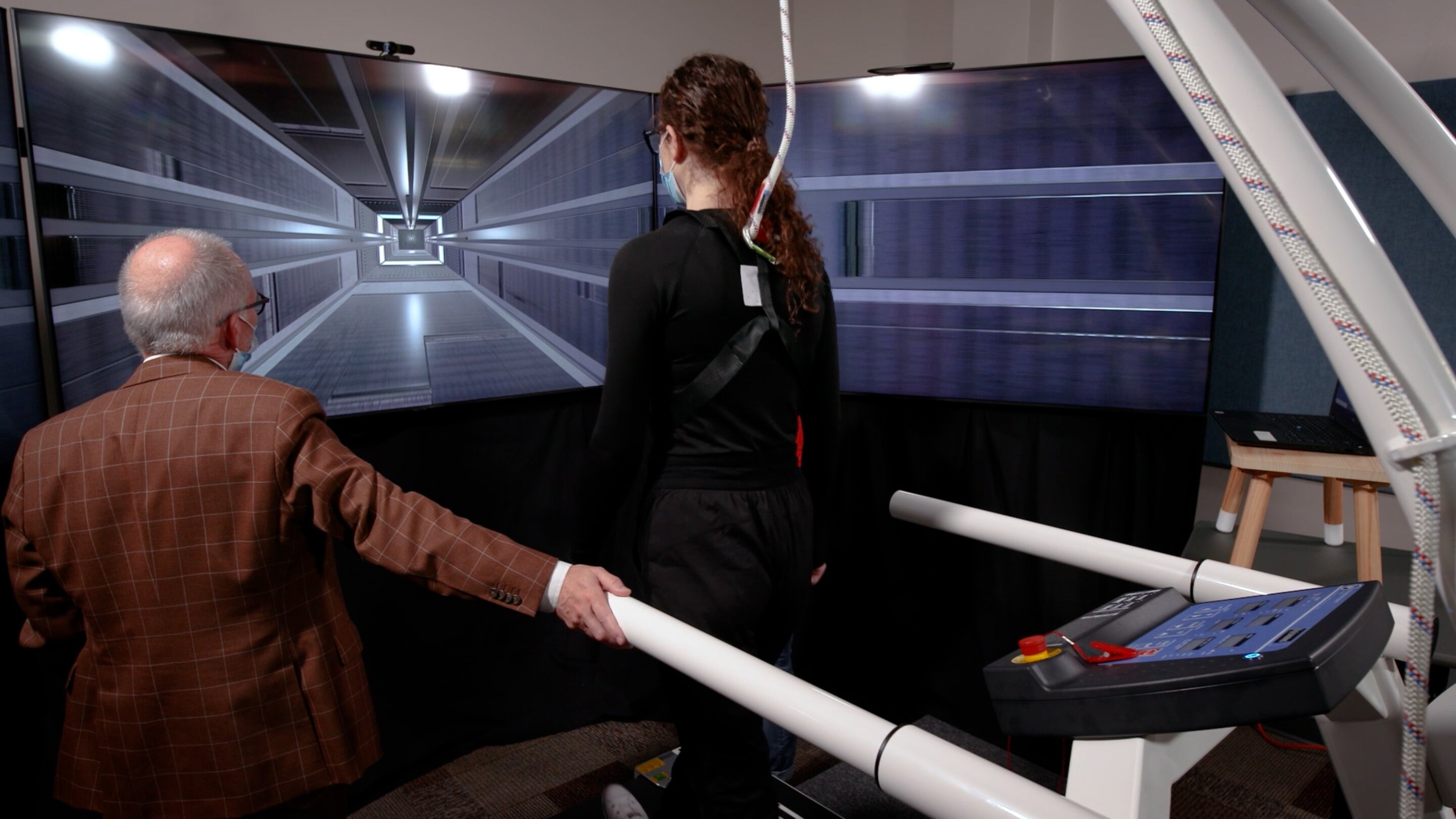
University of Alberta researchers say 3MDR PTSD therapy, a treatment that combines walking on a treadmill with controlled reminders of trauma, has shown strong results for people with post-traumatic stress disorder. The findings matter because the approach is designed for patients who must confront distressing memories while staying physically engaged and in control of the session.
The therapy is called Multi-modal Motion-assisted Memory Desensitization and Reconsolidation, shortened to 3MDR. According to the University of Alberta, it asks patients to walk while briefly viewing images and hearing music they have chosen because those cues connect to past trauma.
The work was published in Brain and Behavior. The study was co-led by Phillip Sevigny of the university’s Faculty of Education and Suzette Brémault-Phillips, a professor in the Faculty of Rehabilitation Medicine.
What is 3MDR PTSD therapy?
3MDR is a psychotherapy developed in the Netherlands about 15 years ago, according to the University of Alberta. It combines movement, visual cues and music to help patients revisit traumatic memories in a structured setting rather than avoid them.
Brémault-Phillips said the walking component appears to help people think in new ways during treatment. She linked that movement to “divergent thinking,” saying it may help patients shift out of the immobilized or fight-or-flight states often tied to PTSD distress and toward processing the memory.
Sevigny said the team has seen improvement over weeks that might otherwise take years, and he said people continued to do better for at least a year. Brémault-Phillips described the intervention as one of the most promising she has worked with in decades as a clinician, saying it gives patients control over their own treatment process.
The University of Alberta team said even a small number of sessions can start to change how patients experience severe trauma-related memories, making them easier to manage. The research paper reports that 3MDR reduced symptoms of PTSD and related conditions among Canadian military members and veterans, public safety personnel and clinical personnel.
Who has received the treatment?
Brémault-Phillips and Sevigny run the program through the Heroes in Mind, Advocacy & Research Consortium, known as HiMARC. The University of Alberta said it is the only clinical research program of its kind in Canada.
The program began in 2019 with groups at high risk for PTSD, including military members, veterans, first responders, public safety workers and health care workers. It has since broadened to include civilians, and more than 200 Albertans have received 3MDR, according to the university.
The researchers said the results create what they called a moral obligation to make the therapy more widely available. They are discussing ways to extend access to other groups, including Indigenous communities affected by intergenerational trauma, according to the University of Alberta.
The published study is titled “3MDR Therapy Reduces Symptoms of PTSD and Related Conditions in Canadian Military Members and Veterans, Public Safety Personnel, and Clinical Personnel.” The paper lists Matthew Robert Graham Brown and colleagues as authors and carries the DOI 10.1002/brb3.71479.
This story draws on original reporting from Medical Xpress.