
Warsh cuts Fed rate guidance, putting more weight on markets and colleagues
The new Fed chair shortened the central bank’s policy statement and signaled a retreat from hints about future rate moves.
By Sofia Marchetti · World Affairs Correspondent
4 min read
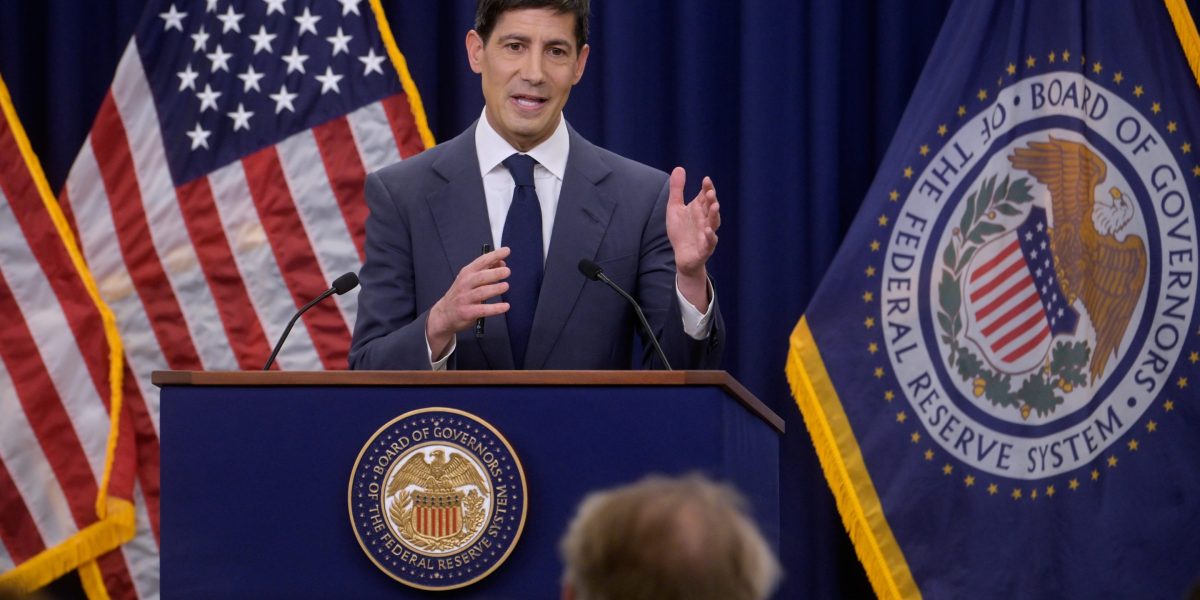
Federal Reserve Chair Kevin Warsh used his first post-meeting news conference to pull the central bank away from giving investors clear signals about its next interest-rate moves, according to The Associated Press. The shift matters because analysts say less guidance could mean sharper swings in stocks and bonds, with possible effects on borrowing costs.
AP reported that the Fed’s latest interest-rate statement was cut to 132 words, down from 341 words in April. Warsh also highlighted that the statement did not include clues about future policy, the practice known as forward guidance.
Warsh has argued that markets have become too reliant on the Fed’s signals, AP reported. He said Wednesday that market prices are “probably the most important source of information to guide central bankers,” a view that would put more responsibility on investors to read economic data and price assets accordingly.
Market reaction was uneven
Financial markets moved back and forth before falling after the Fed statement and Warsh’s news conference, AP reported. The S&P 500 lost 1.2% Wednesday.
The 10-year Treasury yield, which has a strong influence on mortgage rates, rose Wednesday to 4.49% from 4.43%, according to AP, before easing Thursday. The 2-year Treasury yield, which closely reflects expectations for Fed policy, stood at 4.16% Thursday, up from 4.05% before the Fed meeting.
George Pearkes, global macro strategist at Bespoke Investment Group, told AP that forward guidance has tended to hold down volatility and keep market expectations steady. Pearkes said that has helped borrowing rates stay lower than they might otherwise be, though he added that the effect on consumers would likely be limited, with mortgage rates perhaps about a quarter percentage point higher than otherwise.
A break from the post-crisis Fed
The Fed has become more open over several decades, AP reported, moving away from a period when it gave the public little explanation of its decisions. Warsh’s approach could reverse some of the communication changes that expanded after the 2008-2009 financial crisis.
Matthew Luzzetti, chief U.S. economist at Deutsche Bank, told AP that the Fed had been moving in one direction since the global financial crisis: more communication, more transparency and more guidance. Luzzetti said Warsh has now put that trend in reverse.
AP reported that Warsh has often pointed to former Fed Chair Alan Greenspan as a model. Greenspan, who chaired the Fed from 1987 to 2005, was known for comments that left investors uncertain, though he also oversaw the start of the Fed’s post-meeting policy statements.
The first such statement came on Feb. 4, 1994, when the Fed announced its first rate increase in five years, AP reported. Investors were caught off guard, and the Dow Jones Industrial Average dropped 2.4% that day.
Other Fed officials may gain influence
Warsh also announced five task forces to review parts of the Fed’s work, AP reported. The groups will examine communications, the balance sheet, economic data practices, the effects of artificial intelligence on productivity and jobs, and the frameworks used to assess inflation.
The communications task force will consider possible changes to the Fed’s quarterly economic projections and other practices such as press conferences, according to AP. Former Chair Ben Bernanke began holding press conferences after every other meeting, while Jerome Powell, Warsh’s predecessor, held them after every meeting.
Pearkes told AP that reducing forward guidance could give more influence to the other 18 members of the Fed’s rate-setting committee. Those officials, including members of the Fed’s board and the 12 regional Fed bank presidents, often speak publicly, and markets may study their remarks more closely for clues.
David Andolfatto, a University of Miami economics professor and former St. Louis Fed economist, told AP that he agrees forward guidance has weaknesses because events such as Russia’s invasion of Ukraine or the Iran war can upset prior signals. Andolfatto said Warsh still needs to explain how the Fed would respond to surprises and persistent inflation.
Economists told AP that a market downturn or economic crisis would test Warsh’s approach, because forward guidance can help calm investors during periods like the COVID pandemic. Pearkes said whether Warsh keeps this stance over a full five-year period will depend on events that have yet to unfold.
This story draws on original reporting from Fortune.