
Vance opens Iran talks in Switzerland as Lebanon fighting tests deal
The vice president met Iranian negotiators in Switzerland as Washington seeks nuclear talks and Tehran presses for an Israel-Hezbollah ceasefire.
By Hana Yoshida · Markets Reporter
4 min read
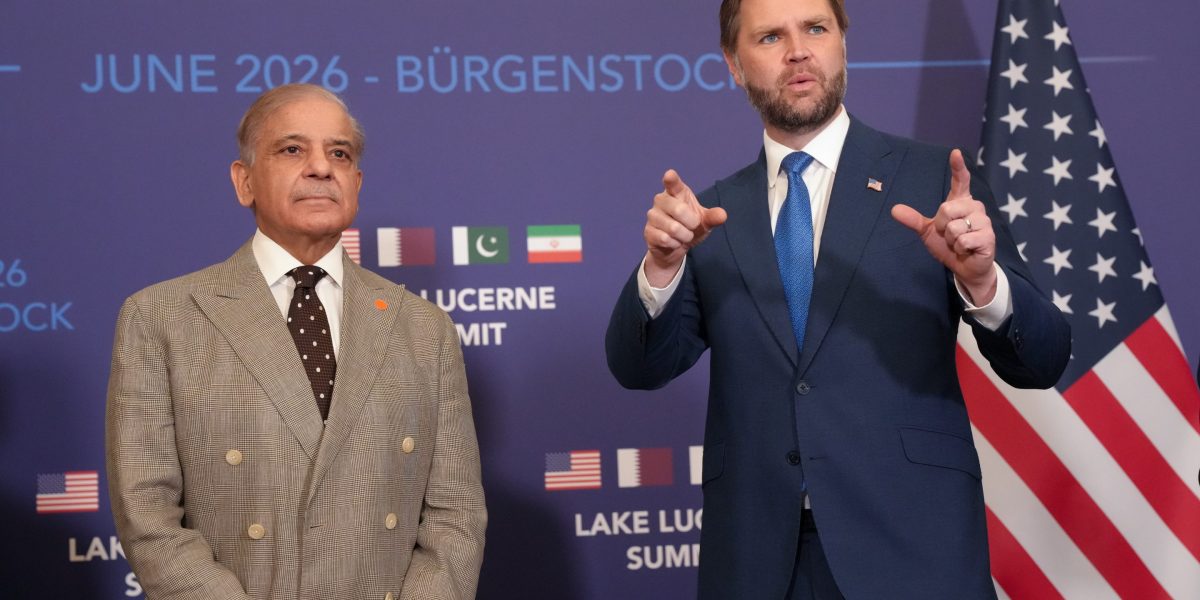
Vice President JD Vance met senior Iranian officials in Switzerland on Sunday as the White House tried to expand an interim agreement reached last week with Tehran. The talks matter because they link Iran’s nuclear program, oil flows through the Strait of Hormuz and fighting between Israel and Hezbollah in Lebanon, according to The Associated Press.
The AP reported that Vance was expected to meet Iranian negotiators including parliamentary speaker Mohammad Bagher Qalibaf and Foreign Minister Abbas Araghchi at the Bürgenstock resort near Lake Lucerne. Mediators from Pakistan and Qatar also joined the direct talks, which Iranian state broadcaster IRIB said had begun after Vance spoke briefly to reporters.
Washington wants Iran committed to negotiations over its nuclear program, the AP reported. Tehran, according to Iranian Foreign Ministry spokesman Esmail Baghaei as cited by Iran’s state news agency, planned to make the Israel-Lebanon war the central issue in Sunday’s discussions.
Ceasefire pressure shapes the summit
The meeting follows a framework signed last week that gives U.S. and Iranian negotiators 60 days to settle technical details, according to the AP. The deal is already under strain after renewed fighting in Lebanon between Israel and Hezbollah, the Iranian-backed militant group.
Iran’s military said it had again closed the Strait of Hormuz, a waterway used for one-fifth of the world’s traded oil and natural gas, the AP reported. U.S. Central Command disputed that claim and said U.S. forces were monitoring the strait to keep traffic moving. Vance has said millions of barrels of oil have passed through the waterway in recent days, according to the AP.
A new Lebanon ceasefire brokered Saturday appeared to be holding, the AP reported. Baghaei said Iran wants implementation of the agreement to begin with provisions calling for wars to stop, including the Israel-Hezbollah conflict, and accused the United States of being unable or unwilling to enforce a ceasefire on Israel.
Iranian President Masoud Pezeshkian said Sunday that Iran would not give up uranium enrichment, according to Iranian state media cited by the AP. Baghaei also said Tehran was approaching the talks carefully because prior nuclear negotiations with Washington had been interrupted by major strikes on Iran.
What the agreement covers
The agreement signed by President Donald Trump and Pezeshkian allows Iran to sell oil freely and opens a path for Tehran to access billions of dollars in frozen assets, the AP reported. It also calls for Iran to dilute its stockpile of highly enriched uranium, which the AP said is believed to be buried below nuclear sites hit by U.S. strikes last summer.
The deal permits commercial ships to transit the Strait of Hormuz without charge for 60 days but does not rule out future Iranian fees, according to the AP. Trump said Saturday on social media that the United States could impose its own tolls on the strait if no deal is reached within 60 days.
The talks were delayed after Iranian officials canceled plans to attend amid the Lebanon escalation, the AP reported. Vance traveled with special envoy Steve Witkoff and Jared Kushner, Trump’s son-in-law, who had already been in Switzerland to work on nuclear-related details.
Vance first met Pakistani Prime Minister Shehbaz Sharif and Staff Field Marshal Asim Munir, who has served as an intermediary between Washington and Tehran, according to the AP. Rafael Grossi, head of the International Atomic Energy Agency, also met Swiss Foreign Minister Ignazio Cassis on the sidelines.
The agreement has drawn criticism from Republican hard-liners who compare it unfavorably with the 2015 Iran nuclear deal negotiated under President Barack Obama, the AP reported. Trump withdrew the United States from that earlier agreement in 2018.
Neither Israel nor Hezbollah signed the U.S.-Iran deal, the AP noted. Israeli Prime Minister Benjamin Netanyahu has said Israeli forces will remain in southern Lebanon until threats to Israel are removed, while Hezbollah has refused to stop attacks unless Israel commits to leaving Lebanon. The AP reported that early fighting after the U.S.-Iran agreement killed 47 people in Lebanon and five Israeli soldiers.
This story draws on original reporting from Fortune.