
Tankers keep moving through Hormuz despite Iran closure claim
Ship-tracking data cited by Bloomberg showed oil cargoes crossing the Strait of Hormuz as Iran and the U.S. disputed control of the route.
By Maya Lindqvist · Senior Technology Correspondent
4 min read
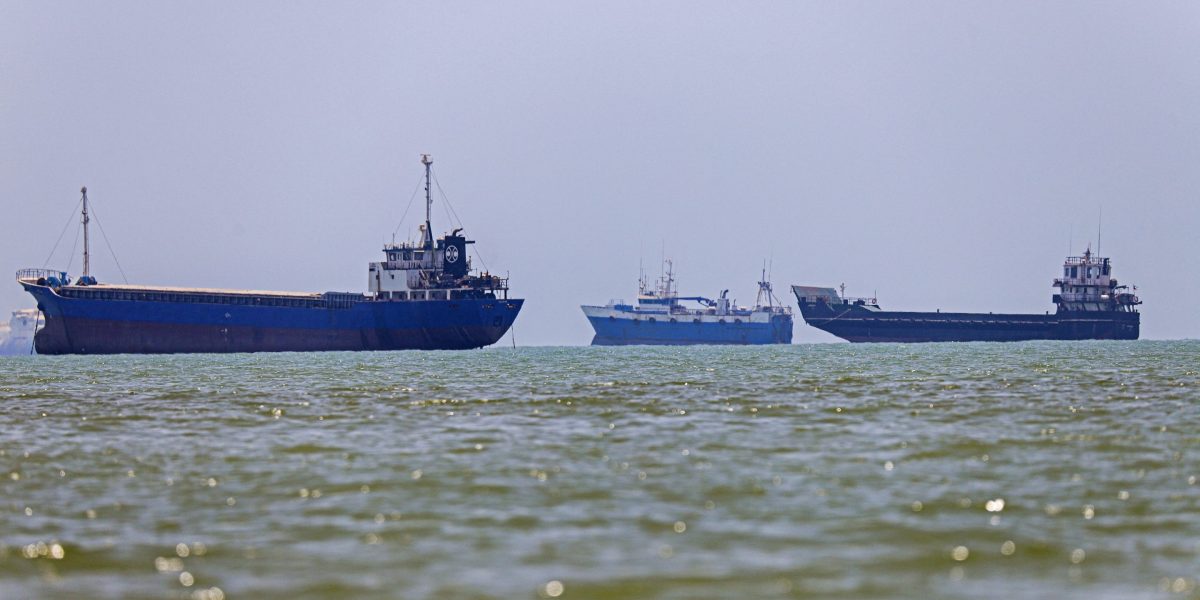
Oil tankers continued to move through the Strait of Hormuz over the weekend despite Iran’s claim that the waterway had been shut, according to ship-tracking data compiled by Bloomberg. The traffic matters because Hormuz is a critical route for global energy shipments, and Washington and Tehran are offering competing accounts of who can control passage through it.
Bloomberg reported that three loaded oil supertankers, with a combined carrying capacity of about 6 million barrels, transmitted signals Saturday while using a route close to Oman’s coast. One of the vessels later resumed automated signals early Sunday after reaching the Gulf of Oman, according to the data.
The Gulf Sunrise, which Bloomberg said was carrying about 2 million barrels of Saudi crude to Japan, was crossing the Gulf of Oman after disappearing from screens near the narrowest part of the strait on Saturday. The Angola B, loaded with crude from the United Arab Emirates, was last detected near the tip of Oman’s Musandam peninsula, while the Monaco Loyalty had not yet reached the same area when its signal stopped Saturday, Bloomberg reported.
Bloomberg said emails to the ships’ managers were not immediately returned. It also reported that the vessels’ cargoes were identified through ship-tracking data and information from Kpler.
U.S. says oil is still passing
U.S. Central Command said Saturday that 17 million barrels had moved through Hormuz despite Iranian media reports that the strait was closed, Bloomberg reported. A maritime liaison body, the Joint Military Information Center, issued guidance earlier Saturday saying ships could use the southern route near Oman at any hour while keeping their location systems visible.
The center advised mariners to travel the route with AIS transponders operating, radars active, running lights on and normal VHF radio use, according to Bloomberg. That guidance differed from an earlier U.S. advisory cited by Bloomberg that suggested vessels consider using the same route without broadcasting transponder signals.
Pakistan, which coordinates navigational warnings for the area, issued an alert late Friday saying a confirmed mine had been spotted along the southern route, Bloomberg reported. The Joint Military Information Center’s notice came after that warning and before Iranian media reported the strait was shut.
Bloomberg said several ships were also transmitting signals near Iran’s coast. The Desh Vibhor, Desh Vaibhav and Sanmar Herald were observed Sunday in the Gulf of Oman and the Arabian Sea after previously signaling late Friday near the Strait of Hormuz, according to the data.
Those three supertankers, each signaling Indian ownership or India-bound cargo, were carrying a combined 6 million barrels of Iraqi and Kuwaiti oil, Bloomberg reported. Their earlier positions near Iran’s Qeshm Island suggested they used a route approved by Tehran, though Bloomberg said they may have passed through before Iran announced the latest closure claim.
Shipping Corporation of India, listed in the Equasis database as owner and manager of Desh Vibhor and Desh Vaibhav, did not immediately respond to Bloomberg emails sent outside regular business hours. Sanmar Shipping Ltd., operator of Sanmar Herald, also did not immediately respond, Bloomberg reported.
Diplomacy continues in Switzerland
The dispute over Hormuz comes as U.S. and Iranian officials prepare for talks in Switzerland, according to Bloomberg. Qatar said the talks were beginning Sunday, and Bloomberg reported that U.S. Vice President JD Vance was among senior officials converging there.
Bloomberg reported that the sides are several days into a 60-day negotiating period created by a memorandum of understanding signed by President Donald Trump in Paris on Wednesday. The arrangement allows for an extension, according to Bloomberg, after clashes in southern Lebanon between Israeli forces and Iran-backed Hezbollah fighters delayed the start of talks.
Bloomberg also reported that empty tankers and liquefied natural gas carriers were seen entering the Persian Gulf. Some Gulf producers are known to send tankers through Hormuz without visible signals so cargoes can be transferred to other vessels waiting in the Gulf of Oman, Bloomberg said.
This story draws on original reporting from Fortune.