
Utah measles outbreak slows as officials warn of fall risk
State health officials say school reopenings and colder weather could renew spread after more than 680 measles cases in Utah since June 2025.
By Maya Lindqvist · Senior Technology Correspondent
3 min read
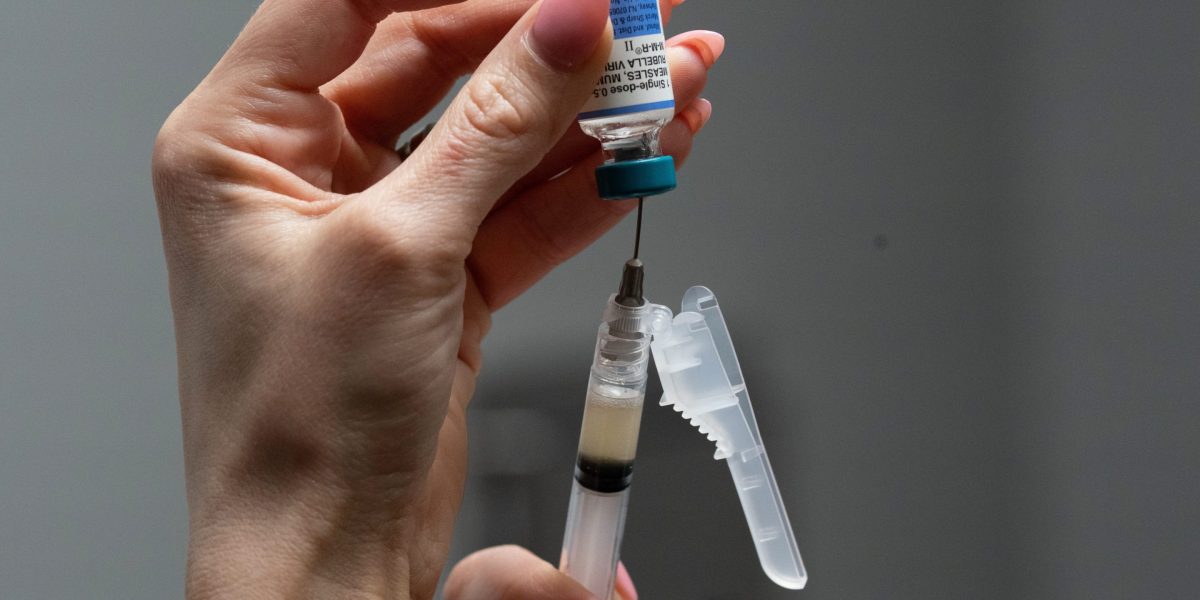
Utah’s yearlong measles outbreak has eased in recent weeks, but state health officials are warning that the virus is still spreading and could rise again when schools reopen and colder weather pushes people indoors. The Associated Press reported that more than 680 people in Utah have contracted measles since the state’s first outbreak began on June 20, 2025.
The outbreak matters beyond Utah because prolonged local transmission could affect whether the United States keeps its measles-elimination status, according to the AP. Public health officials consider measles eliminated in a country when continuous spread in local communities has been stopped for at least a year.
Utah’s outbreak has differed from outbreaks in Texas, South Carolina and Arizona because officials have struggled to confine it to one area, the AP reported. Cases have appeared in undervaccinated communities across nearly the entire state, with infections recorded in 22 of Utah’s 29 counties.
State epidemiologist Leisha Nolen told the AP that the slowdown has not ended the risk. “It’s still here, it’s still transmitting,” Nolen said, adding that a small number of cases could ignite a larger flare-up if they reach the wrong community.
Utah health officials have traced exposures to health care sites, large retailers, restaurants and youth sports events, according to the AP. A February exposure at a state high school wrestling championship led to at least 46 cases among people who attended.
The heaviest spread has been in southwestern Utah, where 265 people have become sick since last summer, the AP reported. The rural northeastern region covering Daggett, Duchesne and Uintah counties also saw a spring cluster after infections tied to the wrestling tournament moved through schools and then households.
State data cited by the AP show that more than 16% of kindergarteners in that three-county health region were missing measles vaccination during the last school year. Statewide, 12.8% of kindergarteners lacked the vaccine, below the 95% coverage level public health officials say is needed to prevent outbreaks.
Sydnee Lyons, public information officer for the TriCounty Health Department, told the AP the area had been seeing increased vaccine hesitancy before the outbreak. The department recorded 74 measles cases this spring, according to the AP.
Local and state officials still viewed the TriCounty response as effective, the AP reported. Health workers excluded unvaccinated students from in-person school, asked sick people to isolate and urged residents to protect their neighbors, which officials said brought more people in for vaccination.
Cyndie Mattinson, an infectious disease specialist with TriCounty, told the AP that some parents feared judgment from health officials because their children were unvaccinated. She said the department worked to present itself as a resource for the community rather than an enforcement arm.
Measles is among the most contagious diseases known to medicine, according to the AP. It can cause rash, high fever, severe cough, ear infections and diarrhea, and it can lead to pneumonia, brain swelling, blindness, death or a rare fatal brain disease years after infection.
The measles vaccine is safe and provides 97% protection after two doses, according to the AP. Babies, pregnant people and people with weakened immune systems face higher risks from infection.
International health experts are expected to meet in November to decide whether the U.S. and Mexico have lost measles-elimination status, the AP reported. Canada lost that status last year after continuing outbreaks.
As of June 18, the national measles count stood at 2,104 cases, nearly exceeding last year’s record total, according to the AP. Dr. Ellie Brownstein, president-elect of the Utah chapter of the American Academy of Pediatrics, told the AP she has been reassuring worried patients and pushing for stronger public health policy as the state continues to deal with the disease’s return.
This story draws on original reporting from Fortune.