
US says service member died handling downed Iranian drone in Iraq
The death came as U.S. forces struck Iranian targets and Tehran fired missiles toward Jordan, deepening fears of a wider regional war.
By Sofia Marchetti · World Affairs Correspondent
4 min read
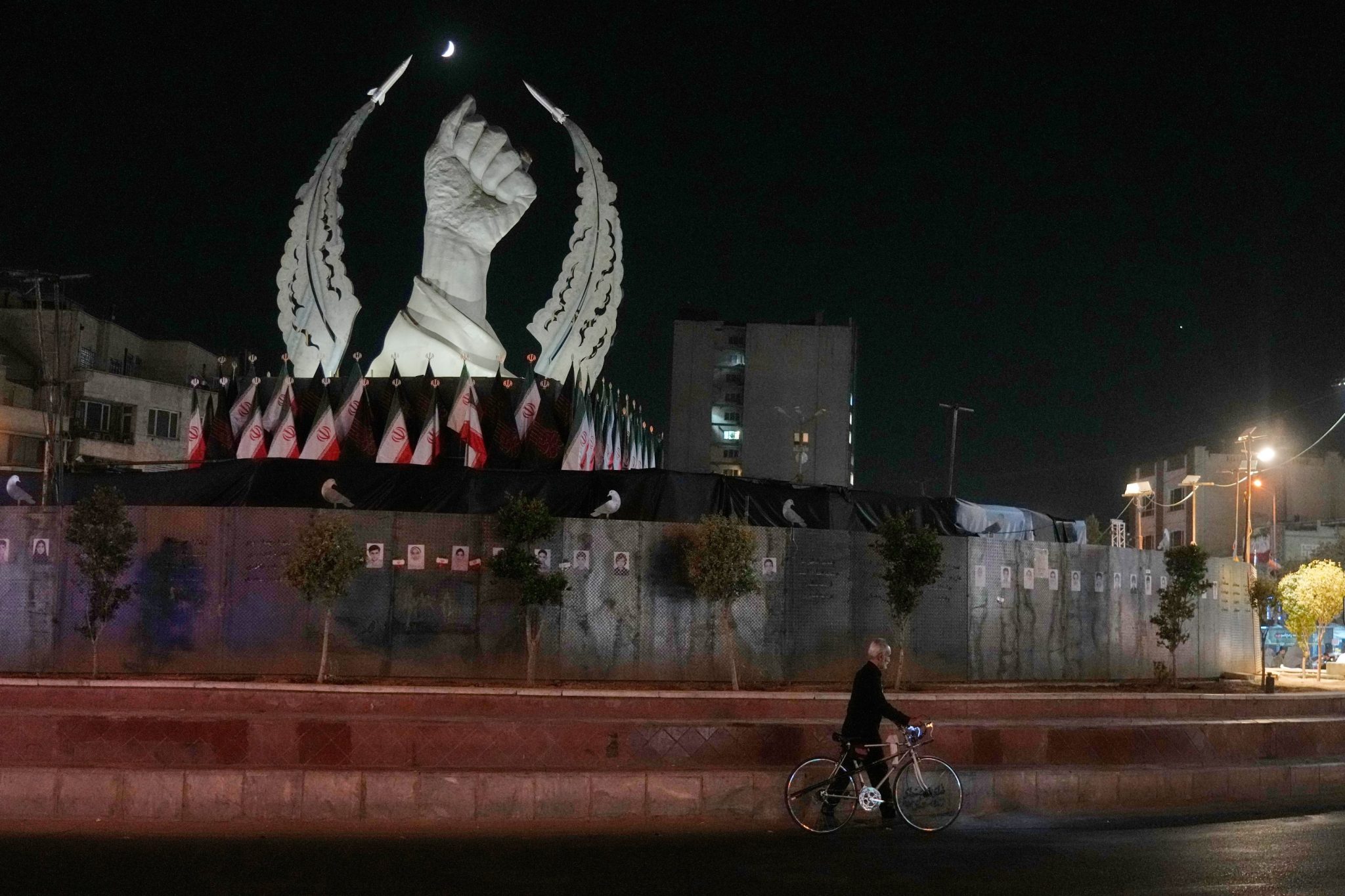
The U.S. military said a service member was killed Saturday in Iraq during the “controlled detonation” of an Iranian drone that had been shot down. The announcement came as U.S. forces carried out new strikes in Iran and Iranian missiles were fired toward Jordan, adding pressure to a conflict that has spread across the region.
U.S. Central Command said the latest American strikes hit Iranian coastal surveillance and air-defense sites, maritime assets, and missile and drone storage locations. The command said the operation was meant to weaken Iran’s ability to control the Strait of Hormuz and punish forces tied to the Islamic Revolutionary Guard Corps.
The military said earlier that the strikes were retaliation for the killing of U.S. troops in Jordan on Friday. It also said one service member had been missing after that attack, and that unidentified remains found Sunday were being examined. According to the military, 17 U.S. service members have been killed since the war began.
Iran reports strike at planned nuclear site
Iran’s atomic energy agency said U.S. strikes hit the construction site of a planned nuclear power plant in the country’s southwest, according to state television. Satellite images from Planet Labs PBC showed land clearing at the Darkhovin site but little visible construction as of July 9.
The International Atomic Energy Agency said the site was in the very early stages of construction and contained no nuclear material when the U.N. watchdog last visited. Iran had not previously said the site had been struck.
Video released by the U.S. military appeared to show fighter jets and sea-launched Tomahawk cruise missiles carrying out attacks. One target appeared to sit in a mountainous valley, where the Revolutionary Guard has often placed missile bases and military equipment.
Jordan, Kuwait and Bahrain activate defenses
Jordan’s military said it intercepted several Iranian missiles and reported no casualties or damage. Jordan, which hosts major U.S. bases and uses U.S. air-defense systems, later summoned Iran’s chargé d’affaires to protest, according to state-run television.
Israel’s military said missiles aimed toward the Jordanian port of Aqaba, near the Israeli city of Eilat, could send fire into Israeli territory for the first time in weeks. Eilat cited security officials as saying two interceptors were launched from the city’s outskirts to prevent falling debris.
Kuwait, Jordan and Bahrain activated air defenses against incoming Iranian drones and missiles. Kuwait said one of its power and water desalination plants was attacked for the second time in two days, causing fires, while its Ministry of Electricity, Water and Renewable Energy said the grid remained stable.
Jasem Mohamed al-Budaiwi, secretary-general of the Gulf Cooperation Council, accused Iran of war crimes over strikes on infrastructure and civilian facilities. International humanitarian law generally protects civilian infrastructure such as bridges and power plants, though those protections can be lost if a site is used for military purposes; attacks must still be proportionate and limit harm to civilians.
Strait of Hormuz traffic remains low
President Donald Trump has threatened to strike Iranian power stations and bridges to pressure Tehran over the Strait of Hormuz, where one-fifth of global oil supplies passed before the war. Recent U.S. attacks suggest the military is carrying out that threat.
The U.S. military said Saturday it had redirected five ships and disabled one since reimposing a naval blockade on Iranian ports in the past week to halt crude oil shipments. A maritime organization overseen by the U.S. Navy said Sunday that threats to mariners were severe and that deliberate hostile action was considered highly likely.
The organization said traffic through the strait remained sharply reduced, with eight transits Saturday and three Friday, compared with a prewar daily average of almost 140. Iranian Supreme Leader Mojtaba Khamenei warned Saturday of “unforgettable lessons” if U.S. attacks continue.
An Iranian negotiator said Tehran was suspending its commitments under last month’s interim deal and accused Washington of violating it. Iranian authorities said Sunday that at least 50 people had been killed and 517 wounded in the latest U.S. strikes, while Iran has not provided an overall account of its military losses.
This story draws on original reporting from Fortune.