
US curbs on Anthropic models may lift open-source AI rivals
Anthropic’s export-control dispute is drawing attention to open-source AI models, including lower-cost systems from Chinese labs.
By Sofia Marchetti · World Affairs Correspondent
4 min read
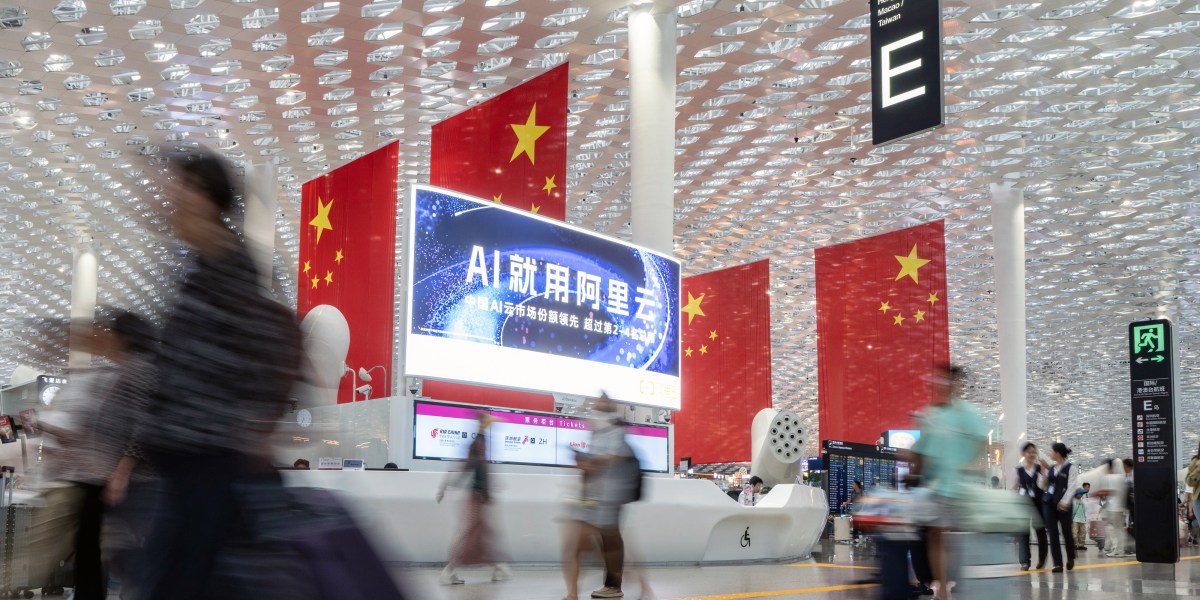
The U.S. government’s move to restrict access to Anthropic’s Mythos and Fable 5 models could push companies and governments toward open-source AI, Fortune reported. The shift matters because open-source systems can be downloaded and run outside a model maker’s platform, making access harder for developers or governments to cut off.
Anthropic said Friday that the U.S. Department of Commerce had ordered it to stop offering its frontier models to people outside the United States. Fortune reported that the company’s reading of U.S. export rules also barred access for “foreign national” users inside the U.S., including Anthropic employees, leading the company to suspend the models for all users.
The order has focused attention on whether other U.S. AI labs, including OpenAI and Google, could face similar restrictions. Paul Triolo, a partner at DGA-Albright Stonebridge Group, told Fortune the case marked the first time a government had directed a model developer to limit access to a specific model by nationality.
Triolo said companies and governments may reconsider building applications around a single model, especially for sovereign AI projects. He told Fortune that until Washington explains how it will assess and approve frontier models, some users will look at alternatives from outside the U.S., including Mistral, Cohere and Chinese open-source models.
Chinese labs see an opening
Chinese AI companies are already using the Anthropic dispute to promote their own systems, according to Fortune. Knowledge Atlas, better known as z.ai, released GLM-5.2, its latest open-source model, and its Hong Kong-listed shares rose more than 30% on Monday, the South China Morning Post reported.
The South China Morning Post reported that Knowledge Atlas said on social media it favored a different approach at a time when some frontier models can become unavailable. The company said advanced AI should not be controlled by a small group or pulled back because of a limited set of rules.
OpenRouter rankings cited by Fortune showed Chinese models held the top four spots for usage last week, with systems from DeepSeek, MiniMax, Tencent and Xiaomi. Fortune reported that Chinese open-source models have gained users in China and in developing markets where buyers see them as a useful balance of cost and performance.
Neil Shah, vice president of research at Counterpoint Research, told Fortune the Anthropic order was favorable for China. He said Chinese firms are not at the leading edge because of U.S. export controls, but they have domestic chips and software.
Shah also told Fortune the order would increase use of Chinese open-source models. He said economies seeking more self-sufficiency, including in the Middle East, are also likely to try to build their own AI systems.
Cost remains a major factor
Anthropic had argued before the order that Mythos was too powerful to release broadly without safeguards, Fortune reported. The company had run an early-access program called Project Glasswing that gave institutions in about 15 countries, including Japan and South Korea, access to Mythos for security research.
South Korea has been pursuing sovereign AI, including a state-backed competition for Korean-language models, Fortune reported. Sung Kim, founder of Korean AI startup Upstage, said at a Tuesday press conference reported by Bloomberg that South Korea needed to develop its own technology quickly and become as self-reliant as possible, calling AI a strategic national asset.
Fortune reported that OpenAI and Anthropic do not make their models available in mainland China or Hong Kong. Both companies have accused Chinese labs such as DeepSeek of using distillation, a technique in which larger models help train smaller and more efficient systems.
Chinese models still trail top U.S. systems, according to Fortune. DeepSeek has estimated its V4 model is three to six months behind leading frontier models, while Fortune reported it performs around the level of Anthropic’s Claude Opus 4.6 and OpenAI’s GPT 5.4, released earlier in 2026.
Price is a clear advantage for some Chinese systems, Fortune reported. DeepSeek’s V4 Pro costs $3.48 for 1 million output tokens, compared with $50 for the same amount from Anthropic’s Fable 5.
This story draws on original reporting from Fortune.