
Dollar swap politics could weaken reserve status, economists warn
Peterson Institute researchers say using dollar swap lines as geopolitical rewards could damage the Fed’s credibility and global demand for the currency.
By Maya Lindqvist · Senior Technology Correspondent
3 min read
U.S. currency swap lines are becoming a foreign-policy tool under President Donald Trump, and that shift could weaken the dollar’s central role in global finance, Peterson Institute for International Economics researchers warned. Their analysis said the risk is sharpest if the Federal Reserve appears to grant access to dollars based on political preference rather than financial stability needs.
Currency swaps let the U.S. exchange dollars for foreign currency, giving other central banks or governments access to dollar funding. According to the Peterson researchers, the Fed has historically used such arrangements to calm dollar markets during stress, including the 2008 financial crisis and the early phase of the COVID-19 pandemic.
The researchers said the Trump administration has added a more overt geopolitical purpose to the tool. If governments and investors conclude that emergency dollar access depends on their relationship with Washington, they could reduce their exposure to the currency, the Peterson economists wrote.
“If the supply of nonpoliticized [lender of last resort] services falls, so will the demand for dollars. Governments and markets will retreat from dollar exposure,” the researchers wrote.
Treasury and Fed roles differ
The U.S. has long used currency support as part of diplomacy, but the Peterson analysis drew a line between the Treasury Department and the Federal Reserve. The Treasury’s Exchange Stabilization Fund, described in the analysis as a nearly $220 billion portfolio, has traditionally been the executive branch’s vehicle for financial statecraft.
The Treasury used that fund last year for a $20 billion swap framework for Argentina, according to the account. The arrangement supported President Javier Milei, an ideological ally of Trump, as Argentina faced pressure from a falling peso and a difficult legislative election.
The Fed’s swap authority is different because the central bank can create dollars when it judges that the economy requires them. Peterson researchers said that capacity lets the Fed serve as a lender of last resort for offshore dollar markets in a crisis.
Outside emergency programs, the Fed maintains standing swap lines with five counterparts: the Bank of Canada, the Bank of Japan, the European Central Bank, the Bank of England and the Swiss National Bank. The Peterson analysis described those arrangements as highly prized in international finance.
UAE talks draw scrutiny
The United Arab Emirates said last month that it was discussing a currency swap line with the United States, Reuters reported. Treasury Secretary Scott Bessent also said in April that the U.S. was considering requests from several unnamed countries in the Middle East and Asia, according to Reuters.
UAE trade minister Thani Al Zeyoudi indicated the country wanted the kind of access held by the Fed’s existing swap partners, Bloomberg reported. “It is an elite matter. It is not about bailing out,” he said at a conference, according to Bloomberg.
The Peterson researchers said the administration should treat the UAE request carefully, arguing that a Fed swap line for a wealthy country without a possible dollar shortage would move the central bank outside its accepted role. They wrote that creating a “gold-plated” Fed line to enhance an ally’s prestige would be a serious departure.
The warning comes as Kevin Warsh, a Trump appointee, has taken over as Fed chair. CNBC has reported that observers have questioned whether Warsh can keep the central bank insulated from pressure from the White House.
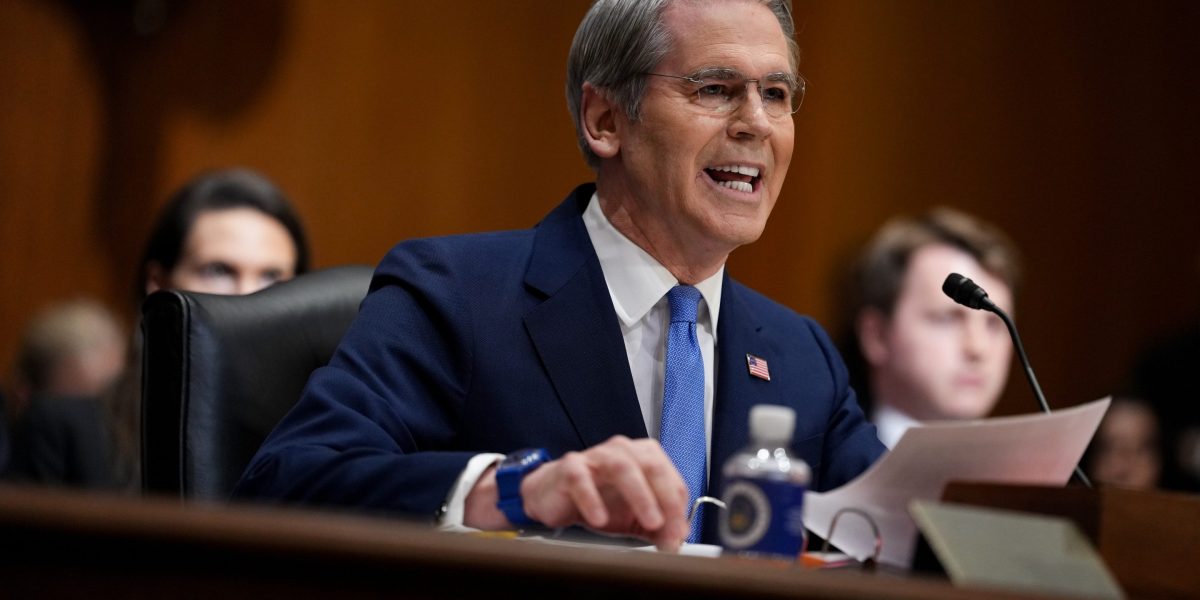
During his April Senate confirmation hearing, Warsh said the Fed would remain independent on interest-rate policy but would work with the administration and Congress on “non-monetary matters,” including economic statecraft. He also said Fed officials do not deserve the same deference on issues involving international finance.
The Peterson researchers said politically driven Fed swap lines could blur the boundary between the central bank and the Treasury. “The red line that compromises central bank independence when crossed is for the Treasury effectively to commandeer the Fed’s balance sheet,” they wrote.
This story draws on original reporting from Fortune.