
UN official urges companies to help design blended finance deals
Sanda Ojiambo says businesses should be treated as co-designers, not just recipients, in projects that use public capital to attract private investment.
By Sofia Marchetti · World Affairs Correspondent
3 min read
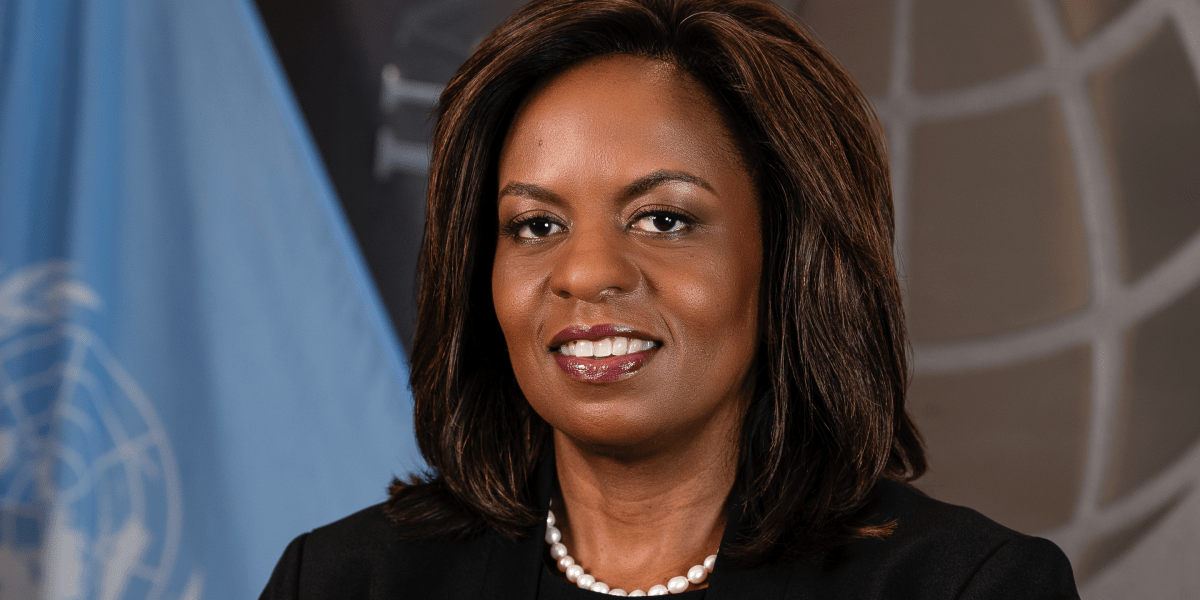
A senior United Nations official is calling for companies to take a larger role in designing blended finance projects, arguing that economic resilience will be harder to build if business stays outside the planning process. Sanda Ojiambo, CEO and executive director of the United Nations Global Compact, said in a Fortune commentary that public money and private investment need to work together more practically as development funding falls short.
Ojiambo pointed to a widening financing gap for the Sustainable Development Goals, the UN’s 17 targets for poverty reduction, environmental protection and broad-based prosperity by 2030. Citing UNCTAD, she said the annual shortfall is estimated at $4 trillion, while foreign direct investment remains uneven and official development assistance faces pressure.
Part of that gap may be suitable for private investment if risks are shared differently, Ojiambo said. She cited Boston Consulting Group’s estimate that $2.6 trillion of the shortfall is in energy and infrastructure, sectors she described as a fit for blended finance because they require long-term capital and involve assets that can be scaled.
Blended finance and business risk
Blended finance uses public, concessional or catalytic capital to take on part of a project’s risk, according to Ojiambo. That structure can make investments more attractive to private investors by changing the balance between risk and return.
Ojiambo said companies face pressure to strengthen supply chains, secure energy systems, update infrastructure and support industrial change. She added that many places where those investments are needed also carry higher actual or perceived risk, especially in frontier and emerging markets.
She argued that blended finance has grown over the past decade but has not reached the needed scale. One reason, she said, is that governments, multilateral development banks and development finance institutions often design the structures without bringing companies into the process early enough.
Those public institutions remain essential because they can absorb early-stage risk, Ojiambo said. But she argued that businesses bring operational knowledge about procurement, construction risk, customer demand, supply chains and the timing constraints that can determine whether a project works commercially.
Examples in steel, water and energy
Ojiambo cited Tata Steel’s Port Talbot transition in the United Kingdom as one model of collaboration. According to her account, the project paired a £500 million UK government grant with about £750 million in corporate investment to support lower-carbon steelmaking while maintaining industrial capacity and thousands of jobs.
She also pointed to work in Mexico involving Grupo Modelo, the German Agency for International Cooperation, Coca-Cola and other partners. Ojiambo said the partners used nature-based approaches to improve water security and create financing opportunities for local farmers.
Other examples she cited included digital connectivity in Ethiopia, water security in Mexico and renewable energy deployment in Zimbabwe. In those cases, she said blended finance helped support assets or services tied to economic resilience.
Ojiambo said many current blended finance transactions remain too customized, complicated and difficult to repeat. She also said due diligence can take years, reporting rules differ among institutions, legal structures vary by deal and many nonfinancial companies lack practical guidance on how the tool can support long-term investment plans.
The UN Global Compact is trying to address that gap through efforts including its CFO Coalition for the SDGs, Ojiambo said. She also pointed to a new report, Business-Led Blended Finance: A Practical Playbook, which she said is aimed at helping real-economy companies understand structures, manage risk and engage earlier in project design.
Ojiambo’s central argument is that public capital cannot close the development financing gap on its own. She said private capital will be more likely to move at scale if companies help shape blended finance structures from the start.
This story draws on original reporting from Fortune.