
Trump split MMR vaccine proposal faces approval and access hurdles
Trump’s order recommends separate MMR shots, but the products are not licensed in the U.S. and experts warn of more missed doses.
By Hana Yoshida · Markets Reporter
3 min read
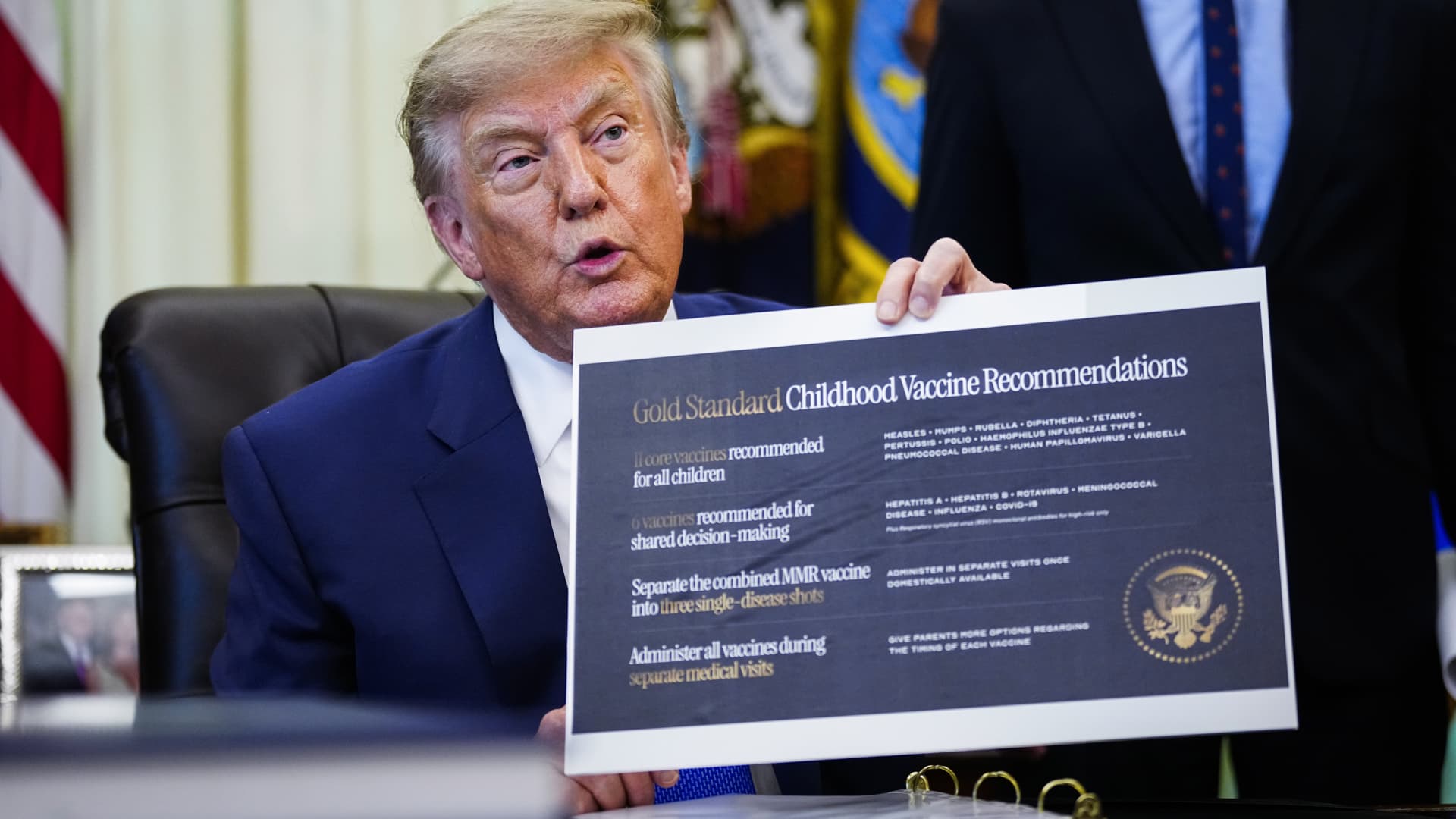
President Donald Trump’s split MMR vaccine proposal calls for replacing the combined measles, mumps and rubella shot with separate injections and holding childhood vaccinations at separate visits. The Aug. 10 executive order is guidance, not an immediate change to available vaccines or state school-entry rules, according to the BBC and CIDRAP.
The proposal could add appointments and injections for families while leaving children at greater risk of delayed or missed protection, public-health and medical experts told CNBC and the BBC. The order also recommends reducing the number of routine childhood vaccines, though its MMR provision has drawn particular concern because the separate products are not currently licensed in the United States.
Are separate MMR vaccines available in the US?
No. CIDRAP and CBS News report that standalone vaccines for measles, mumps and rubella are not licensed or approved by the Food and Drug Administration for use in the United States. A presidential order cannot itself create those products; manufacturers would have to develop them, conduct clinical testing and obtain FDA approval.
Andrew Racine, president of the American Academy of Pediatrics, told CNBC that the process would probably take more than a decade. William Moss of Johns Hopkins University told CNBC that manufacturers would have little reason to take on the regulatory work for separate products.
School vaccination requirements remain a state matter, the BBC reported. CIDRAP said the order advises states and territories to consider changes to their laws and regulations, but that is distinct from a federal mandate.
What would splitting the MMR shot change?
The current schedule uses two doses of the combined MMR vaccine: one at 12 to 15 months and another at ages 4 to 6, CNBC and the BBC reported. Giving each component separately would mean six injections across that period rather than two combined doses.
The Centers for Disease Control and Prevention says there is no published scientific evidence that separating MMR into three individual shots has a benefit, according to the BBC. The CDC also says vaccination is safer than getting measles, mumps or rubella and that most recipients do not have serious problems from MMR.
Trump said the combined vaccine could be “quite lethal” and linked it to autism. CNBC and the BBC reported that there is no scientific evidence supporting those assertions, and the BBC noted that multiple studies have found no connection between MMR vaccination and autism.
Neil Maniar, a Northeastern University public-health professor, told CNBC that additional visits could produce more delayed or missed vaccinations, especially for families that struggle to take time off work or reach care. Vanderbilt’s William Schaffner told the BBC that more appointments would raise the tracking burden and expense without a scientific benefit.
Combination vaccines were designed to reduce missed opportunities for vaccination and improve coverage, a former CDC immunization-program leader told CBS News. Experts cited by the outlets warned that gaps created by postponed doses can leave children unprotected from measles, mumps or rubella, illnesses that can cause serious complications.
This story draws on original reporting from CNBC.