
Trump’s Carter jabs soften as Iran and inflation test his second term
Fortune reported that Trump has invoked Carter more cautiously as Iran, inflation and legacy concerns draw comparisons to the 39th president.
By Sofia Marchetti · World Affairs Correspondent
4 min read
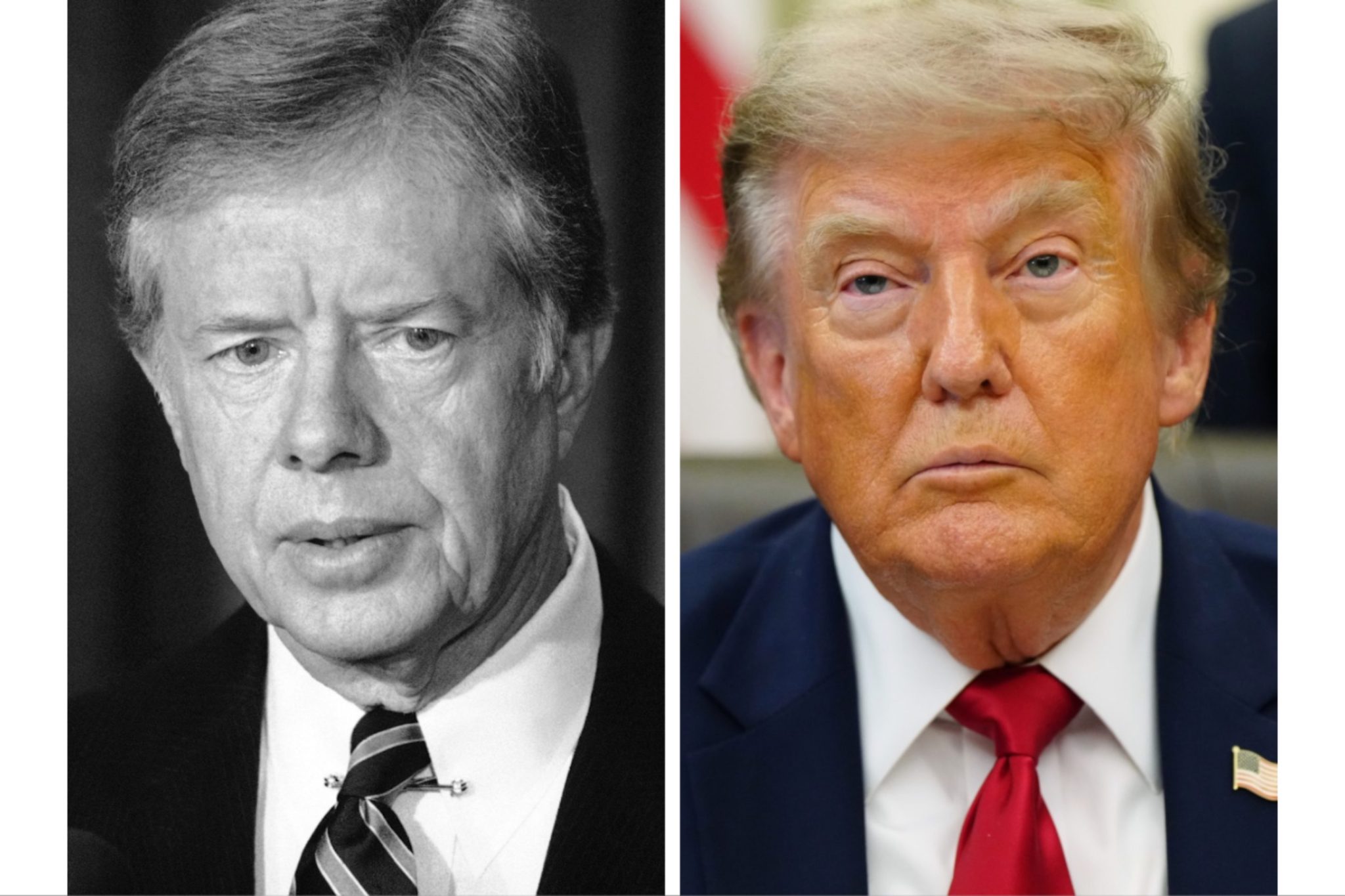
President Donald Trump has shifted from using Jimmy Carter as a regular political insult to invoking him as a warning while facing Iran and inflation, two problems that also marked Carter’s presidency, Fortune reported. The change matters because Trump is increasingly talking about presidential legacy as U.S. involvement around Iran intensifies and consumer prices remain a political threat.
Trump has long portrayed Carter as a symbol of Democratic weakness, often using him to attack Joe Biden during the 2024 campaign, according to Fortune. His tone has changed as he confronts a war in Iran, U.S. efforts tied to the Strait of Hormuz and inflation that he has not eliminated despite promises that his business experience would help bring costs down.
Asked last month why he had not sent U.S. Special Forces into Iran to remove enriched uranium, Trump said, “I didn’t feel like being Jimmy Carter.” Fortune reported that the remark referred to the failed 1980 hostage rescue mission in Iran, which killed eight U.S. service members.
Trump also said in March that the failed mission “cost them the election” against Ronald Reagan in 1980, according to Fortune. That comment suggested a more cautious view of Carter’s experience than Trump’s earlier use of Carter as a campaign punchline.
Experts split on what Trump is taking from history
Johnathan Adler, author of “His Very Best: Jimmy Carter, A Life,” told Fortune that Trump may be realizing his presidency could be remembered for some of the same issues as Carter’s. Adler said Trump had “kicked over a hornet’s nest” and could face a Carter-like legacy over Iran and the economy.
The White House rejected the comparison. Spokesperson Olivia Wales told Fortune that Trump “will never allow Iran to have a nuclear weapon” and remains focused on an economic agenda aimed at lowering costs.
Wales called Trump “a one-of-a-kind leader” who advances U.S. interests and said the only legacy he is concerned with is “making America greater than ever before.” Kori Schake, a former member of George W. Bush’s National Security Council, told Fortune she does not believe Trump is reassessing Carter.
Iran and inflation form the central overlap
Fortune reported that inflation was far worse under Carter, reaching 14.7% in April 1980. Under Trump, consumer prices rose 4.2% in May from a year earlier, a three-year high, before falling sharply from May to June as gas prices dropped after a U.S.-Iran ceasefire.
That ceasefire has since unraveled, Fortune reported, and oil prices have risen again. The report said U.S. attacks intensified after Iran attacked commercial ships in the Strait of Hormuz.
Carter also faced pressure over the strait. In his 1980 State of the Union address, Carter said the situation required participation from countries relying on Middle East oil and concerned with global peace and stability, according to Fortune.
Another overlap involves Kharg Island, a key Iranian oil site. Fortune reported that Carter considered military action there but decided against it to avoid endangering U.S. hostages, while Trump struck the island early in the war and has threatened it again.
Schake, now a senior fellow and director of foreign and defense policy studies at the American Enterprise Institute, told Fortune the difference is that Carter’s team held back because it did not want war with Iran. “And we’re already at war with Iran,” she said.
Legacy talk has become more common
Trump has recently cited several past presidents, including William McKinley, Theodore Roosevelt, Herbert Hoover, Andrew Jackson and Franklin D. Roosevelt, Fortune reported. He said this week, “I’m a student of a lot of history.”
James P. Pfiffner, a professor emeritus at George Mason University, told Fortune by email that Trump is thinking about legacy and may have believed attacking Iran would improve it. Pfiffner said the war will instead damage Trump’s standing and argued that he ignored lessons from Carter’s experience and the geography around the Strait of Hormuz.
This story draws on original reporting from Fortune.