
SpaceX Starship V3 launch deploys advanced Starlink satellites
SpaceX’s Starship completed a test flight with 20 advanced Starlinks and its cleanest re-entry yet, though the booster return failed.
By Daniel Okafor · Business Editor
3 min read
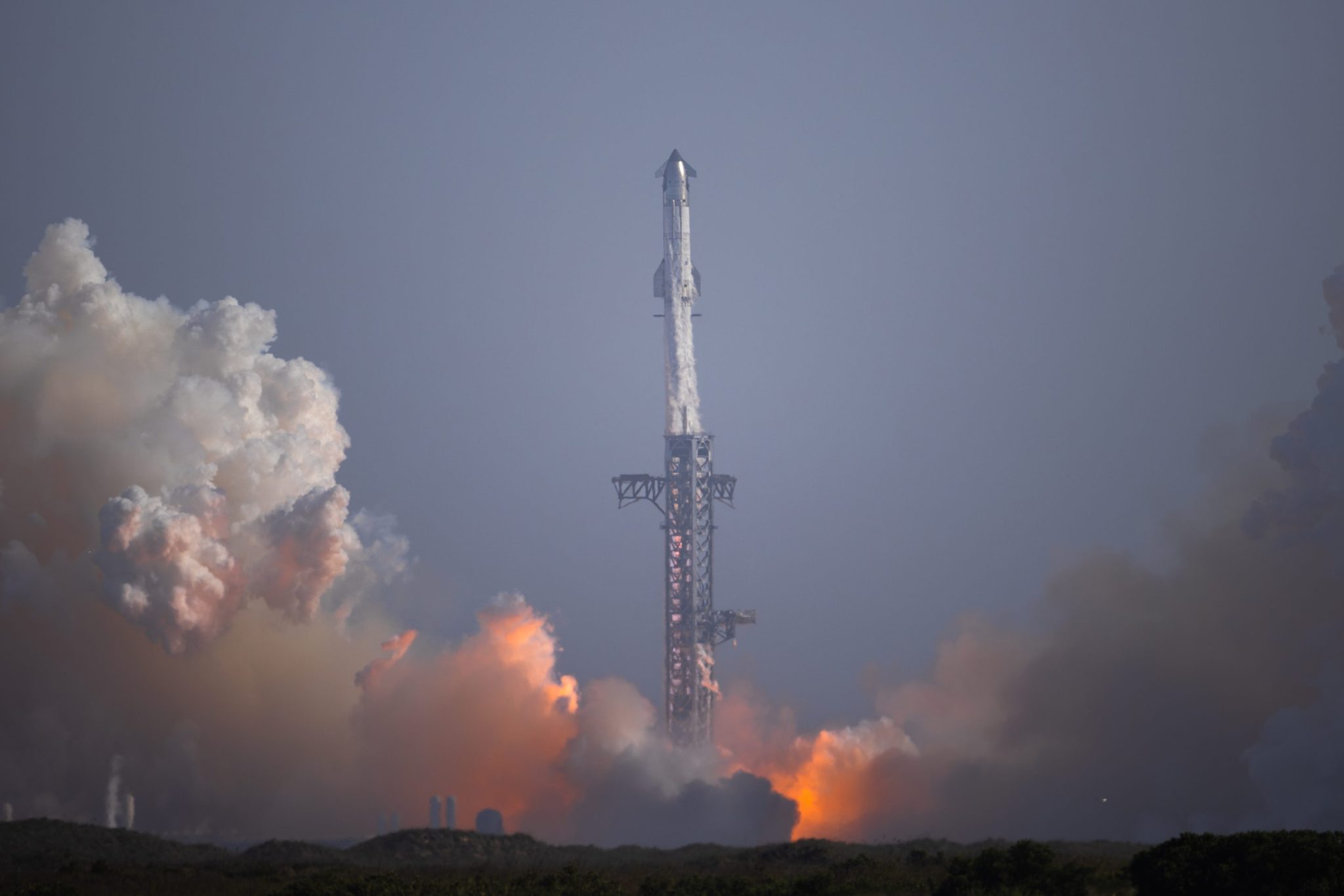
The SpaceX Starship V3 launch on Friday sent the company’s 407-foot rocket from South Texas on a test flight that deployed 20 advanced Starlink satellites and ended with the spacecraft floating in the Indian Ocean. The flight matters to SpaceX and NASA because Starship is central to planned lunar missions and the company’s goal of making the vehicle fully reusable.
Fortune reported that NASA monitored the roughly hourlong flight, which carried Starship more than 10,000 miles from its launch site near the Texas-Mexico border. SpaceX employees cheered as the spacecraft made a soft splashdown and remained afloat at the end of the company’s webcast.
What happened on the SpaceX Starship V3 launch?
All 33 engines fired at liftoff after SpaceX replaced six engines on the first-stage booster, Fortune reported. The replacement followed a last-second abort the previous week, when some booster engines did not ignite.
The booster still did not complete its return as planned. Fortune reported that too few engines restarted for the descent, causing the booster to come down too quickly and hit the Gulf of Mexico.
The upper spacecraft continued eastward and released the 20 Starlink satellites one at a time at an altitude of 124 miles, or 200 kilometers. SpaceX said the satellites completed their assigned work before re-entering over the Indian Ocean.
The mission was Starship’s 13th test flight and the second this year using the new V3 version, according to Fortune. SpaceX did not plan to recover either the booster or the spacecraft on this demonstration flight.
How did the Starlink satellites perform?
After release from Starship’s dispenser, the satellites had about 20 minutes to send communications by laser and radio before re-entry. SpaceX said engineers contacted each satellite and downloaded data from all 20.
Six of the satellites carried cameras that photographed Starship’s heat shield near the end of the flight. Fortune reported that those images were sent back while the spacecraft was bobbing in the ocean.
SpaceX said more than 10,000 Starlink satellites are now providing internet service, giving the company the world’s largest satellite constellation.
Why was the re-entry important?
SpaceX described the Indian Ocean splashdown as Starship’s best re-entry so far. Earlier flights ended with the spacecraft burning up, exploding at splashdown or breaking apart in the air, Fortune reported.
The spacecraft’s heat shield carried sensors to measure the pressure on the vehicle during launch. Most of its thermal tiles were black, while some were painted white to simulate missing tiles as part of a heat-shield test.
“We got all the heat shield data we needed and then some!” Elon Musk wrote on X. SpaceX engineer Kate Tice said during the company’s coverage that the team was “really pumped” and called it “lucky flight 13.”
NASA Administrator Jared Isaacman also congratulated the company on X, writing that he was excited about what would be learned from the mission.
What does NASA need from Starship?
NASA plans to use Starship as a lunar lander for astronaut missions to the moon. Fortune reported that the agency needs Starship to finish testing and reach orbit soon so the Artemis III crew, made up of three Americans and one Italian, can practice docking their capsule with it next year.
SpaceX wants to prove Starship’s heat shield can survive re-entry before trying to bring the spacecraft back to the Starbase launch pad. The company has already used giant mechanical arms at the pad to catch a Starship booster and plans to attempt the same type of recovery with the spacecraft, which is designed for full reuse.
Musk also intends Starship to support Mars missions, including his plan for a city there. Fortune reported that SpaceX is already booking tourist trips to Mars as well as the moon.
The latest flight had been delayed by the July 16 launch abort and then by thick clouds from Tropical Storm Bertha on Thursday, Fortune reported.
This story draws on original reporting from Fortune.