
Quartz countertop dust linked to severe silicosis in workers
Occupational health experts say engineered stone fabrication has sickened hundreds of U.S. workers, with California weighing tougher limits.
By Maya Lindqvist · Senior Technology Correspondent
3 min read
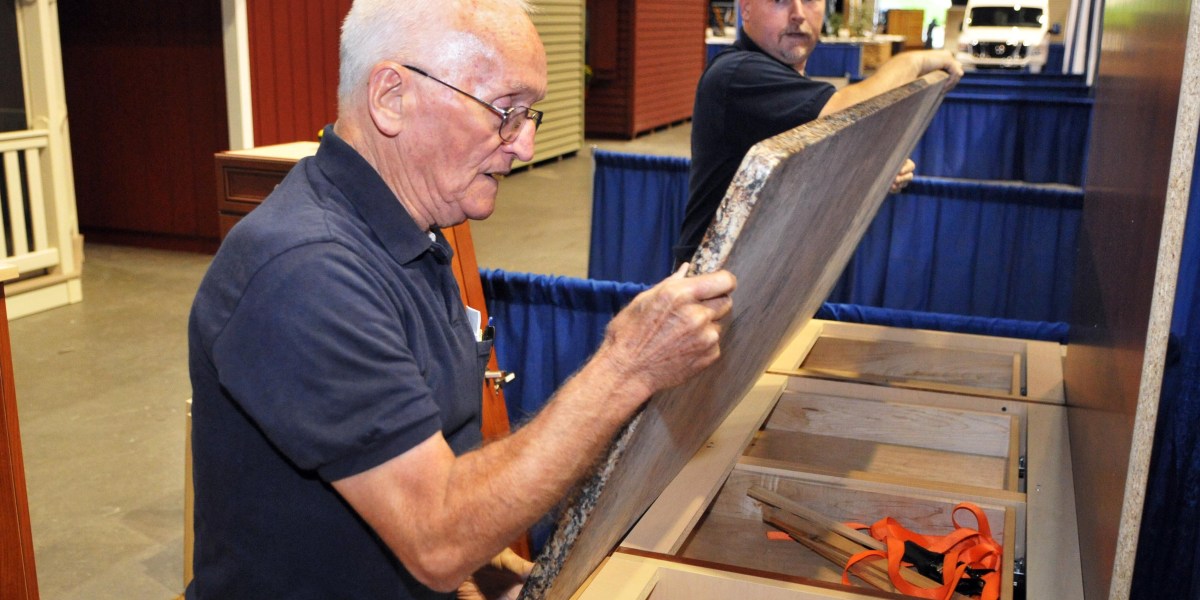
Workers who cut, grind and polish engineered stone countertops are developing severe lung disease tied to silica dust, according to occupational health experts David Michaels and Robert Harrison. The risk matters because the material, commonly sold as quartz, has become a common choice for kitchen renovations while the work is often done in small fabrication shops outside public view.
Michaels, a George Washington University public health professor and former Occupational Safety and Health Administration official, and Harrison, a University of California, San Francisco occupational health physician, said engineered stone can contain up to 95% finely ground quartz mixed with resins and pigments. They said fabrication releases tiny crystalline silica particles that workers can inhale, causing a fast-moving form of silicosis that scars the lungs and has no cure.
California cases put the risk in view
California has identified more than 550 engineered-stone-related silicosis cases among workers, according to state public health data cited by Michaels and Harrison. They said at least 100 of those workers have had or are waiting for lung transplants, and at least 30 died from 2019 through 2026.
The workers affected in California are relatively young, Michaels and Harrison said, with a median age of 46 and a median age at death of 52. They said workers who survive after silica exposure also face higher risks of lung cancer, kidney disease and autoimmune diseases than people without that exposure.
The problem is likely undercounted outside California, according to Michaels and Harrison, because most states do not track the disease in the same way. They said reported U.S. cases have also appeared in Massachusetts, Illinois, New York, Florida, Utah, Washington, New Mexico and Colorado.
Retail demand meets small-shop exposure
Consumers can order quartz countertops through retailers such as Costco, Home Depot and Lowe’s, which typically use local fabrication shops, Michaels and Harrison said. They said Ikea stopped selling engineered stone countertops in 2025, while Home Depot, Lowe’s and Costco were still selling crystalline-silica products as of June 2026.
Michaels and Harrison said roughly 100,000 people work in U.S. countertop fabrication shops, citing market data, and studies suggest 20% or more of exposed workers develop silicosis. They also said treatment can cost millions of dollars per person, with many costs paid by Medicaid and other public programs.
The experts pointed to crushed-glass countertop products as a safer alternative because they use amorphous silica, which they said is much less toxic than crystalline silica. They said consumers are often unaware those options exist.
Lawsuits and regulation are expanding
Hundreds of sick workers are suing countertop manufacturers, distributors and retailers, according to Michaels and Harrison. They said some early cases settled, and that a 2024 trial ended with a $52 million award to a 36-year-old worker who had a double lung transplant while on life support.
OSHA lowered the federal workplace exposure limit for airborne silica in 2016, according to Michaels and Harrison, but they said meeting that standard has not been enough for engineered stone work. California adopted a stronger workplace rule in 2024, and the state has begun emergency rulemaking to prohibit fabrication and installation of engineered stone containing more than 1% crystalline silica, they said.
Other countries have moved faster. Michaels and Harrison said Australia banned the importation and use of engineered stone products containing more than 1% crystalline silica after stronger workplace controls proved inadequate, while Britain in May 2026 barred dry cutting of engineered stone and announced plans to inspect 1,000 fabrication shops.
Michaels and Harrison said manufacturers are opposing tighter liability exposure through proposed national legislation. They argue that unless retailers and manufacturers stop selling engineered stone containing crystalline silica, more workers will continue to face preventable silicosis and cancer risks.
This story draws on original reporting from Fortune.