
Presidio sues over border wall plan near Rio Grande levees
The Texas border town says the federal wall project could weaken flood protections and should not proceed without Army Corps review.
By Sofia Marchetti · World Affairs Correspondent
3 min read
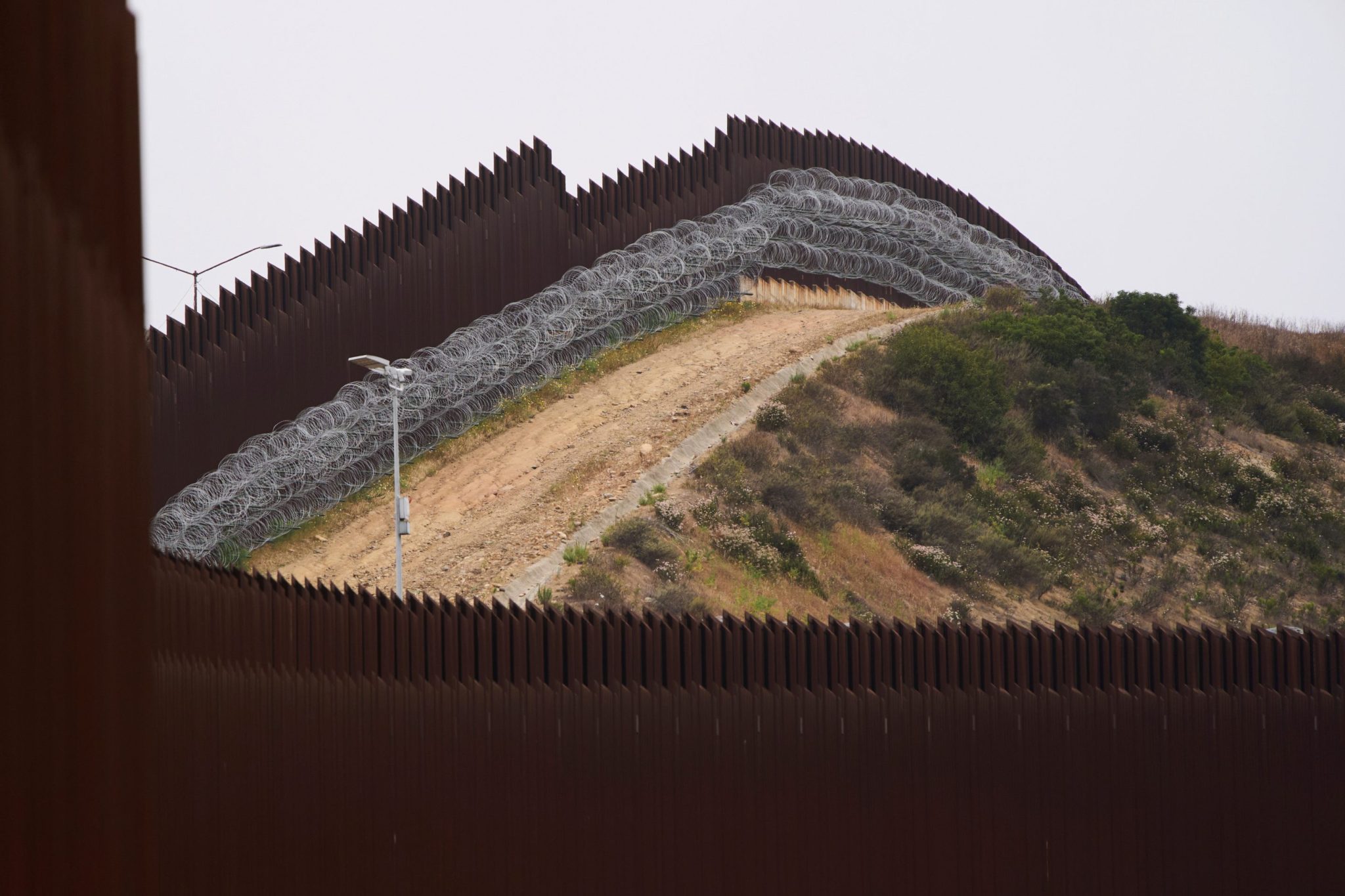
The development district in Presidio, Texas, is asking a federal judge to stop a border wall project it says could endanger levees that protect the town from flooding. The case challenges a major piece of the Trump administration’s $46 billion effort to extend barriers along the U.S.-Mexico border from the Pacific Ocean to the Gulf of Mexico, Fortune reported.
At a Tuesday hearing, lawyers for the district argued that Customs and Border Protection plans to build through a levee system along the Rio Grande and nearby tributaries. The district says those levees and berms, built in the 1970s and 1980s, are a key defense against flash flooding in and around Presidio, a rural community of just over 3,200 residents.
In court filings, the district said CBP intends to remove the earthen face of an existing levee and replace it with a concrete wall topped by 30-foot steel bollard panels. The district also said the agency has declined to provide fuller plans, citing national security.
Laura Bakst, a lawyer with Democracy Forward, which represents the Presidio district, said CBP construction has a history of creating or worsening flood risks. The district argues that Homeland Security is violating the Rivers and Harbors Act because it has not obtained required approval from the Army Corps of Engineers before building on or near the levees.
The Justice Department countered that the case is premature because CBP has not settled on a final design or route for the wall in Presidio. Government lawyers also said Homeland Security has power under federal law to waive a wide range of requirements to speed border wall construction.
Homeland Security has used that waiver authority as it pushes to build more wall segments, Fortune reported. Former Homeland Security Secretary Kristi Noem and current Secretary Markwayne Mullin have waived rules that normally protect environmental resources and archaeological sites during federal construction projects.
Critics of the department’s approach say those waivers reach beyond what Congress allowed for border barrier construction. Louis Katz, another Democracy Forward lawyer, described the department’s use of waiver power as an extraordinary assertion of authority.
The timing of any work in Presidio remains uncertain. Justice Department lawyer Alexander Yun told the judge that construction was unlikely to begin at the start of August, but could start later in August, in September or in October. Materials, including steel bollard panels, have been staged in the area, though wall construction has not begun there, Fortune reported.
Homeland Security officials have described the wall as a priority. Mullin told Congress in June that a preliminary layer of the wall would be done by this time next year, and CBP Commissioner Rodney Scott has said the agency is building 6 miles of wall per week.
The hearing also touched on border crossings, which Fortune reported are at their lowest levels in decades. The Big Bend Sector, which includes Presidio, has not seen the same high crossing numbers recorded in some other border regions, partly because of remote and difficult terrain.
A Justice Department lawyer said the recent low numbers are an anomaly and that the administration’s aim is zero illegal crossings. U.S. District Judge Reggie Walton questioned that goal and also said he was weighing how much authority he has to restrict Homeland Security after Congress gave the department waiver power.
Walton said he expects to rule in the coming week.
This story draws on original reporting from Fortune.