
Pickaxe Mountain in Iran faces new Trump strike threat
Trump said the U.S. may soon hit Iran’s buried Pickaxe Mountain nuclear site, a facility inspectors have not accessed.
By Sofia Marchetti · World Affairs Correspondent
4 min read
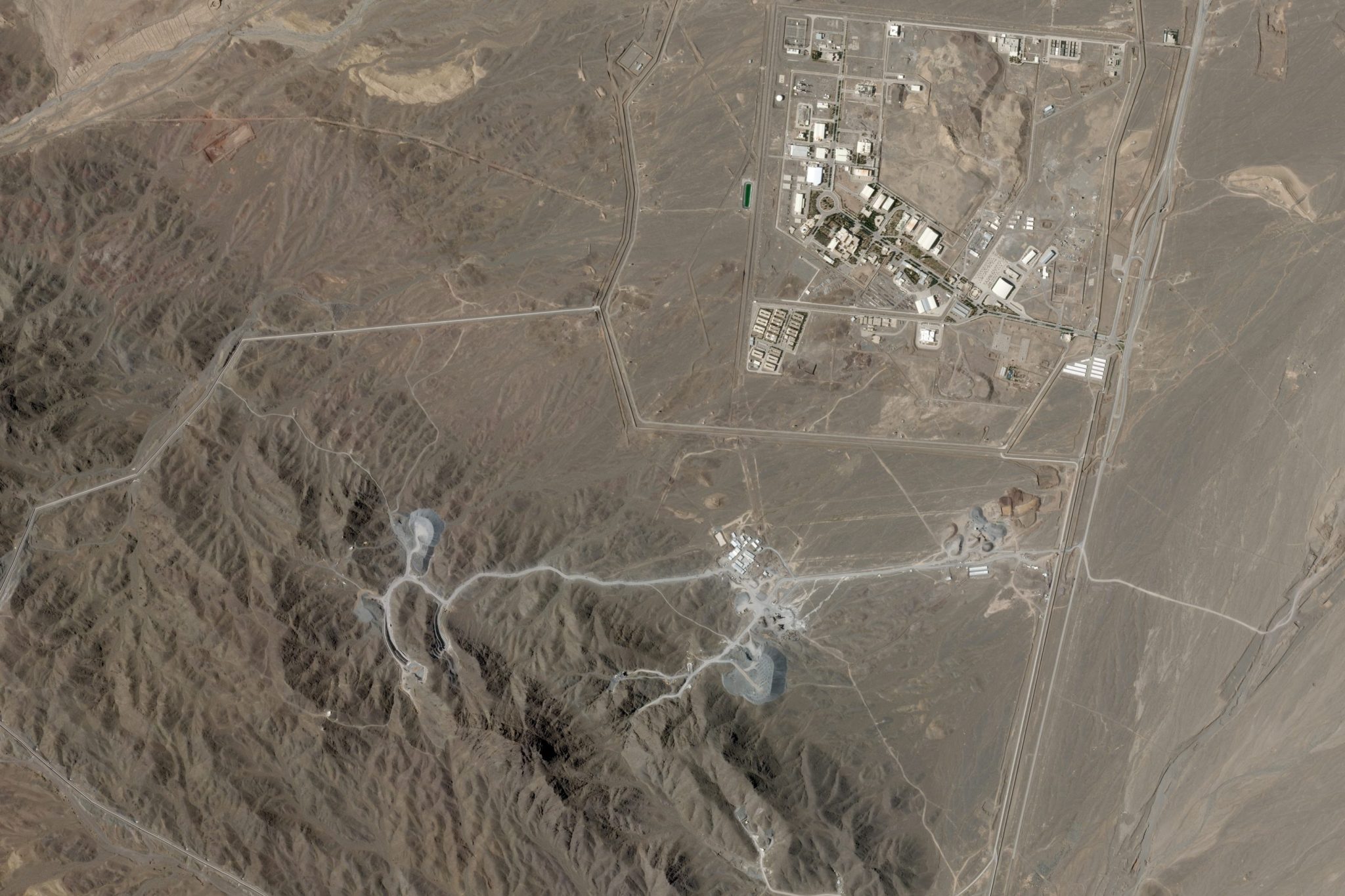
Pickaxe Mountain in Iran has become a focus of new U.S. military threats after President Donald Trump said American forces may soon strike the deeply buried nuclear site. The facility matters because experts cited by The Associated Press say it may be deep enough to test the limits of the most powerful U.S. bunker-busting bombs.
Trump made the comments Tuesday in the Oval Office while speaking with journalists, according to AP. He said Iran may have moved centrifuges to the site and added, “We’ll be hitting that area … probably pretty soon. And there’s not a thing they can do about it.”
The remarks came as the United States and Iran traded attacks tied to tensions over the Strait of Hormuz, AP reported. The site, formally known as Kuh-e Kolang Gaz La and commonly translated as “Pickaxe Mountain,” sits near Iran’s Natanz nuclear enrichment complex.
What is Pickaxe Mountain in Iran?
Pickaxe Mountain is an under-construction Iranian nuclear facility on the south side of Natanz, about 225 kilometers, or 140 miles, south of Tehran, according to AP. The U.N. International Atomic Energy Agency has not gained access to the site, so it remains unclear what Iran has placed there.
Natanz has long drawn international concern because it includes above-ground and underground nuclear facilities. AP reported that Iran began building the Pickaxe Mountain project after sabotage attacks at Natanz, including an attack likely carried out by Israel that destroyed a centrifuge manufacturing site.
The facility covers about 2.7 square kilometers, or 1 square mile, on Iran’s Central Plateau, AP reported. Satellite images show multiple entrances, and the area is protected by anti-aircraft batteries, fencing and Iran’s paramilitary Revolutionary Guard, according to AP.
Why the site could be hard to destroy
In 2023, AP reported that experts at the James Martin Center for Nonproliferation Studies assessed that Iran was likely building the site at a depth of 80 to 100 meters, or 260 to 328 feet. AP said excavation has continued since then, and some experts believe the facility could be even deeper.
Experts cited by AP say the scale of the work suggests Iran could use the underground site both to enrich uranium and to build centrifuges. Centrifuges are tube-shaped machines arranged in cascades that spin uranium gas to raise its enrichment level.
The U.S. developed the GBU-57 bomb for deeply buried targets, according to AP. The American military says the bomb can penetrate at least 60 meters, or 200 feet, of earth before exploding, but AP reported it is unclear whether even sequential strikes would damage a facility as deep as Pickaxe Mountain.
What Trump said about Iran’s nuclear material
Speaking alongside Lebanese President Joseph Aoun, Trump initially pointed to Iran’s stockpile of highly enriched uranium, AP reported. Iran had enriched uranium up to 60%, near weapons-grade levels, before U.S. strikes in 2025.
“We follow the material, that’s where the action is,” Trump told journalists, according to AP. He later said Pickaxe Mountain remained a possible target and said the U.S. would hit the area “pretty soon” and “very heavily.”
AP reported that Iran is not known to have restarted enrichment since the 2025 strikes, and its stockpile is believed to remain at bombed enrichment sites. During Operation Midnight Hammer in the 12-day war between Iran and Israel, the United States struck Fordo, Isfahan and Natanz, all of which had conducted uranium enrichment, according to AP.
Iran has said areas near its Russian-run Bushehr nuclear power plant have been attacked without damaging the reactor, AP reported. Tehran also said the U.S. attacked the cleared area planned for the Darkhovin nuclear plant; the IAEA said no nuclear material was there when it last inspected the site.
Iran has long said its nuclear program is peaceful, AP reported. The IAEA and Western governments do not believe Iran has had an active military nuclear program since 2003, while Israel has long been believed to be the Middle East’s only nuclear-armed state.
This story draws on original reporting from Fortune.