
Oil shock pushes electric cars to record share of global sales
Goldman Sachs says EVs reached 26.1% of global car sales in May after the Iran war disrupted oil supplies and lifted fuel prices.
By Daniel Okafor · Business Editor
3 min read
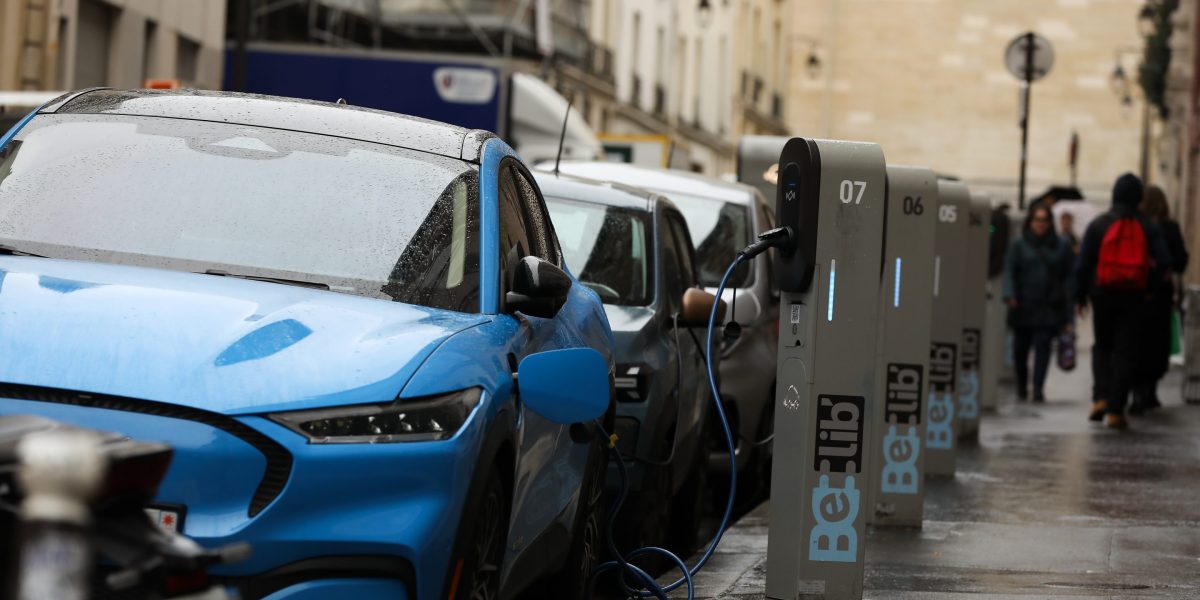
Electric vehicles took a record share of global car sales in May as the Iran war tightened oil supplies and raised gasoline costs, according to Goldman Sachs. The bank said the shift could trim global oil demand by late 2027, though the expected impact remains small beside total consumption.
Goldman’s commodities team said EVs made up 26.1% of all car sales worldwide in May, the first time the share topped one quarter. The report put the increase at 3.4 percentage points since the oil shock that followed the closure of the Strait of Hormuz.
Fortune reported that the U.S. launched strikes on Iran in late February and that the Strait of Hormuz, a route for about 20% of global oil supply, was closed. Gasoline prices in the U.S. moved above $4 a gallon within weeks, while Moody’s estimated the extra pump costs for Americans at more than $100 billion.
China drives most of the increase
Goldman said 12 of the 15 largest EV markets have recorded higher electric-vehicle penetration since February. China accounted for 61% of the global increase, while OECD markets contributed 21% and non-OECD markets outside China accounted for 19%, according to the bank.
The report said China’s EV share rose 11.4 percentage points after February, helped by established charging infrastructure, lower-priced domestic models and higher gasoline costs. Data from the China Passenger Car Association showed EVs at nearly 63% of China’s retail car sales in May, after topping 60% in April.
The U.S. showed little movement by comparison. Goldman said U.S. EV penetration increased by 0.1 percentage point, and Fortune reported that new U.S. EV sales were about 85,000 units in May, equal to 5.7% of total vehicle sales and down nearly 22% from a year earlier.
Goldman linked the weak U.S. showing partly to the expiration of the federal $7,500 EV tax credit in September 2025. The bank said the incentive’s end brought some purchases forward, leaving less demand to appear after the oil shock.
Oil demand effect remains modest
Goldman estimated that every 1 million cars switching from internal combustion engines to electric power lowers road fuel demand by 30,000 barrels a day in the U.S. and 20,000 barrels a day elsewhere. Under its temporary-acceleration case, the bank projected a 0.13 million-barrel-a-day reduction in global oil demand by December 2027.
In a stronger scenario, where the current trend continues through late 2027, Goldman estimated the reduction at 0.32 million barrels a day. The bank compared those figures with global oil consumption of roughly 100 million barrels a day.
Goldman said the numbers may miss some fuel displacement because its analysis covers new passenger cars only. In China, the bank said plug-in hybrid owners are charging more often instead of refueling, contributing to an estimated year-over-year drop of more than 20% in gasoline and related product sales volumes.
The report also pointed to electric two- and three-wheelers as another factor not captured in passenger-car data. Goldman said those vehicles account for 92% of EV sales in India, 80% in Vietnam and 35% in China.
Goldman said the EV acceleration makes its lower oil-price case plausible. The bank projected Brent crude could fall to the mid-$50s a barrel by late 2027 if the Strait of Hormuz constraints continue and EV demand keeps strengthening.
This story draws on original reporting from Fortune.