
NASA prepares robotic boost to save Swift space telescope
NASA hired Katalyst Space Technologies for a $30 million mission to lift the aging Swift Observatory before it drops too low to save.
By Hana Yoshida · Markets Reporter
3 min read
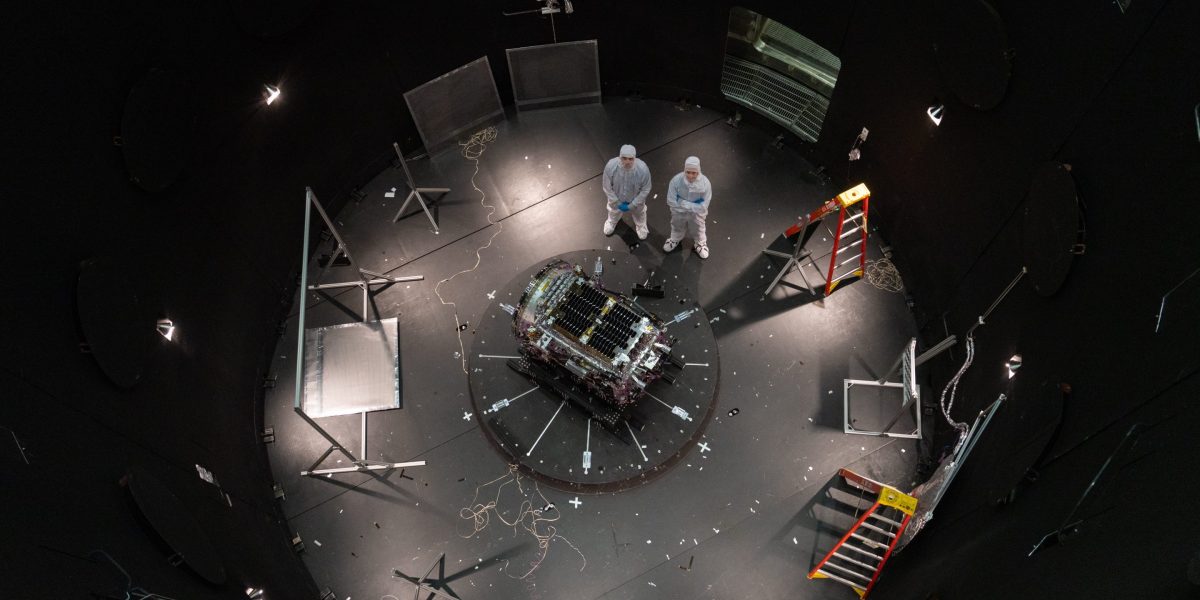
NASA is preparing a robotic rescue attempt to keep the Swift Observatory from sliding toward an uncontrolled return to Earth, according to the Associated Press. The $30 million mission would also test a service that NASA officials and Katalyst Space Technologies say could later help extend the life of other orbiting observatories, including Hubble.
NASA hired Katalyst, a startup, to send an autonomous spacecraft called Link to meet Swift in orbit and raise it to a safer altitude, AP reported. The spacecraft is expected to launch from an atoll in the Marshall Islands on an airplane-launched Pegasus rocket, with liftoff possible as soon as Tuesday.
A race against orbital decay
Swift has been operating since 2004 and studies violent cosmic events, including gamma ray bursts and exploding stars. NASA officials told AP that recent intense solar activity has increased drag on the telescope, causing it to lose altitude faster.
The observatory is now about 224 miles, or 360 kilometers, above Earth, according to AP. Katalyst’s plan is to move it to about 373 miles, or 600 kilometers, over several months after Link catches up with it.
The timing is tight. AP reported that the 1.6-ton observatory must stay above 185 miles, or 300 kilometers, for the rescue to be feasible, and current estimates put that cutoff point in October.
NASA has already stopped Swift’s science work to slow the descent, AP reported. Its instruments were turned off in February.
How the rescue is supposed to work
Link is about the size of a small kitchen refrigerator and has solar arrays spanning 40 feet, according to AP. The spacecraft carries three arms, each just over 3 feet long, with pinching grippers at the ends.
Katalyst chief executive Ghonhee Lee told AP that Link should take about a month to rendezvous with Swift. If it attaches successfully, the orbit-raising phase would take another couple of months, and Lee said Swift could return to work by September if the mission goes as planned.
Company officials told AP the job is difficult because Swift was not built for servicing or capture. NASA astrophysics director Shawn Domagal-Goldman said the agency did not initially expect Katalyst to get this far on the compressed schedule.
NASA science mission chief Nicky Fox told AP the agency cannot currently afford to build a replacement for Swift. Domagal-Goldman said Swift remains valuable because it can quickly turn toward sudden astronomical events, a role expected to grow as the Webb Space Telescope and the planned Roman Space Telescope find more targets.
Hubble could follow
AP reported that only China has tried a comparable mission, moving a satellite into a higher graveyard orbit four years ago. Lee told AP the Swift flight would be the first U.S. robotic mission of its kind.
Katalyst is already developing a next-generation spacecraft for satellites as high as 22,300 miles, or 35,800 kilometers, AP reported. Lee said the company sees Swift as an opening step toward in-orbit repair, refueling and construction services.
NASA’s Hubble Space Telescope is also losing altitude during the current period of solar activity, according to AP. Hubble, which astronauts serviced several times during the shuttle era, could receive a Katalyst boost in 2028, and Fox described it to AP as a national treasure.
This story draws on original reporting from Fortune.