
Paris leans on Seine-fed cooling system as heat strains the city
A 75-mile district cooling network is helping Paris cool major buildings, but extreme temperatures are testing its capacity.
By Hana Yoshida · Markets Reporter
3 min read
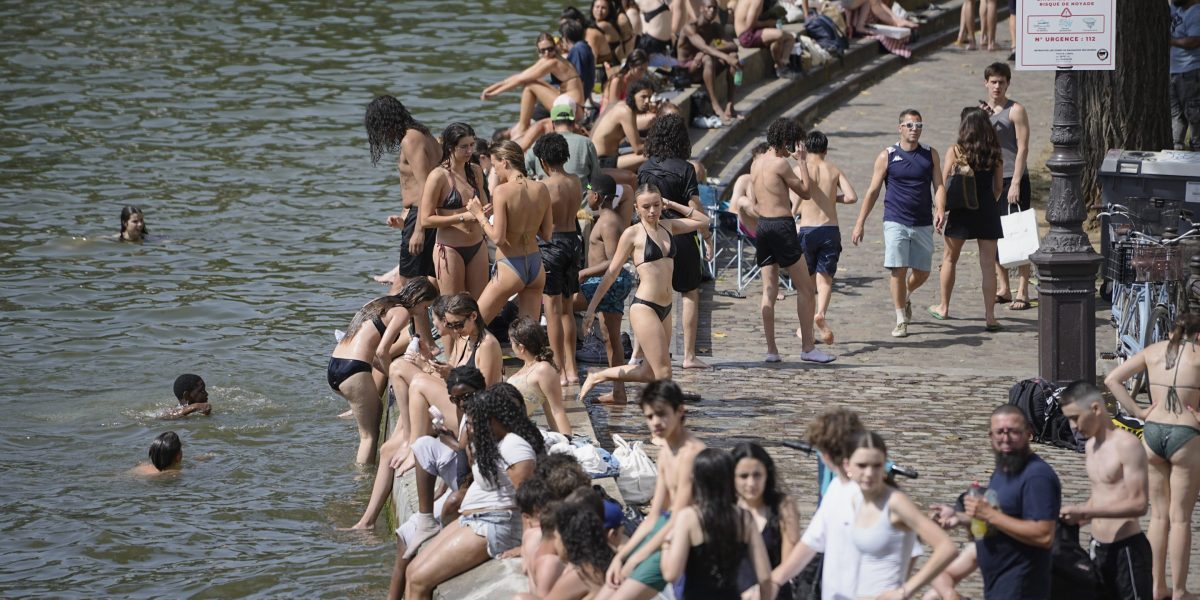
Paris is relying on an underground district cooling system tied to the Seine as a severe heatwave raises demand for relief across the city, Bloomberg reported. The network matters because it offers a lower-energy alternative to individual air conditioning in a city where such systems are not widely used.
The 75-mile system sends chilled water through pipes to offices, shopping centers and cultural sites, including the Louvre, according to Bloomberg. Fraicheur de Paris, the operator and part of Engie SA, says the system uses half as much electricity as standalone air conditioning and cuts emissions by 50%.
Managing Director Marie Carlo told Bloomberg that the company’s cooling plants are running continuously during the heatwave. She said high demand and occasional power outages mean the plants sometimes cannot cool the water to their usual level.
The current heat arrived before Europe’s typical July temperature peak, Bloomberg reported. In Paris, the heat prompted the Louvre and Eiffel Tower to close earlier than usual this week, while transport disruption, crop damage and closures of schools and nurseries were reported elsewhere in Europe.
Bloomberg said heat has also been linked to deaths across the continent in recent years. More than 60,000 people were likely killed by extreme temperatures in Europe in the summer of 2022, and about 47,000 people in 2023, according to figures cited by Bloomberg.
How the cooling system works
District cooling systems are used in cities including Zurich, Singapore and Chicago, Bloomberg reported. In Paris, refrigerants cool water to as low as 4 degrees Celsius, or 39.2 degrees Fahrenheit, before it is pumped through a closed-loop network to customers’ buildings.
As the water warms, it returns to plants to be chilled again, according to Bloomberg. The Paris system also uses water from the Seine through heat exchangers, and some of that water is sent back to the river slightly warmer after use.
Bloomberg described one plant beneath the Seine’s banks near Place du Canada as a dense installation of pumps, machinery and pipework. From there, chillers cool large amounts of water before sending it through the network to supply clients’ air-conditioning systems.
Fraicheur de Paris has operated under a city concession and now serves more than 900 customers, including office buildings and landmarks such as the Opera Garnier, Bloomberg reported. The network began operating on a limited scale in Paris in the 1970s and expanded more rapidly from the 1990s, growing to 14 cooling plants along with reservoirs and ice tanks.
Expansion plans face space limits
Fraicheur de Paris aims to add plants and nearly 100 miles of pipes by 2042, when its city concession expires, according to Bloomberg. The company’s goal is to triple the number of connected premises.
The company says it is receiving requests to speed up the expansion, Bloomberg reported. Carlo said interested customers include commercial landlords, department stores, entertainment venues, hospitals and other public services.
Carlo told Bloomberg that finding space for new cooling plants is one obstacle. She said about half of the pipe expansion would require opening sidewalks, while the rest could be placed in the existing sewer network, allowing some customers to connect in less than a year.
Paris Mayor Emmanuel Grégoire said in remarks cited by Bloomberg that developing the cooling network is strategic because it avoids the energy use and heat emissions tied to individual air conditioning. He said heatwaves should be treated as recurring events rather than crisis episodes.
This story draws on original reporting from Fortune.