
Musk wealth framed as paper bet after SpaceX IPO
A Fortune commentary says Elon Musk’s trillion-dollar net worth is mostly equity tied to future results at SpaceX and Tesla.
By Maya Lindqvist · Senior Technology Correspondent
3 min read
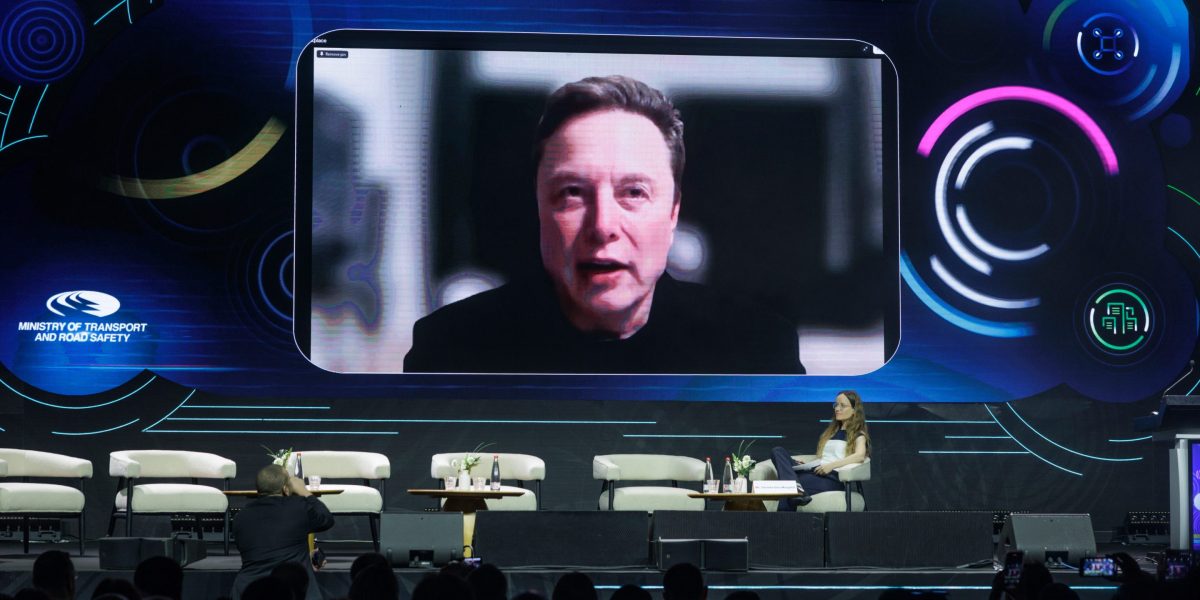
Elon Musk’s net worth moved above $1.1 trillion in June 2026 after SpaceX completed a $75 billion initial public offering, according to a Fortune commentary by Douglas P. McCormick. McCormick, identified by Fortune as managing partner and chief investment officer of Oridian Capital Partners, argued that the milestone says more about market expectations than spendable wealth.
The commentary described the SpaceX deal as the largest IPO on record and said it made Musk the world’s first trillionaire. McCormick wrote that investors voluntarily accepted the valuation and the risks attached to it, while the cash raised would support rockets, satellites, factories and artificial intelligence projects.
McCormick’s central argument was that Musk’s fortune is mostly unrealized equity in companies he continues to run. He wrote that Musk draws no salary and that his net worth is tied to shares whose value depends on whether Tesla and SpaceX deliver on ambitions already reflected in market prices.
Valuations tied to future promises
According to McCormick, SpaceX’s roughly $1.77 trillion valuation reflects investor expectations for Starship, Mars-related plans and a still-developing satellite economy. He also wrote that Tesla’s valuation includes assumptions about autonomous driving and robotics businesses that have yet to fully arrive.
That structure, McCormick argued, leaves Musk exposed to failure because a decline in confidence could cut deeply into his paper wealth. He pointed to Tesla losing more than $800 billion in market value in early 2025 before recovering, and said Musk’s net worth can move by tens of billions of dollars on ordinary trading days.
The commentary credited Musk’s companies with past economic and technological effects. McCormick wrote that Tesla pushed legacy automakers toward electric vehicles, while SpaceX lowered launch costs, restored U.S. astronaut launch capability and used Starlink to provide broadband to rural areas. He also said the companies supported hundreds of thousands of U.S. jobs, including advanced manufacturing in Texas, California and Nevada.
Power and inequality concerns
McCormick acknowledged that Musk’s influence spans rockets, satellites, autos, artificial intelligence, a communications platform and government contracts. He called that concentration a legitimate concern, while arguing that it should be handled through competition, tax policy, lawsuits, disclosure rules, antitrust law and government contracting decisions.
On inequality, McCormick wrote that Musk’s wealth differs from cash accumulation because he would need the companies to succeed in order to preserve it. He argued that SpaceX and Tesla become more valuable if they lower space costs, electrify transport, build factories or connect underserved areas.
The commentary also connected Musk’s potential future giving to earlier American fortunes. McCormick cited Andrew Carnegie’s libraries and peace endowment, Rockefeller funding for the University of Chicago and public-health work, and Mellon money behind the National Gallery. He noted that Musk signed the Giving Pledge in 2012.
Fortune labeled the piece as commentary and said the views expressed were McCormick’s, not necessarily those of the publication. His conclusion was that Musk’s trillion-dollar status should be seen as a market wager on future technology and growth, with the fortune vulnerable if those expectations fail.
This story draws on original reporting from Fortune.