
Micah Lasher defeats Jack Schlossberg in Manhattan House primary
The Associated Press reported Lasher beat the Kennedy grandson in a crowded Democratic race for Jerry Nadler’s open congressional seat.
By Daniel Okafor · Business Editor
3 min read
Micah Lasher won Tuesday’s Democratic primary for an open U.S. House seat in Manhattan, defeating Jack Schlossberg and a crowded field in a race watched for its Kennedy family connection and tech money. The Associated Press reported that Lasher, a New York state Assembly member, is now strongly positioned for November in a district where Democrats account for two-thirds of registered voters.
Schlossberg, the 33-year-old grandson of President John F. Kennedy, drew national attention with an online-heavy campaign and a combative progressive message. The Associated Press reported that he barely topped 10% in the primary, ending his first run for office.
Lasher has spent years in New York politics, including work for Rep. Jerry Nadler, the longtime Democrat whose seat he is seeking, according to the AP. At his victory event, Lasher appeared with Gov. Kathy Hochul and other figures from the city’s Democratic establishment and said he wanted to bring new energy and ideas to Democrats in Washington.
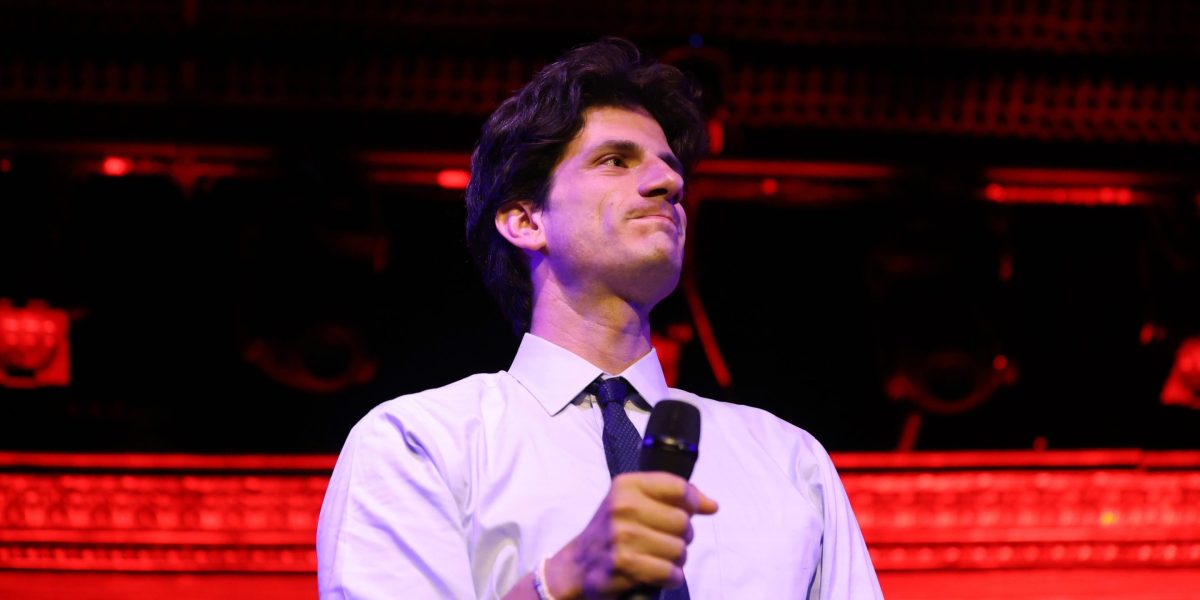
Before the race was called, Schlossberg addressed supporters at a Manhattan concert venue, thanking campaign staff and saying Democrats needed candidates who speak more directly about the cost of living, corruption and constitutional issues, the AP reported. Supporters later reacted audibly when news of Lasher’s win reached the room.
A race shaped by name recognition and AI money
The contest became more than a fight over one safely Democratic seat. The AP reported that Schlossberg’s celebrity as a Kennedy heir and his social media following helped make the race unusually visible, while spending tied to artificial intelligence interests made it unusually expensive.
Schlossberg had described his appeal to the AP earlier this year as rooted in more than his family name, pointing to his experience, ideas and public trust in him. He also faced scrutiny over his résumé and questions about whether his online persona translated into a serious campaign, according to the AP.
The AP reported that Schlossberg holds a joint law and business degree, worked briefly in the State Department’s environmental bureau and wrote political opinion pieces for Vogue. He also said family wealth allowed him to avoid dependence on political fundraising.
Artificial intelligence policy became a major fault line because of Alex Bores, another state Assembly member in the race and a former tech company engineer. According to the AP, some tech and AI companies opposed Bores over legislation he wrote, while other AI figures more open to regulation spent in support of him.
Voters were hit with mailers and advertising focused heavily on Bores and Lasher, the AP reported. Lasher ran on his record in government, while Bores cast himself as a newer voice willing to challenge powerful interests.
Old rivalries and other candidates
The primary also revived tensions between Nadler and former Rep. Carolyn Maloney, according to the AP. Nadler endorsed Lasher, while Maloney backed Bores after losing to Nadler in a 2022 primary that followed redistricting.
George Conway, a lawyer and former Republican known for helping form the anti-Trump Lincoln Project, also sought the nomination. The AP reported that Donald Trump celebrated Conway’s loss on social media, using the insult “Trump Deranged Loser.”
Several other candidates ran as well, but Lasher emerged from the field with the nomination. In a district so heavily Democratic, the AP reported, his primary victory leaves him favored heading into the general election.
This story draws on original reporting from Fortune.