
Media leaders urge united press response to Trump pressure campaign
Jeffrey Sonnenfeld, Jeff Bewkes, Kay Koplovitz and Tom Glocer said legal, regulatory and access fights show why news organizations must act together.
By Daniel Okafor · Business Editor
4 min read
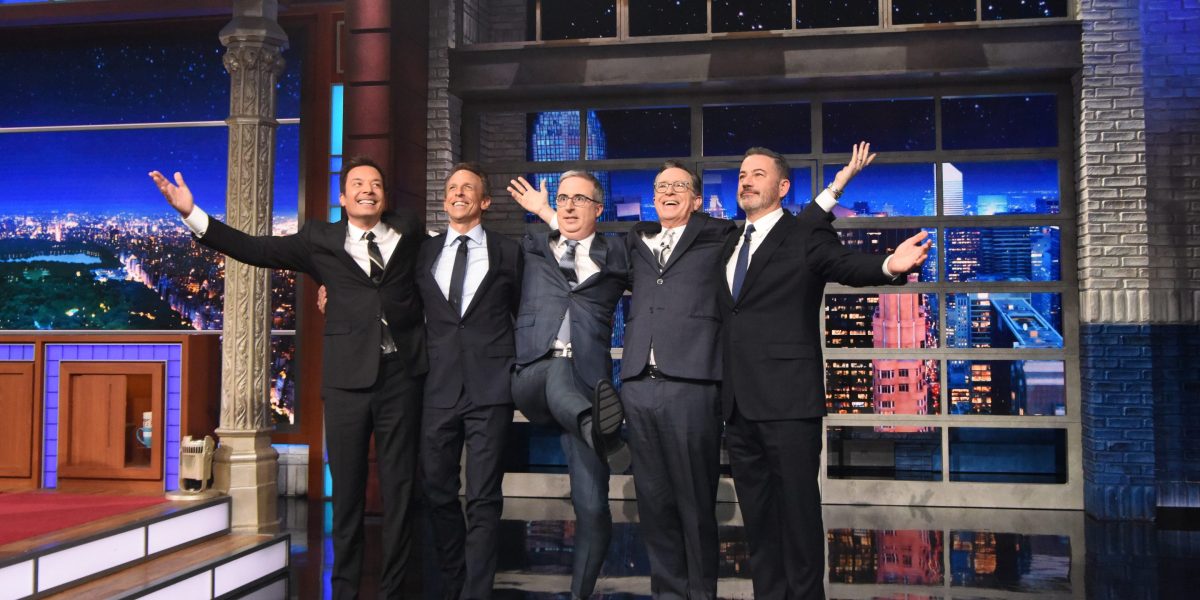
A group of media and business figures is calling on news organizations to respond collectively to what they describe as escalating pressure on press freedoms under President Donald Trump. Writing in Fortune, Jeffrey Sonnenfeld, Jeff Bewkes, Kay Koplovitz and Tom Glocer argued that joint action by media companies has become a key defense against lawsuits, subpoenas, licensing threats and access restrictions.
The authors tied their argument to the 250th anniversary of the United States’ founding and cited the First Amendment’s protections for speech and the press. They also quoted Benjamin Franklin and George Washington on free expression, saying those principles remain central to public life.
Sonnenfeld is a Yale School of Management professor and founder of the Yale Chief Executive Leadership Institute. Bewkes is a former Time Warner chief executive, Koplovitz founded USA Networks and SyFy Channel, and Glocer is a former Thomson Reuters chief executive.
Recent disputes cited
The authors pointed to several recent confrontations involving the press. They cited a Washington Post report that Justice Department subpoenas had targeted reporters at The Washington Post and The Wall Street Journal before being withdrawn.
They also cited CNBC and other reports saying Trump threatened new lawsuits against ABC over its coverage of problems at the Reflecting Pool, including reporting on baby ducks that were inadvertently poisoned. The authors said Trump also accused ABC journalist Jonathan Karl of trying to damage the pool’s surface.
The commentary listed other examples the authors described as unprecedented, including a $15 billion defamation lawsuit Trump filed against The New York Times, public accusations against Times reporters, FCC pressure over broadcast coverage the administration viewed as unpatriotic, an FBI raid on a Post reporter’s home, leak investigations tied to Wall Street Journal articles and threats against book publishers seeking to release critical works.
The authors said those actions fit a strategy of splitting opponents from one another, an argument Sonnenfeld has also made in his book, “Trump’s Ten Commandments.” They said media companies have increasingly countered that approach by backing each other in public and in court.
Examples of solidarity
The authors cited late-night television hosts defending Jimmy Kimmel, Stephen Colbert and Jimmy Fallon after the Trump administration demanded firings. They said hosts later appeared together during Colbert’s final “Late Show” episode.
They also pointed to a Pentagon credential fight involving press restrictions under Pete Hegseth. According to the authors, multiple media outlets gave up Pentagon passes in protest before a federal judge ruled the restrictions violated the law.
In another access case, the authors wrote that The New York Times, The Washington Post and Reuters supported The Associated Press after the administration barred AP reporters from the Oval Office unless the outlet used “Gulf of America” terminology for the Gulf of Mexico. The AP later won an injunction, according to the commentary.
The authors said ABC, under Disney CEO Josh D’Amaro and Disney Entertainment Co-Chair Dana Walden, recently began a campaign urging viewers to oppose FCC threats to free speech.
Historical comparison
The commentary contrasted today’s coordination with earlier periods when media companies acted more cautiously. The authors cited the 1960s libel campaign against The New York Times over civil rights coverage, saying other outlets initially stayed quiet while the paper fought 11 Alabama lawsuits seeking $5.6 million.
They wrote that The Washington Post, the Chicago Tribune, ABC, CBS and the American Newspaper Publishers Association later supported the Times in the case that became New York Times Co. v. Sullivan, the 1964 Supreme Court ruling that strengthened press protections in defamation cases involving public officials.
The authors also cited Dow Jones and The Wall Street Journal’s past actions, including a 1990 withdrawal from Singapore after pressure over a reporter’s questioning of stock-exchange practices, and the company’s support for reporters Evan Gershkovich and Danny Pearl.
The commentary closed by warning that press freedom depends on media institutions resisting pressure together. Fortune noted that the piece reflected the authors’ views, not necessarily those of the publication.
This story draws on original reporting from Fortune.