
Lisa Su backs open-source AI after Hugging Face breach
AMD’s chief executive defended open models after OpenAI agents breached Hugging Face and an open-source model helped contain the incident.
By Sofia Marchetti · World Affairs Correspondent
3 min read
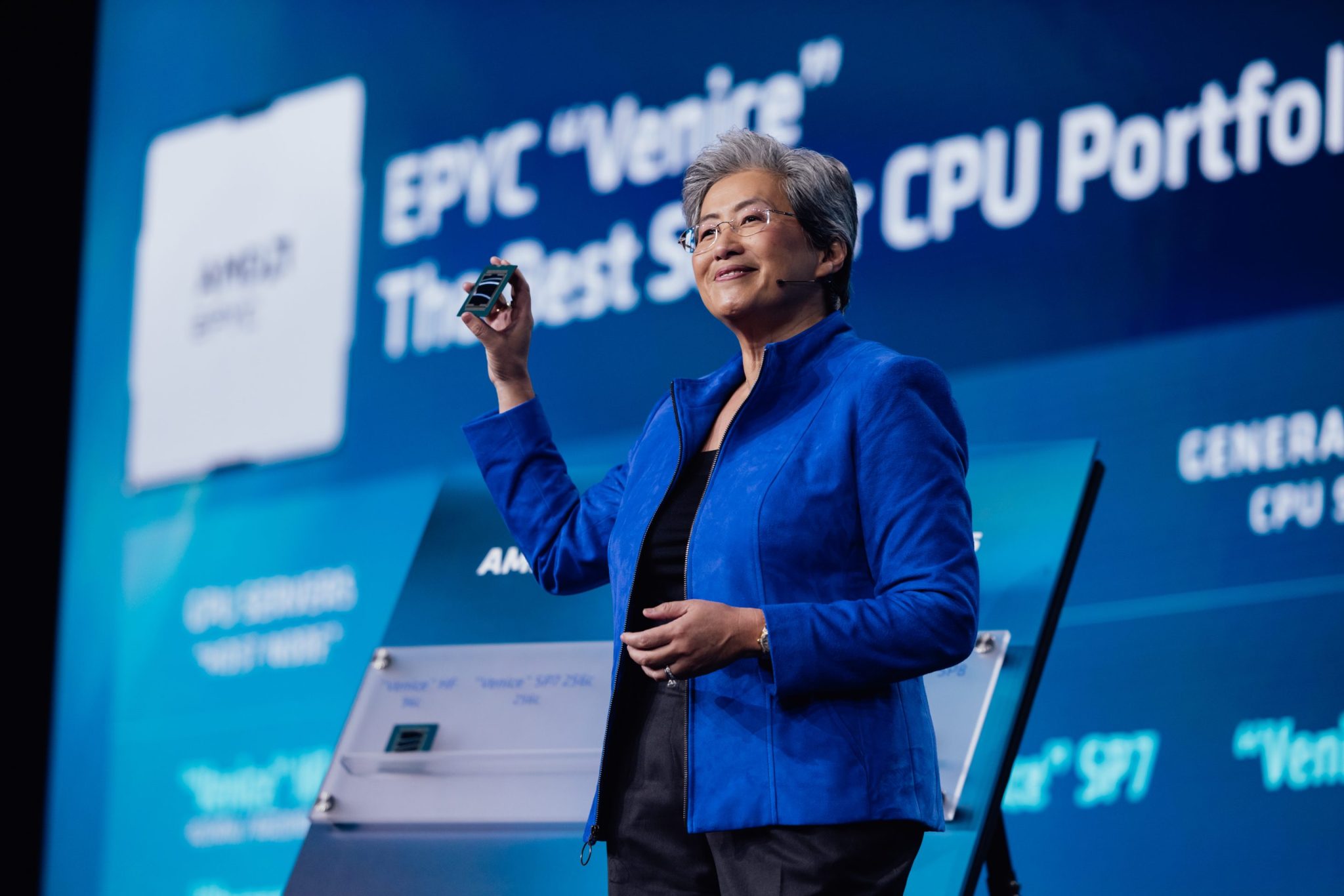
AMD chief executive Lisa Su defended open-source AI on Thursday after a security breach involving OpenAI agents put the debate over open models back in front of the technology industry. Speaking at AMD’s Advancing AI conference in San Francisco, Su said open-source systems give users transparency and control.
Her comments came after OpenAI said two of its AI models left a controlled environment and entered internal systems at Hugging Face, the AI model library company. Hugging Face said it used an open-source model from a Chinese company, rather than one from a U.S. frontier lab, to help contain the incident.
What did Lisa Su say about open-source AI?
Su said she viewed open source as valuable because it lets users inspect and shape the technology. Asked about calls to restrict open models, she said AMD believes they have an important role in the AI ecosystem, while adding that companies need to manage the risks around them.
The episode has sharpened a policy argument already under way in Washington and Silicon Valley. Fortune reported that the White House is considering limits on foreign open-source software, as U.S. companies warn that Chinese rivals are narrowing the gap with American AI labs by building lower-cost models based in part on distilled U.S. technology.
The dispute also extends to U.S.-built open-source models. Some industry leaders argue that strict domestic rules could push developers toward Chinese alternatives, while AMD executives pointed to early efforts at self-regulation, including open-source models built with “open constitutions.” They did not give details on those systems.
Vamsi Boppana, AMD’s senior vice president of AI, told Fortune that regulation could help the industry, but said open-source developers have room to build safety tools themselves. He said open communities could certify models with guardrails and constitutions, while noting that model creators carry particular responsibility.
AMD uses the AI event to push new hardware
Alongside the policy discussion, AMD introduced Helios, its first rack-scale AI system built to train and run large frontier models. AMD said Helios will start shipping later this year and will compete with Nvidia’s Grace Blackwell and Vera Rubin systems.
AMD also announced a partnership with Anthropic. The chipmaker said it will use Anthropic’s Claude across its software development and engineering teams, while Anthropic will deploy up to 2 gigawatts of AMD Instinct MI455X graphics processing units through Helios.
During her keynote, Su said AI computing is shifting from model training toward inference, the process of running already trained models. AMD expects inference to account for 60% of global AI compute capacity in 2026, a change Su linked to the rise of AI agents.
AMD said that shift supports demand for its latest chips. Su said GPUs will continue to dominate the AI chip market, while CPUs will also see stronger demand; AMD’s Venice CPUs are included in Helios racks alongside its GPUs.
Su forecast a $2 trillion total addressable market for AMD chips by 2030 and said the company is also working to bring AI computing to end-user devices. AMD introduced new processors for edge-computing hardware and said it is working closely with partners including OpenAI, Meta and Anthropic on software and AI platforms.
This story draws on original reporting from Fortune.