
Idaho poll shows farm labor concerns cutting across party lines
A Boise State University survey found broad support for legal status for long-term dairy workers as immigration enforcement pressures farms.
By Maya Lindqvist · Senior Technology Correspondent
3 min read
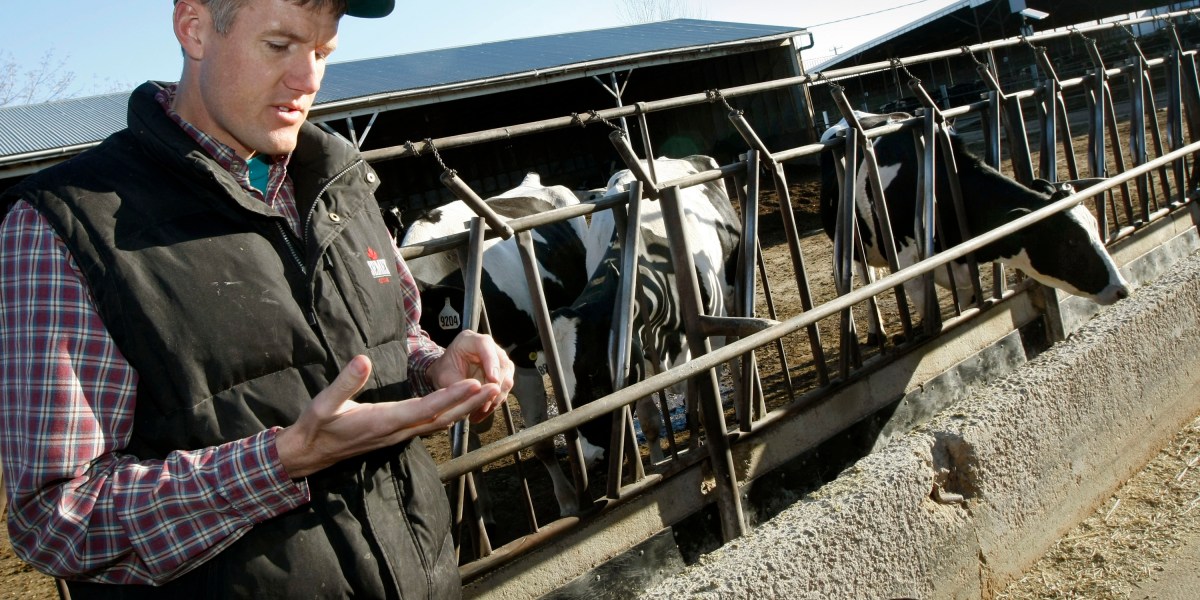
A Boise State University survey found that most Idaho adults support a path to legal working status for long-term dairy workers and their families. The findings point to tension between federal immigration enforcement and the labor needs of one of the nation’s most farm-dependent Republican states.
The 11th annual Idaho Public Policy Survey, conducted in fall 2025, asked 1,000 adults about dairy workers and family members who had lived in Idaho for more than 10 years and had no criminal record. Boise State researchers Lisa Meierotto, Matthew May and Rebecca Som Castellano reported that 85% of respondents favored a legal work pathway, including 56% who strongly supported it and 29% who somewhat supported it.
Support crossed party lines, according to the survey. The researchers said 79% of Republicans, 88% of independents and 95% of Democrats backed legal status for that group, while 9% of all respondents opposed it. The survey’s total margin of error was plus or minus 3.1 percentage points.
The same poll found concern about stepped-up immigration enforcement in agriculture. Boise State researchers reported that 53% of Idaho adults said a larger U.S. Immigration and Customs Enforcement presence would hurt the state’s agricultural economy, compared with 19% who said it would help, 18% who saw no effect and 10% who were unsure.
Republicans were more likely than other respondents to see a benefit from more ICE activity, according to the survey. Even within that group, the researchers said, 35% said it would help agriculture, compared with 11% of independents and less than 3% of Democrats.
Farm economy depends on immigrant labor
Idaho’s farm sector gives the polling added weight. The Idaho State Department of Agriculture says agribusiness accounts for 20% of the state’s annual gross domestic product, and the Idaho Dairymen’s Association identifies Idaho as the fourth-largest milk-producing state in the country.
Immigrant labor is central to that industry, according to the researchers. They cited reporting that 90% of Idaho dairy workers are foreign born, and national data from the Center for Migration Studies showing that 86% of U.S. farmworkers are foreign born and 45% are undocumented.
The political context is just as clear. Idaho state election data cited by the researchers showed about 60% of Idaho voters are registered Republicans, and the Idaho Capital Sun reported that Donald Trump won 67% of the state’s vote in 2024.
The Boise State researchers said that mix makes Idaho a useful place to measure whether national immigration politics match views in communities that rely heavily on farm labor. They also found that people living in agriculture-dependent parts of Idaho were more likely to say expanded ICE activity would damage the agricultural economy.
Federal crackdown raises labor fears
The Department of Homeland Security said the second Trump administration’s immigration crackdown pushed nearly 3 million people out of the United States during Trump’s first year back in office. Pew Research Center reported that the number of immigrants living in the U.S. is declining for the first time since the 1960s.
The researchers said those shifts are already affecting farms because much of the agricultural workforce is foreign born. They cited reports of labor shortages in states that voted for Trump, including Pennsylvania, and in states that did not, including California.
National polling still shows immigration views often track party affiliation, according to the researchers. But they cited Pew Research Center findings that half of respondents disapproved of the administration’s immigration approach and that a rising share of Republicans said Trump was doing too much on deportations.
The Boise State team said Idaho’s results suggest local economic dependence on immigrant workers can complicate partisan views. Their findings indicate that, in a major agricultural state, many voters distinguish between national immigration enforcement and the workers who keep dairy farms operating.
This story draws on original reporting from Fortune.