
Greenspan’s death frames Warsh’s looming call on AI and rates
Alan Greenspan died at 100 as Kevin Warsh faces a Fed decision with echoes of the 1990s tech boom.
By Sofia Marchetti · World Affairs Correspondent
3 min read
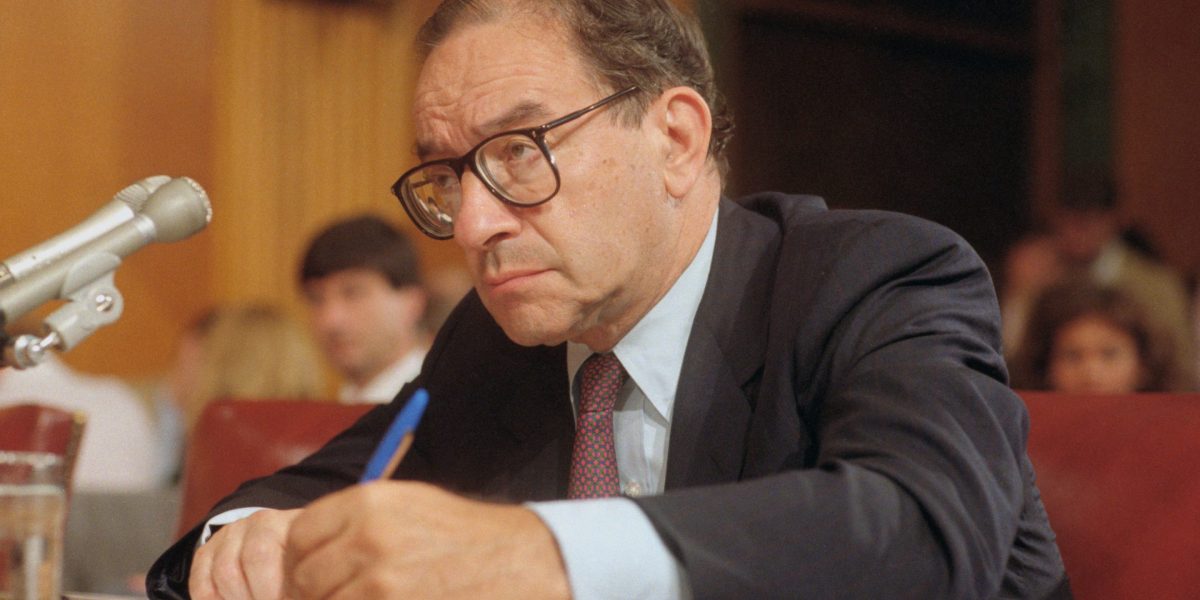
Alan Greenspan’s death has renewed attention on the Federal Reserve’s old dilemma: whether to restrain a market boom before it breaks. Fortune reported that Greenspan died Monday at 100 from complications of Parkinson’s, as Fed Chair Kevin Warsh prepares to confront a similar question around artificial intelligence stocks and interest rates.
Greenspan led the Fed for 18 years and became one of the most recognizable central bankers in modern U.S. history. Peter Petre, the former Fortune editor who co-wrote Greenspan’s memoir, told Fortune that Greenspan often developed his ideas during early-morning baths taken to ease a bad back, including the phrase “irrational exuberance.”
That phrase became shorthand for Greenspan’s warning in 1996 that investors might be pushing asset prices too high. Alan Blinder, who served as Greenspan’s Fed vice chair, told Fortune that today’s AI-linked valuations raise questions similar to those Greenspan faced during the internet boom.
The 1990s bet
Greenspan’s defining call in the late 1990s was that computers and the internet were lifting U.S. productivity faster than official data showed, according to Fortune. He resisted pressure to raise rates aggressively, allowing the expansion to continue even as many economists feared inflation would accelerate.
Blinder told Fortune he was among those who thought Greenspan was wrong at the time, but later viewed the judgment as largely skill rather than luck. Inflation stayed under control, the economy grew strongly and Greenspan’s public stature rose.
The same judgment also helped feed the dot-com bubble. Fortune reported that the Nasdaq tripled after Greenspan’s 1996 warning before the bubble burst in 2000, later losing nearly four-fifths of its value from its peak before eventually recovering.
Greenspan did not use rates to try to puncture that bubble. Blinder told Fortune that Greenspan believed a rate increase large enough to deflate a speculative surge could also damage the broader economy.
A model and a warning
Fortune reported that Warsh has treated Greenspan as a model and has suggested AI could eventually lower inflation by improving productivity. Warsh is expected to try to move the Fed’s board away from a more hawkish stance when it meets next month, according to Fortune.
The risk, as Fortune described it, is that AI’s promised productivity gains may arrive too late or fail to show up. Blinder told Fortune the current moment has “eerie parallels” to the late 1990s and said he hopes it does not end the same way.
Greenspan’s later record remains contested because of the housing boom and financial crisis. Blinder told Fortune that the Fed knew enough about weak lending standards to act more forcefully as a bank supervisor, including against “NINJA” loans made to borrowers with no income, no job and no assets.
In 2008, Greenspan told Congress he had found a flaw in the market-centered worldview he had held for decades, Fortune reported. Petre told Fortune that the admission was one of the most difficult moments of Greenspan’s life.
Donald Kohn, who worked closely with Greenspan and later became Fed vice chair, told Fortune that Greenspan understood central bank language as a policy tool alongside interest rates. That legacy now hangs over Warsh as he weighs whether the AI boom signals lasting productivity gains or another overheating market.
This story draws on original reporting from Fortune.