
Quantum shares rise as Trump orders set federal deadlines
Quantum stocks outperformed a weak market after new executive orders pushed federal agencies toward quantum computing and quantum-safe encryption.
By Maya Lindqvist · Senior Technology Correspondent
3 min read
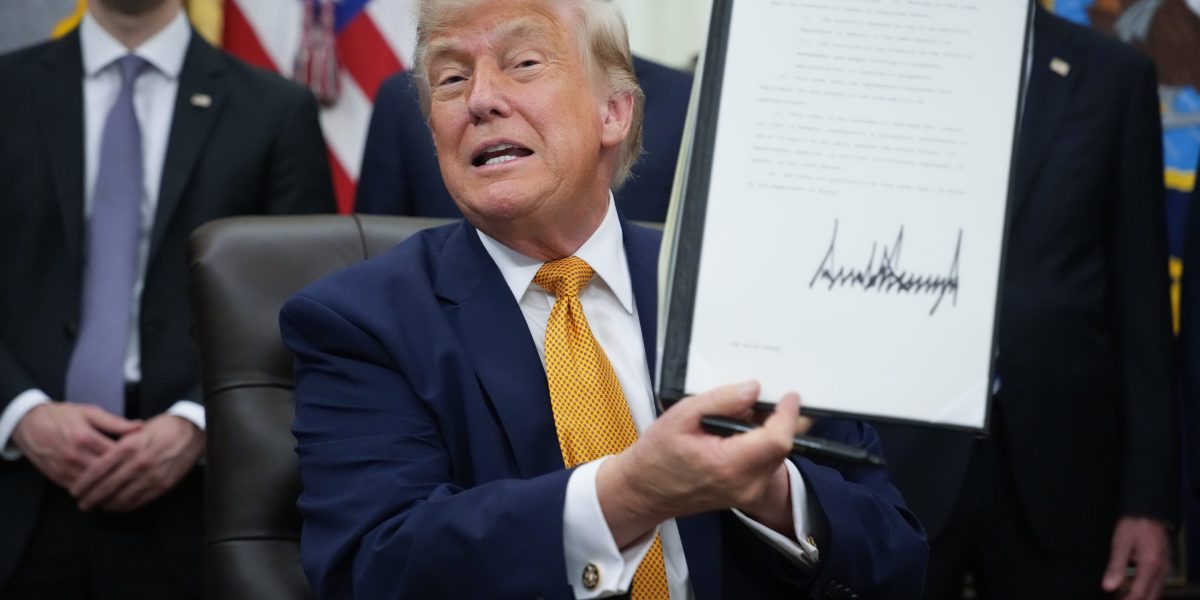
Quantum computing stocks climbed Tuesday after President Donald Trump signed two executive orders setting federal deadlines for quantum research and cybersecurity upgrades, Fortune reported. The move gave investors a policy signal for a sector that has drawn large research funding while many companies remain short of commercial profits.
The gains came during a down day for major indexes. Fortune reported that the Nasdaq fell 2.2% and the S&P 500 dropped more than 1.4%, while several quantum-linked companies ended higher.
Quantinuum, created in 2021 through the combination of Honeywell Quantum Solutions and Cambridge Quantum, rose more than 13% at Tuesday’s close, according to Fortune. Infleqtion finished up 12%, D-Wave gained 2%, and IBM, which Fortune said operates the largest fleet of high-powered quantum systems, rose 5%.
IBM’s move also followed a Wall Street upgrade. Fortune cited a Barron’s report that JPMorgan analyst Brian Essex raised IBM to overweight from neutral, in part because of its potential exposure to rising interest in artificial intelligence and quantum computing.
Orders put agencies on a timetable
Trump signed the orders Monday at the White House, where executives from quantum-related companies attended, Fortune reported. At the event, Trump described quantum computing as important to U.S. economic growth, scientific research and cybersecurity.
The first order creates the QC-ADDS initiative, according to a White House fact sheet. It directs federal agencies to build the first quantum computer capable of meaningful scientific research and place it at a Department of Energy facility.
The same order requires the Pentagon to deploy at least three next-generation quantum sensor projects by 2028, according to the White House. The administration said those sensors are intended to support GPS-independent military positioning in conflict areas and help detect underground infrastructure from space.
The second order focuses on encryption. A White House fact sheet said federal agencies must shift their most sensitive systems to quantum-resistant cryptography by the early 2030s, with federal contractors subject to the same requirements.
The State Department was also directed to encourage allied governments and critical infrastructure operators to adopt compatible standards, according to the White House. The order reflects concern that future quantum computers could weaken current encryption methods used to protect sensitive data.
Industry welcomes federal backing
Infleqtion CEO Matthew Kinsella, who attended the signing, told Fortune the orders turn quantum technology into a national priority. He said U.S. companies, researchers and agencies can now act with more urgency.
IBM CEO Arvind Krishna, who was also at the White House, called the orders an important and timely step in a statement cited by Fortune. Krishna said policy, investment and public-private partnerships are needed to preserve U.S. leadership in quantum technology.
The Trump administration has already put federal money behind the field. Fortune reported that Trump signed the National Quantum Initiative Act in 2018, authorizing up to $1.2 billion for quantum research.
In May, the administration said it would invest another $2 billion in nine quantum computing companies in exchange for equity stakes, Fortune reported, citing The New York Times. Fortune said GlobalFoundries and IBM were set to receive $375 million and $1 billion, respectively, for quantum-related projects, with other funds going to smaller companies including D-Wave, Infleqtion and Quantinuum.
The rally does not erase the sector’s financial risks. Fortune reported that Quantinuum, Infleqtion and D-Wave are still pre-profit companies and have depended heavily on government contracts and private capital to support research and operations.
This story draws on original reporting from Fortune.